North Dakota Rig Count Holds Steady at 30
Bakken drilling activity remains unchanged from yesterday but continues a downward trend compared to recent weeks.
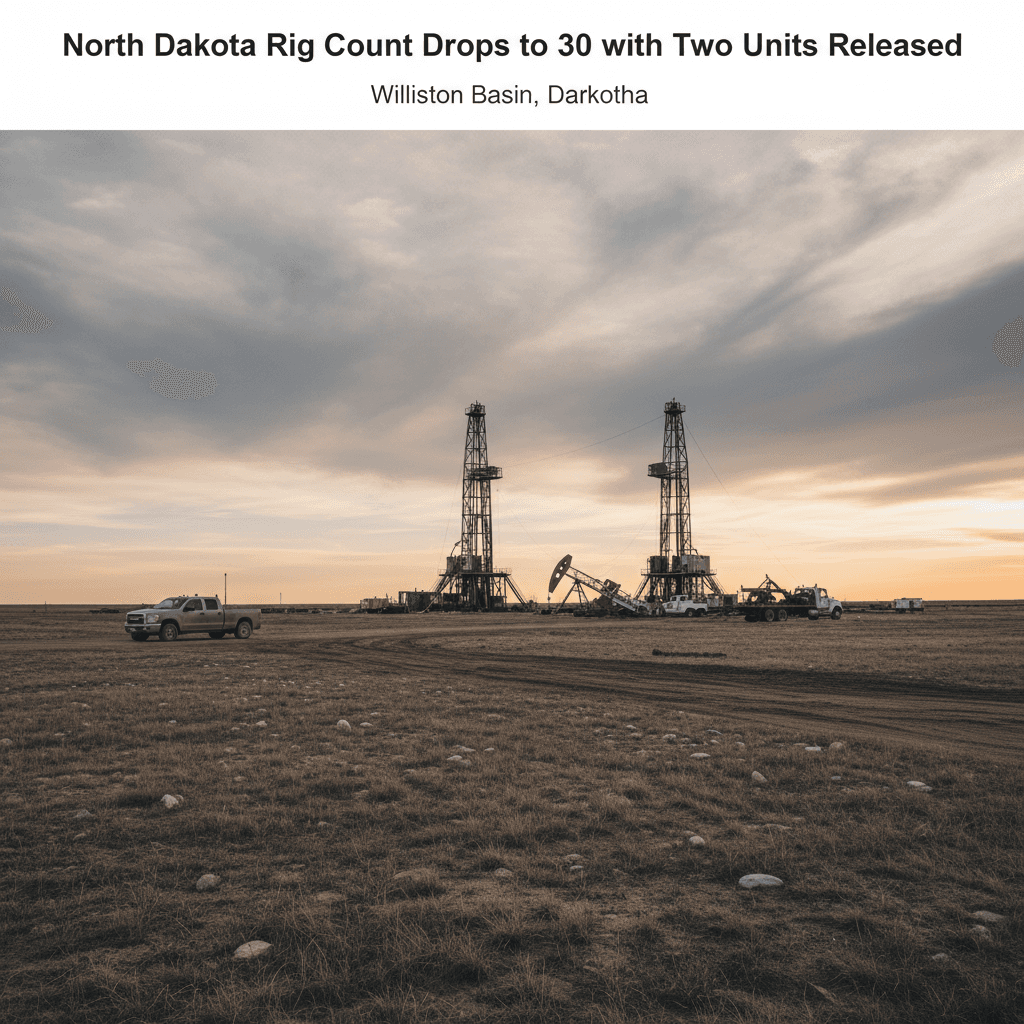
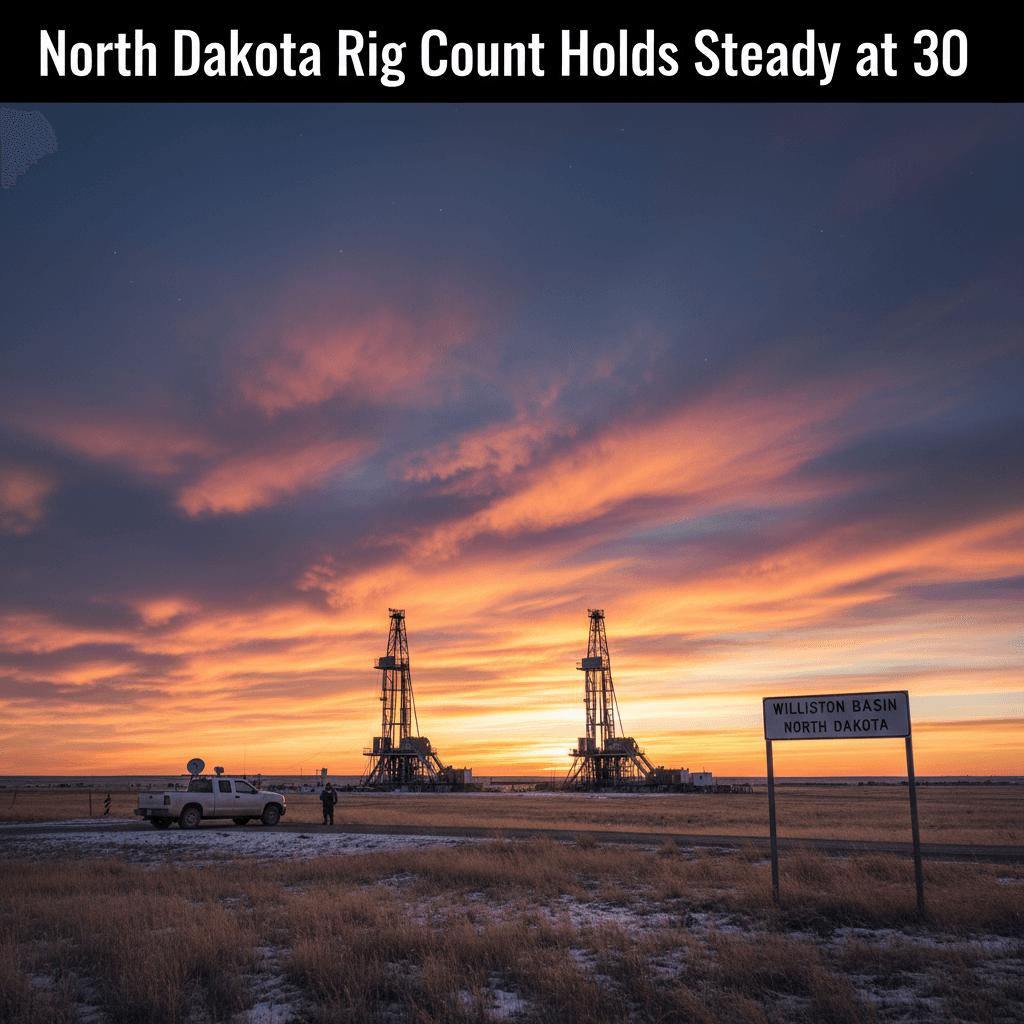
The number of active drilling rigs in North Dakota remained unchanged at 30 on Wednesday, September 30, 2026, according to live rig data. No new rigs were added, none were removed, and there were no rigs that moved location in the latest daily report.
This static daily figure continues a broader trend of declining activity in the Bakken formation. Compared to one week ago, on September 23, 2026, the active rig count is down by one rig. The longer-term trend shows a more significant pullback in drilling operations.
The current count of 30 active rigs represents a decline of six rigs from the level seen just one month ago on August 31, 2026, when 36 rigs were operational. This month-over-month decrease highlights a sustained reduction in capital deployment toward new drilling across the Williston Basin.
A stable rig count can reflect a period of evaluation by operators following shifts in commodity prices, capital budgets, or well performance data. The lack of day-to-day movement often precedes a broader directional shift, either upward or downward, as companies adjust their operational tempo.
The Bakken formation relies on consistent drilling to offset the steep decline curves of its wells and maintain overall oil production levels. A rig count in the low 30s, and trending downward, suggests operators are exercising capital discipline. This activity level is closely watched by service companies, royalty owners, and state economists as a leading indicator of near-term production and economic activity in western North Dakota.
Further context from historical data shows that rig counts are a lagging indicator, responding to earlier decisions on spending and hedging. The current plateau at 30 rigs follows a noticeable drop from the previous month, indicating a potential stabilization at a lower level of activity. Market observers will monitor upcoming weekly and monthly reports to see if this level holds or if the downward trend resumes.
Source
Live Rig Data, Historical Context Data