WTI Crude--
Brent Crude--
Natural Gas--
ND Rig Count--
WTI Crude--
Brent Crude--
Natural Gas--
ND Rig Count--
Oil Markets Flat Sunday as WTI Holds at $88.56 - Bakken Wire
Oil Prices

Oil Markets Flat Sunday as WTI Holds at $88.56

Brent crude holds a significant premium over WTI at $95.84, while Bakken differential remains undefined.

Bakken Wire Staff·🌅Afternoon Wire·

Global oil markets showed little movement in Sunday trading, with key benchmarks holding steady. West Texas Intermediate (WTI) crude was unchanged at $88.56 per barrel, while Brent crude also held flat at $95.84, according to live price data.

The lack of price movement during weekend trading is typical, as liquidity is lower and many major markets are closed. However, the significant $7.28 per barrel premium for Brent crude over WTI remains a notable feature of the current market structure. This spread is closely watched by Bakken operators, as it influences the value of their crude relative to global benchmarks.

For producers in North Dakota's Bakken formation, the flat price of WTI near $89 provides a stable, profitable price environment. The Bakken crude stream typically trades at a differential to WTI, but the specific discount or premium was undefined in the latest data. The stability in the broader benchmarks suggests a lack of immediate, market-moving news affecting supply or demand fundamentals over the weekend.

Natural gas prices were also steady, with the benchmark holding at $3.23 per MMBtu. This price level is supportive for operators who produce associated gas from Bakken oil wells, though gas remains a secondary revenue stream compared to oil in the region.

The current price environment, with WTI sustaining a level above $85, is generally supportive for continued drilling and completion activity in the Williston Basin. Operators budget based on long-term price expectations, and sustained prices at these levels are likely to maintain current activity levels. However, the undefined Bakken differential adds a layer of uncertainty for local netbacks; a wider-than-expected discount could erode the benefit of the strong headline WTI price.

Market participants will be looking ahead to the coming week for fresh catalysts, including inventory reports from the U.S. Energy Information Administration and any geopolitical developments that could impact global supply. The persistence of the Brent-WTI spread may continue to attract commentary regarding export flows and regional supply balances.

Source

Live price data provided to Bakken Wire
oil priceswtibrent crudebakken differentialnatural gasbakken operators

Share this article

Related Articles

WTI Dips Slightly, Brent Holds Steady Amid Mixed Market Signals - Bakken Wire
Oil Prices

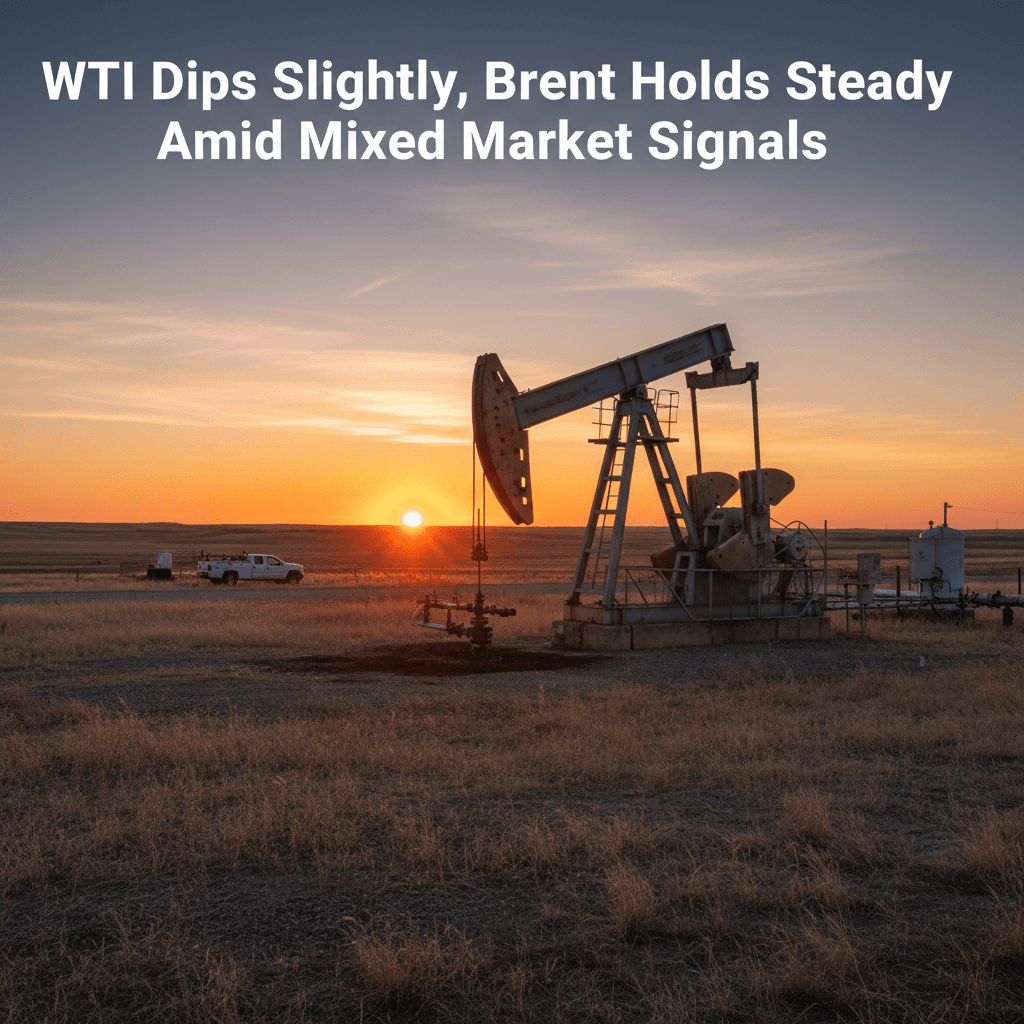
WTI Dips Slightly, Brent Holds Steady Amid Mixed Market Signals

Front-month West Texas Intermediate (WTI) crude futures traded at $88.56 per barrel in midday trading Sunday, November 15, a slight decline of $0.18 or 0.2% from the previous settlement. In contrast, the global Brent benchmark held essentially flat at $95.84, up a marginal $0.02. The minor retreat in WTI, alongside a more significant drop in U.S. natural gas prices to $3.23 per MMBtu (down $0.11), suggests a tempered domestic energy complex. The price action reflects a market balancing persistent geopolitical supply concerns against ongoing questions about global economic demand strength. For Bakken shale producers, the current price environment presents a stable but not spectacular backdrop for operations. WTI holding above $88 provides solid economics for most drilling programs in the play. However, the critical Bakken differential—the discount or premium at which Bakken crude at the wellhead trades versus WTI Cushing—was not defined in current data. This local pricing factor is...

🔆Midday Wire·Nov 15
WTI Dips Slightly, Brent Steady Amid Mixed Market Signals - Bakken Wire
Oil Prices

WTI Dips Slightly, Brent Steady Amid Mixed Market Signals

West Texas Intermediate (WTI) crude traded at $88.56 per barrel early Sunday, down 0.2% from the previous close, according to live price data. The international benchmark Brent crude held steady at $95.84. Natural gas prices fell to $3.23. The modest retreat for WTI comes as the market balances ongoing supply risks against bearish inventory data. According to Rigzone, Brent settled near $96 on November 13 as persistent tensions in the Middle East continued to underpin prices by threatening potential supply disruptions. This geopolitical support is being challenged by signs of rising supply. A separate Rigzone report from November 13, citing the U.S. Energy Information Administration (EIA), stated that U.S. commercial crude oil stocks, excluding the Strategic Petroleum Reserve, rose by almost 5 million barrels week-on-week to 414.417 million barrels as of November 6. Rising inventories typically signal weaker demand or increased supply, placing downward pressure on prices. Further adding to...

☀️Morning Wire·Nov 15
WTI Eases to $88.56 as Bakken Differential Holds at $3.42 Below - Bakken Wire
Oil Prices

WTI Eases to $88.56 as Bakken Differential Holds at $3.42 Below

According to live price data, WTI crude traded at $88.56 a barrel in the afternoon edition, down $0.18, or 0.2%. Brent crude was $95.84, up $0.02, or 0.02%. Natural gas fell $0.11 to $3.23 per million British thermal units. The Bakken differential was $3.42 below WTI. The small moves leave the Brent-WTI spread at $7.28 a barrel. For Bakken producers, the differential implies a realized crude price of about $85.14 a barrel, based on the data. That is still a high absolute price for North Dakota oil, but the discount matters when operators calculate netbacks, royalty checks and wellhead economics. The Bakken formation remains North Dakota’s primary oil-producing region, so benchmark prices and regional discounts are closely watched by lease operators and mineral owners. Oil markets appeared to be trading within a narrow range rather than chasing a single catalyst. In general, WTI and Brent are shaped by OPEC+ supply...

🌅Afternoon Wire·Nov 14