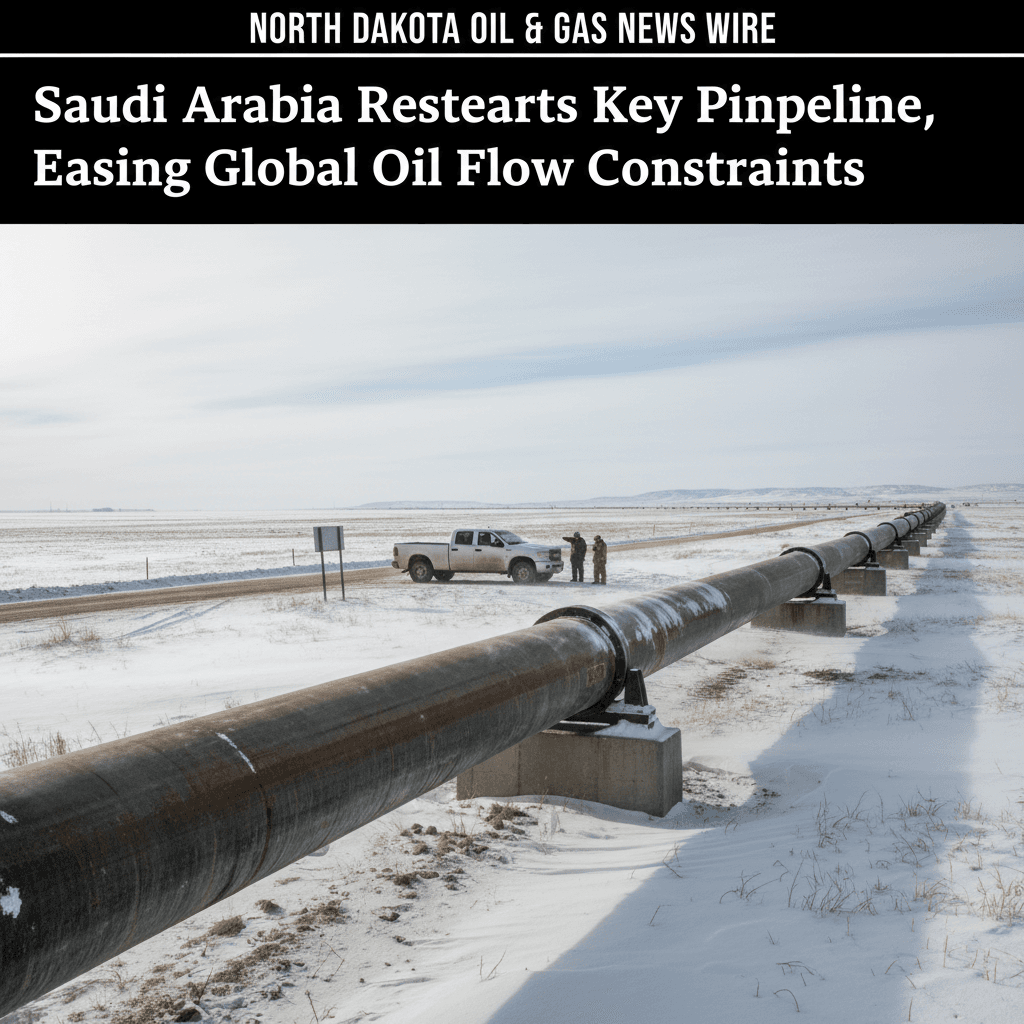
Oil Prices Dip as Saudi Arabia Restarts Key Pipeline
Global supply increase pressures crude benchmarks, impacting Bakken producers' revenue outlook.
Oil prices moved lower on Tuesday after Saudi Arabia moved to restart a major domestic pipeline, according to a report from Rigzone. The news, coupled with ongoing diplomatic developments between the U.S. and Iran, contributed to downward pressure on global crude benchmarks.
For Bakken operators, lower benchmark prices directly translate to reduced wellhead revenue. The Bakken formation's light sweet crude is typically priced at a differential to West Texas Intermediate (WTI), which is influenced by these international supply and demand factors. Any sustained increase in global supply can widen the discount for Bakken crude, squeezing producer margins.
The specific development involved Saudi Arabia's East-West pipeline, a critical piece of infrastructure that carries crude from the kingdom's eastern fields to the Red Sea. Its return to service adds reliable export capacity from a major producer, easing some global supply concerns that have supported prices. Traders are also weighing the potential for further supply changes based on U.S.-Iran diplomacy, Rigzone reported.
In the current environment, Bakken operators are highly sensitive to price swings. While the region's wells are among the most cost-efficient in the U.S., sustained prices below certain thresholds can impact drilling budgets and the pace of well completions. The focus for many companies remains on capital discipline and free cash flow generation.
Market observers will monitor whether the price dip represents a short-term reaction or the beginning of a longer-term trend. The health of the global economy and decisions from the OPEC+ alliance, which includes Saudi Arabia, will be key factors determining price direction through the end of the year.
Source
Rigzone