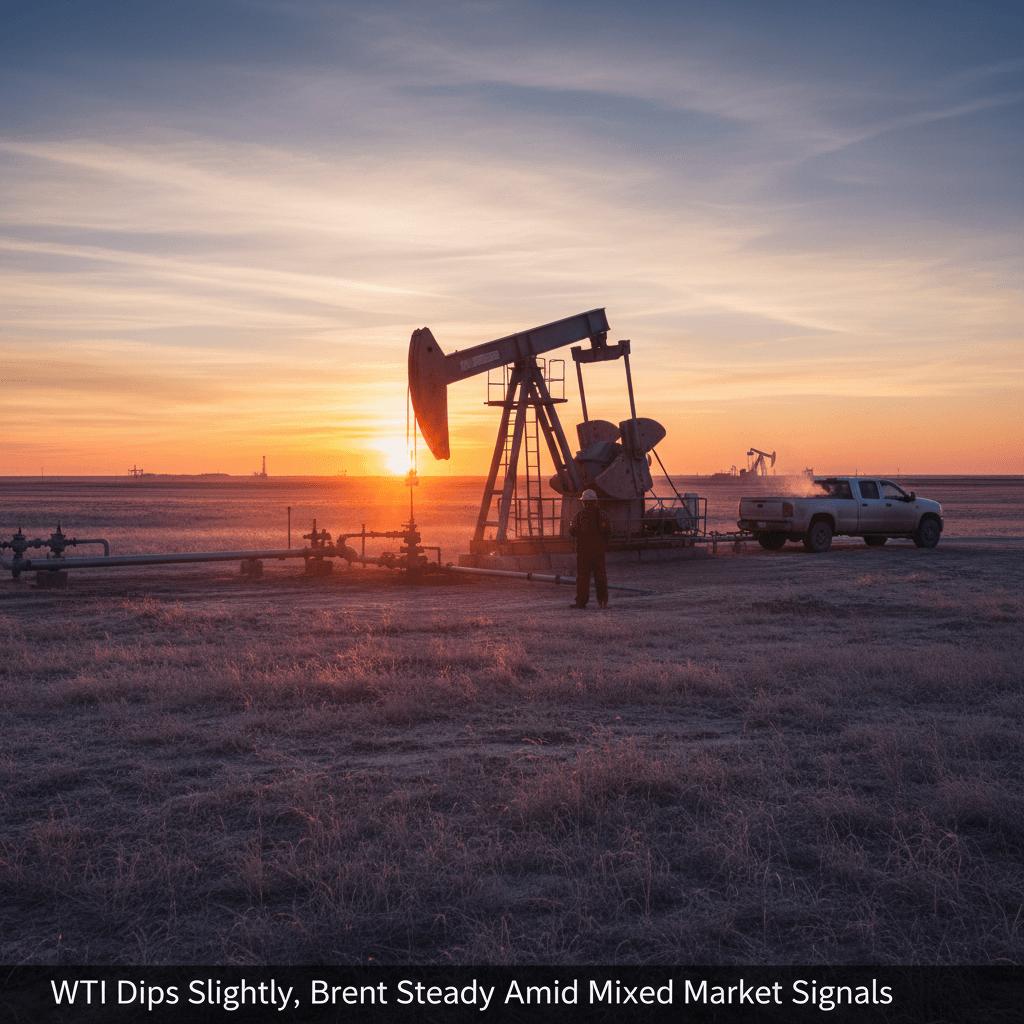
Oil Prices Dip as Supply Concerns Countered by Rising US Inventories
WTI crude falls below $88 while Brent holds above $94, with market balancing Middle East tensions against growing US stockpiles.
Oil prices retreated in early trading Monday, with West Texas Intermediate crude for December delivery trading at $87.79, a decline of 0.87%, according to live price data. The global benchmark, Brent crude, was down 1.12% to $94.77.
The price movement reflects a market balancing persistent geopolitical supply risks against signs of rising physical supply. According to a recent Rigzone report, Brent had settled near $96 last week as Middle East tensions continued to underpin prices. However, that support is being tested by a significant build in US commercial crude inventories.
Data from the US Energy Information Administration showed a substantial increase in stockpiles. For the week ending November 6, commercial crude oil stocks, excluding the Strategic Petroleum Reserve, rose by almost 5 million barrels to 414.417 million barrels, Rigzone reported. This inventory build suggests domestic supply is currently outpacing demand, applying downward pressure on US benchmark prices like WTI.
The price differential between Brent and WTI remains wide at nearly $7, highlighting stronger global market tightness influenced by ongoing Middle East risks. For Bakken operators, the high Brent price is a positive signal for exported crude, but the local pricing benchmark is more directly tied to WTI. The Bakken differential versus WTI was not available in the live data set.
Additional supply is also emerging from non-OPEC sources. In a separate development, Rigzone reported that Benin has shipped its first crude cargo in decades from a revived oil field, rejoining the ranks of West Africa's oil-exporting states. While the volume is small on a global scale, it contributes to the non-OPEC supply stream.
For operators in the Williston Basin, the current price environment presents a mixed picture. WTI holding above $85 is generally supportive for drilling and completion activity in the region. However, the week-on-week price drop coupled with rising US inventories may prompt caution. Operators will be watching for further inventory data and any escalation in geopolitical events that could quickly tighten the global balance and lift prices.
Source
Live price data, Rigzone reports from November 13, 2026.