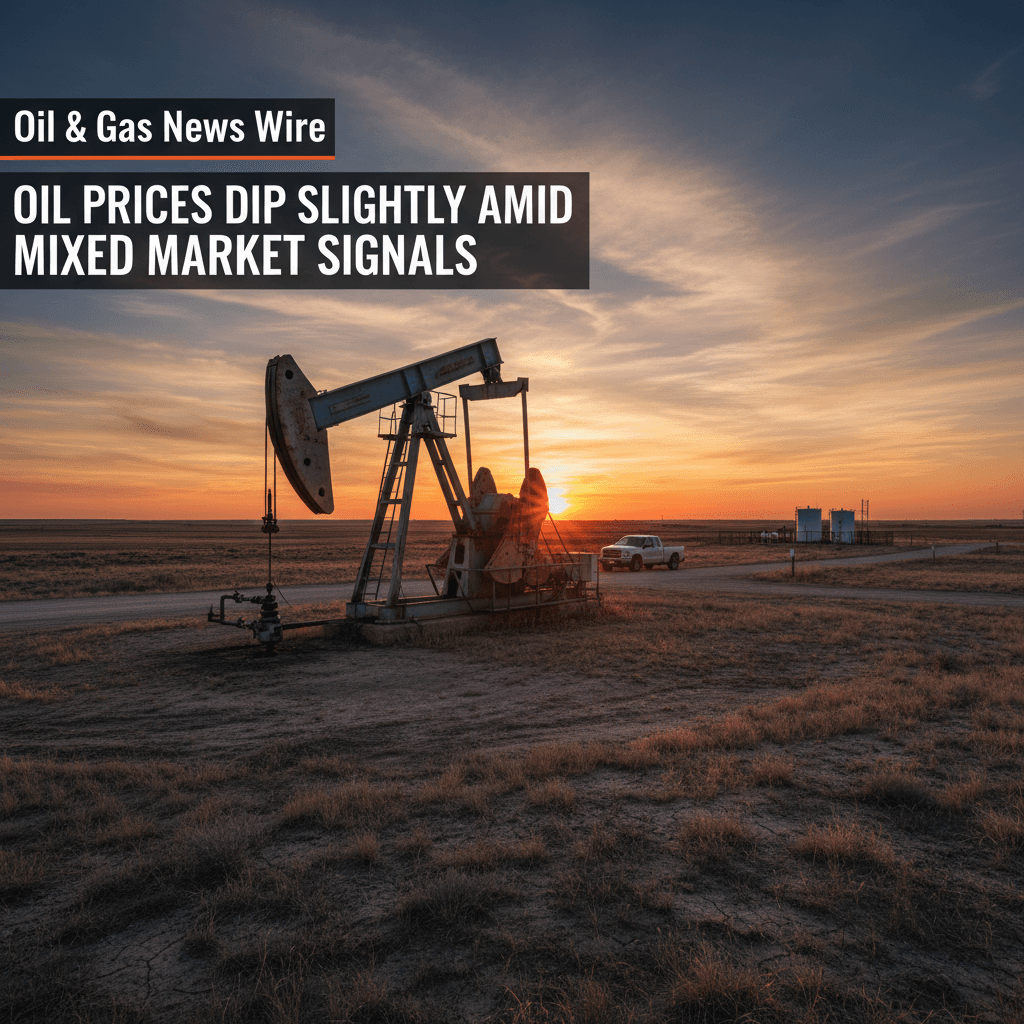
Oil Prices Dip Slightly Amid Mixed Market Signals
WTI holds above $83 while Bakken differential narrows; natural gas also declines.
Front-month West Texas Intermediate crude futures traded at $83.40 per barrel on Saturday, down 13 cents for a 0.16% decline, according to live market data. The global benchmark Brent crude fell 42 cents to $88.10, a drop of 0.47%. The Bakken crude differential to WTI was reported at -$3.42.
The modest pullback in oil prices comes after a week of volatility driven by conflicting fundamental signals. Traders continue to weigh steady OPEC+ production discipline against concerns over the strength of global fuel demand, particularly from China. Geopolitical tensions in key producing regions also remain a persistent source of market uncertainty, providing a floor under prices even during sell-offs.
For Bakken operators, the price environment remains supportive for continued drilling and completion activity. A WTI price sustained above $80 per barrel is generally considered profitable for most wells in the core of the North Dakota formation. The Bakken differential, which represents the discount at which Bakken crude trades versus the WTI benchmark, is a critical metric for local producers. The current differential of -$3.42 is relatively narrow, meaning Bakken barrels are fetching a price close to the benchmark, which boosts netbacks for companies selling their production.
In the natural gas market, prices also softened. The front-month contract was quoted at $2.89 per MMBtu, a decline of 3 cents. Weak natural gas prices continue to be a headwind for Bakken producers, for whom gas is a associated byproduct. Low gas prices can pressure margins and reduce the economic incentive for gas capture investments, though the primary revenue driver remains crude oil.
The overall price stability near multi-month highs suggests a balanced market. While U.S. commercial crude inventories have shown builds in recent weeks, indicating ample supply, they remain within seasonal norms. The key for Bakken operators will be maintaining operational efficiency to capitalize on the favorable oil price while managing the cost inflation that often accompanies periods of sustained high prices.
Market participants are looking ahead to the next meeting of OPEC and its allies, where any decision to adjust output quotas could significantly shift price trajectories. For now, the consensus appears to be for range-bound trading, with WTI finding support above $80 and resistance near $85.
Source
Live Price Data