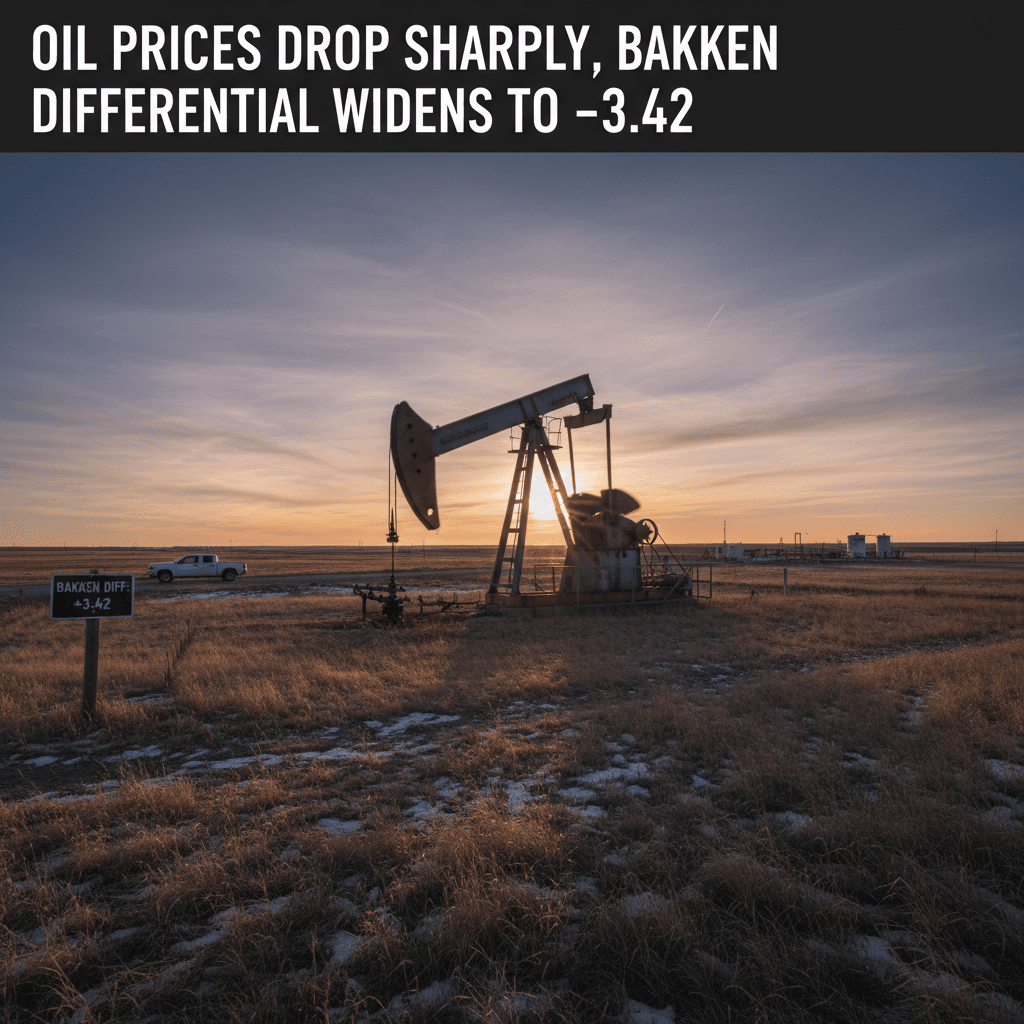
Oil Prices Slump Over 2% Amid Demand Concerns, Bakken Differential Widens
WTI crude falls below $93, pressured by economic headwinds and a stronger dollar, while Bakken crude's discount to the benchmark expands.
Front-month WTI crude futures fell sharply in midday trading Saturday, September 26, dropping 2.33% to trade at $92.41 per barrel. The global benchmark, Brent crude, saw a similar decline of 2.77% to $97.44. Natural gas prices also retreated, down $0.15 to $3.23 per MMBtu.
The price drop puts significant pressure on the realized price for Bakken crude. The Bakken differential—the discount at which Bakken crude trades versus WTI at the Cushing, Oklahoma, hub—widened to $-3.42 per barrel. This means Bakken crude is priced at approximately $88.99 per barrel before further transportation costs.
The midday sell-off was driven by a combination of macroeconomic factors. Persistent concerns over global economic growth and its impact on fuel demand weighed on the market. A strengthening U.S. dollar, which makes oil more expensive for holders of other currencies, added further downward pressure. These headwinds overshadowed ongoing geopolitical tensions and typically supportive inventory draws.
For Bakken operators, the double hit of a lower benchmark price and a wider local differential directly impacts cash flow and drilling economics. A price near $89 for Bakken crude at the wellhead can quickly approach or fall below the break-even point for some higher-cost wells, potentially influencing decisions on completing drilled but uncompleted wells (DUCs) or authorizing new drilling permits.
The price action reflects a market caught between tight physical supplies and fears of demand destruction. While global inventories remain relatively tight and OPEC+ continues to manage output, traders are currently prioritizing worries over central bank policies and recession risks. This volatility underscores the sensitivity of Bakken producers to short-term price swings, given the region's distance to major refining centers and its reliance on pipeline and rail takeaway capacity.
The wider Bakken differential specifically indicates either a temporary glut in local production or weaker demand for the specific grade of light sweet crude from Midwest refiners. Operators will be watching for any changes in pipeline flows or refinery demand that could narrow the discount in the coming days.
Source
Bakken Wire Live Price Data