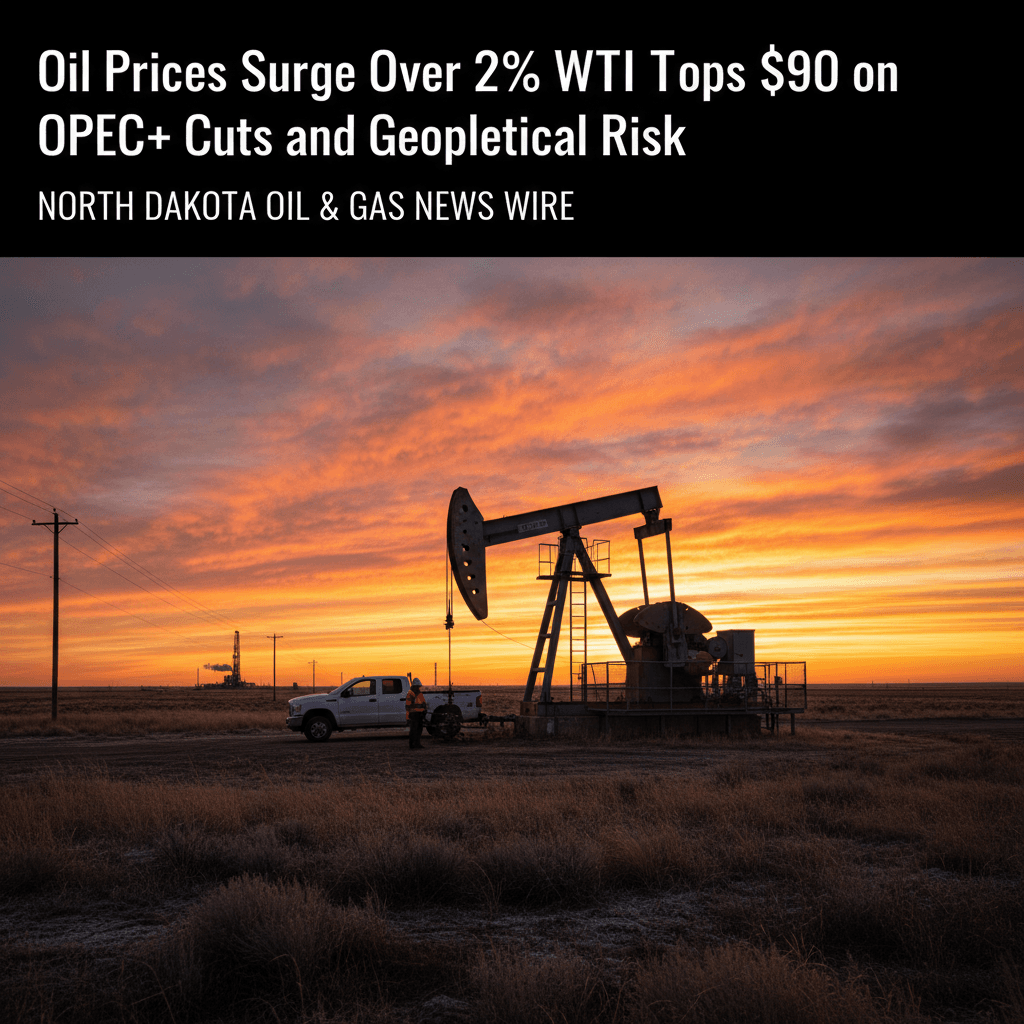
Oil Prices Surge Over 2%, WTI Tops $90 on OPEC+ Cuts and Geopolitical Risk
Brent nears $97 as supply constraints and Middle East tensions boost the market, strengthening the outlook for Bakken producers.
Front-month WTI crude oil futures surged 2.14% to trade at $90.01 per barrel at midday Thursday, November 5, 2026, marking a significant gain of $1.89. The global benchmark, Brent crude, followed closely, rising 2.09% to $96.60 per barrel, according to live price data.
The rally is largely attributed to ongoing supply discipline from the OPEC+ producer group and heightened geopolitical tensions in the Middle East. These factors are tightening the physical market and overriding concerns about global economic demand.
For Bakken operators, the strong rise in the underlying benchmarks is a positive signal for revenue. However, the region's crude is trading at a discount. The Bakken differential was quoted at -$3.42 per barrel versus WTI, meaning Bakken crude is priced around $86.59 based on the midday WTI price.
The OPEC+ alliance, which includes Saudi Arabia and Russia, is currently maintaining its collective production cuts. This deliberate restraint is removing barrels from the global market and providing a firm floor under prices. Analysts note that without a significant change in strategy from the group, the supply side will remain constrained.
Simultaneously, escalating conflicts in the Middle East are injecting a persistent risk premium into oil prices. Any potential disruption to crude flows from the critical region could trigger further price volatility and spikes, supporting the current bullish sentiment.
The rise in natural gas prices was minimal by comparison. The front-month contract was up just one cent to $2.97 per MMBtu, reflecting a well-supplied domestic market with ample storage.
For North Dakota producers, the price environment is favorable for sustaining drilling and completion activity. With WTI holding firmly above $90, most operators in the Bakken formation can generate positive cash flow. The differential, while a discount, is within a typical historical range for the region and does not substantially erode the benefit of higher headline prices.
The focus for the market will now shift to U.S. inventory data and any signals from OPEC+ regarding its production policy into 2027. Sustained prices at or above current levels would likely support stable to increasing rig counts in the Williston Basin, as companies lock in returns for future production.
Source
Live Price Data