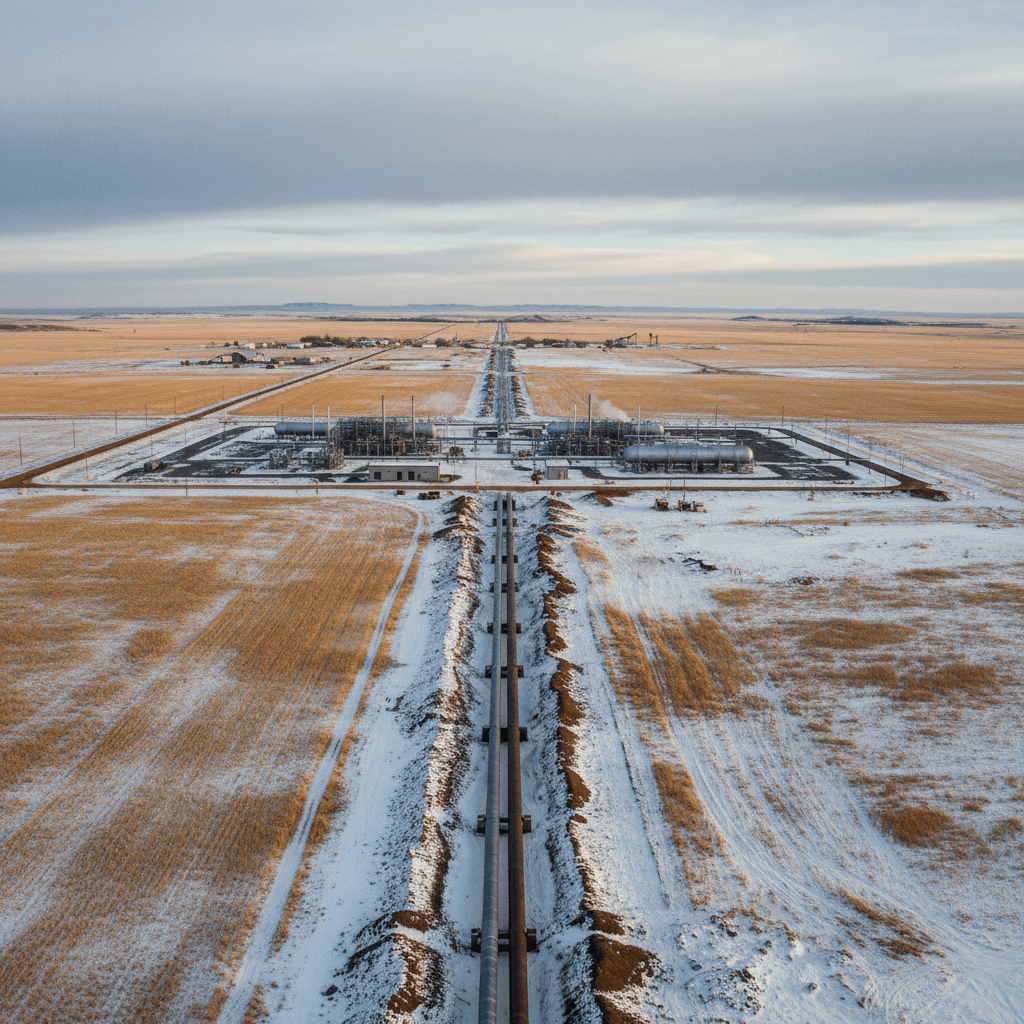
Phillips 66, Kinder Morgan Advance Texas-to-Arizona Pipeline Plan
Project aimed at improving West Coast supply flexibility, with implications for Bakken crude market access.
Pipeline giants Phillips 66 and Kinder Morgan are advancing a proposed pipeline project from Texas to Arizona, according to a report from Rigzone. The development, published Tuesday, indicates the project is moving forward based on strong market interest.
The proposed pipeline is designed to improve supply flexibility and reliability for West Coast markets, Rigzone reported. While the source material does not specify the exact origin in Texas or the pipeline's capacity, such infrastructure projects are critical for connecting major production basins to downstream demand centers.
For Bakken operators in North Dakota, new pipeline capacity to the West Coast represents a potential long-term outlet for crude oil. The Bakken formation is a major oil-producing region, but its landlocked geography makes it reliant on pipeline and rail networks to reach refining markets. Additional pipeline routes to the West could provide more optionality for Bakken shippers, potentially supporting local crude pricing benchmarks.
The advancement of this project by two major midstream companies signals continued industry investment in large-scale logistics. Kinder Morgan and Phillips 66 operate extensive pipeline networks across the United States. Their involvement in a Texas-to-Arizona line suggests a focus on serving refineries in Arizona and California, which have historically received waterborne crude imports and some domestic shipments.
The Rigzone summary cited "strong market interest" as validating the project's role. This typically refers to shippers committing to long-term capacity contracts, which de-risks construction. For the broader Bakken region, the evolution of national pipeline infrastructure can influence the competitive landscape for crude oil, affecting the netback value producers receive after transportation costs.
Source
Rigzone