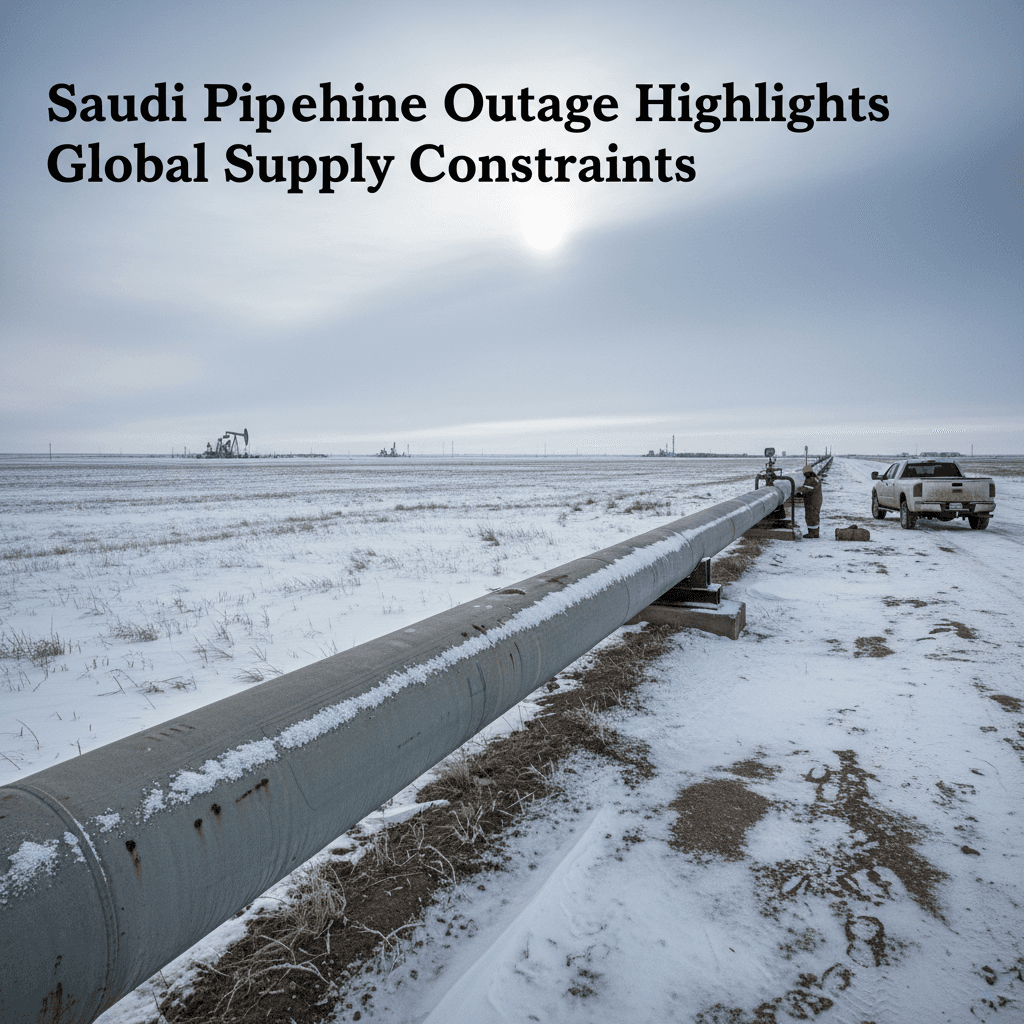
Saudi Pipeline Outage Highlights Global Supply Constraints
Analyst says incident exposes limits of supply optionality, underscoring the strategic value of stable production regions like the Bakken.
Damage to a major Saudi Arabian pipeline is highlighting vulnerabilities in global oil supply chains, according to a new analysis. The incident underscores the continued importance of stable, non-OPEC production basins like North Dakota's Bakken formation.
The damage to Saudi Arabia's East-West pipeline "exposes [the] limits of supply optionality," Emily Ashford, Head of Energy Research at Standard Chartered Bank, outlined in a report covered by Rigzone. The report was published on September 17, 2026.
While the specific operational impact of the Saudi outage is not detailed in the report, the analyst's conclusion points to a broader market reality. Global supply optionality—the ability to quickly reroute or replace large volumes of crude oil—has its constraints. Significant disruptions in key exporting nations can tighten the global supply balance.
For Bakken operators, such global supply shocks reinforce the value of their production. The Bakken formation is a prolific, onshore source of light sweet crude, with its output flowing primarily to U.S. refineries via pipeline and rail. Disruptions in overseas supply can strengthen the relative pricing of domestic crudes like Bakken, improving netbacks for producers.
The incident also indirectly highlights the critical need for robust midstream infrastructure within North America. Efficient pipeline takeaway capacity from the Williston Basin ensures Bakken crude can reach markets reliably, making it a dependable component of U.S. supply. In a world where major international trade routes face occasional disruptions, the security of domestic production and transportation networks becomes a strategic asset.
The analysis, as reported by Rigzone, serves as a reminder that geopolitical and infrastructure risks abroad can have direct implications for the economics of drilling and production in North Dakota.
Source
Analysis from Standard Chartered Bank Energy Research Head Emily Ashford, as reported by Rigzone on September 17, 2026.