WTI Crude--
Brent Crude--
Natural Gas--
ND Rig Count--
WTI Crude--
Brent Crude--
Natural Gas--
ND Rig Count--
Pipeline & Infrastructure

Standing Rock Files New Lawsuit Seeking to Shut Down Dakota Access Pipeline

Tribal Chairman calls for pipeline closure, while opinion piece decries suit as "absurdity" against a decade of safe operation.

Bakken Wire Staff·🌅Afternoon Wire·

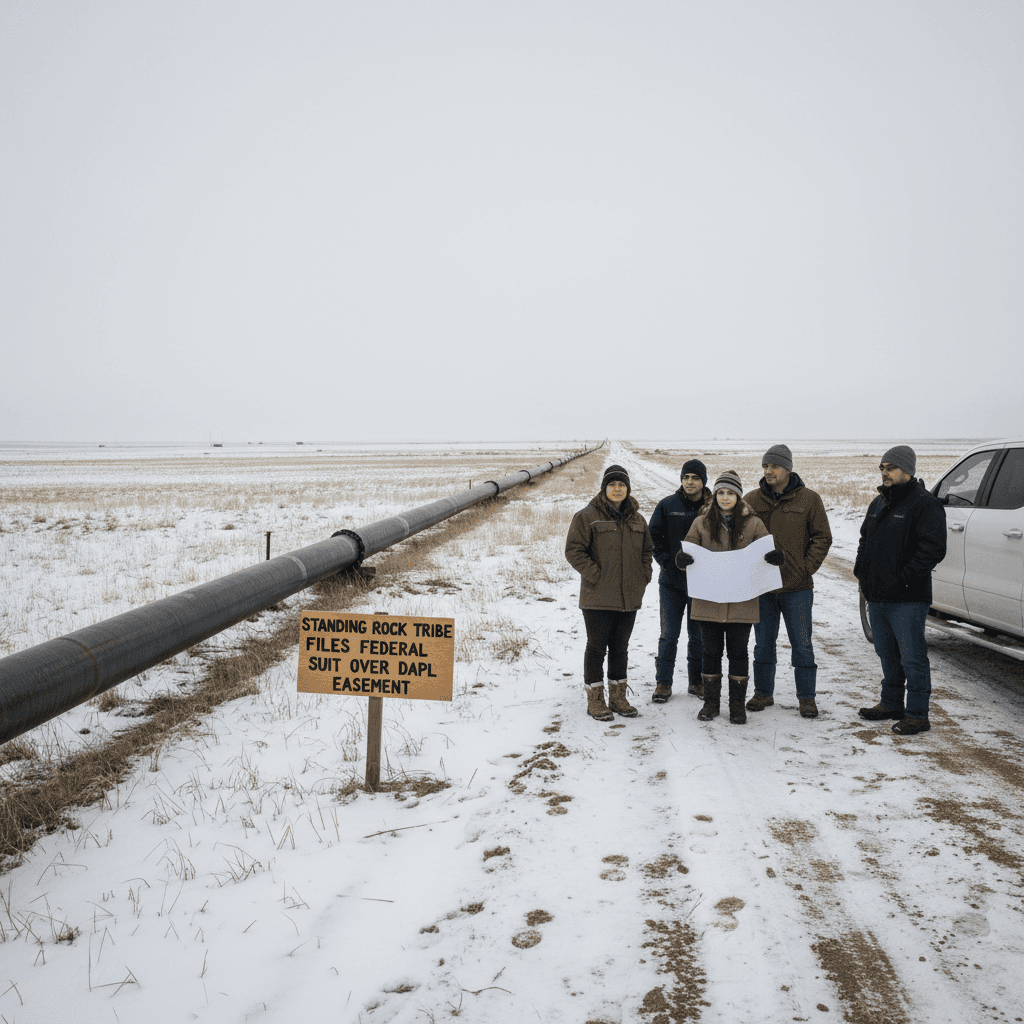
The Standing Rock Sioux Tribe has filed new litigation aimed at shutting down the Dakota Access Pipeline, reigniting a legal battle over the crucial conduit for Bakken oil. Tribal Chairman Steve Sitting Bear announced the lawsuit, stating the Army Corps of Engineers has moved forward without addressing the tribe's longstanding concerns.

“For ten years, Standing Rock’s concerns about this pipeline have not changed, and for ten years we have fought to protect our water, our Treaty rights, and our people,” Sitting Bear said in a press release. “Until this pipeline is shut down, we will continue to defend what generations before us protected for our children.”

The lawsuit challenges the federal easement granted earlier this year for the pipeline to cross the Missouri River upstream from the Lake Oahe reservoir. Chairman Sitting Bear stated, “We should not have to live with unanswered questions about the safety of our water.”

This new legal action was met with sharp criticism in an opinion piece published Monday, which called the lawsuit an "absurdity from an alternate version of reality." The piece argues that safety questions have been "answered empirically, immutably and definitively" by the pipeline's nearly decade-long record of safe operation since 2017.

The opinion column contrasts the tribe's statements with the pipeline's operational history, noting it has been delivering oil for 3,428 days without significant incident. It details that the pipeline was constructed using horizontal directional drilling, placing it between 95 and 115 feet beneath the riverbed in solid geologic formations, with 24-hour monitoring and emergency shut-off valves.

The piece references the comprehensive environmental impact statement ordered by a federal judge in 2020, an exhaustive multi-year review that culminated in a final statement late last year. The Army Corps of Engineers' subsequent granting of the easement is cited as the federal government's definitive action on the matter.

For Bakken operators and North Dakota's oil industry, the pipeline represents a vital piece of infrastructure. The renewed legal challenge introduces uncertainty, though the pipeline continues to operate. The litigation revisits arguments that opponents have maintained since the pipeline's construction, despite its established operational record.

The outcome of this lawsuit will be closely watched by energy companies and royalty owners across the Williston Basin, for whom the Dakota Access Pipeline remains a key route to market for Bakken crude.

Source

Bing News

dakota access pipelinedaplstanding rock sioux tribelitigationarmy corps of engineersinfrastructurebakken

Share this article

Related Articles

Geopolitical Energy Laundering Could Undermine Bakken Market Share in Europe - Bakken Wire
Pipeline & Infrastructure

Geopolitical Energy Laundering Could Undermine Bakken Market Share in Europe

A sophisticated scheme to launder Russian and Iranian crude oil through a sanctioned pipeline corridor could prolong Europe's reliance on non-Western energy, directly impacting future export opportunities for Bakken producers, according to a report from OilPrice.com. European Union regulations call for a complete phase-out of Russian piped gas and crude oil exemptions by December 31, 2027. However, a "massive, highly sophisticated infrastructure back door" is being exploited via the Caspian Pipeline Consortium (CPC), according to the OilPrice.com report. The EU granted a specific legal exemption for the "CPC Blend" crude oil stream on June 3, 2022, justified on the grounds that the underlying volumes originate in Kazakhstan. Since that exemption was granted, annual throughput of this crude has surged from 52 million metric tonnes (about 1.04 million barrels per day) to a record 72 million metric tonnes, a 38.5% increase. However, Kazakhstan’s actual domestic oil production has grown less than...

🔆Midday Wire·Oct 12
Pipeline & Infrastructure

Standing Rock Tribe Challenges New DAPL Easement in Federal Court

The Standing Rock Sioux Tribe filed a federal lawsuit Friday, Oct. 9, challenging the Army Corps of Engineers’ approval of a new Dakota Access Pipeline easement beneath Lake Oahe, according to Bing News. The lawsuit, reported by Bing News from Native News Online, contests the Corps’ approval of a new easement for a crossing that is central to moving crude oil from the Williston Basin to market. For Bakken operators, the case underscores how pipeline infrastructure decisions remain tied to federal permitting, tribal consultation and environmental review. The Dakota Access Pipeline is a major crude oil export route for North Dakota production, and easement approvals beneath Lake Oahe are among the critical land and water crossings that support long-term pipeline operations. Any new federal challenge to a DAPL easement can create uncertainty for producers, midstream companies and royalty owners who depend on stable transportation capacity. Bakken development economics often assume...

🌅Afternoon Wire·Oct 11
Standing Rock Tribe Files Federal Suit Over DAPL Easement - Bakken Wire
Pipeline & Infrastructure

Standing Rock Tribe Files Federal Suit Over DAPL Easement

The Standing Rock Sioux Tribe filed a federal lawsuit Friday, Oct. 9, challenging the U.S. Army Corps of Engineers’ approval of a new Dakota Access Pipeline easement beneath Lake Oahe, according to a report carried by Bing News. The filing revives a long-running legal and permitting dispute over a corridor that matters to crude oil transport from the Williston Basin. The Bakken formation is North Dakota’s primary oil-producing region, and pipeline access remains a critical link between wellsites, storage hubs and downstream markets. DAPL is widely understood as a major crude takeaway route for Bakken production, making easement decisions and court filings a recurring concern for operators, royalty owners and local communities. The lawsuit centers on the Army Corps’ approval of the new easement at Lake Oahe. Easements crossing federal water bodies or Corps-managed land typically involve questions about the agency’s permitting process, environmental review, tribal consultation and compliance with...

🔆Midday Wire·Oct 10