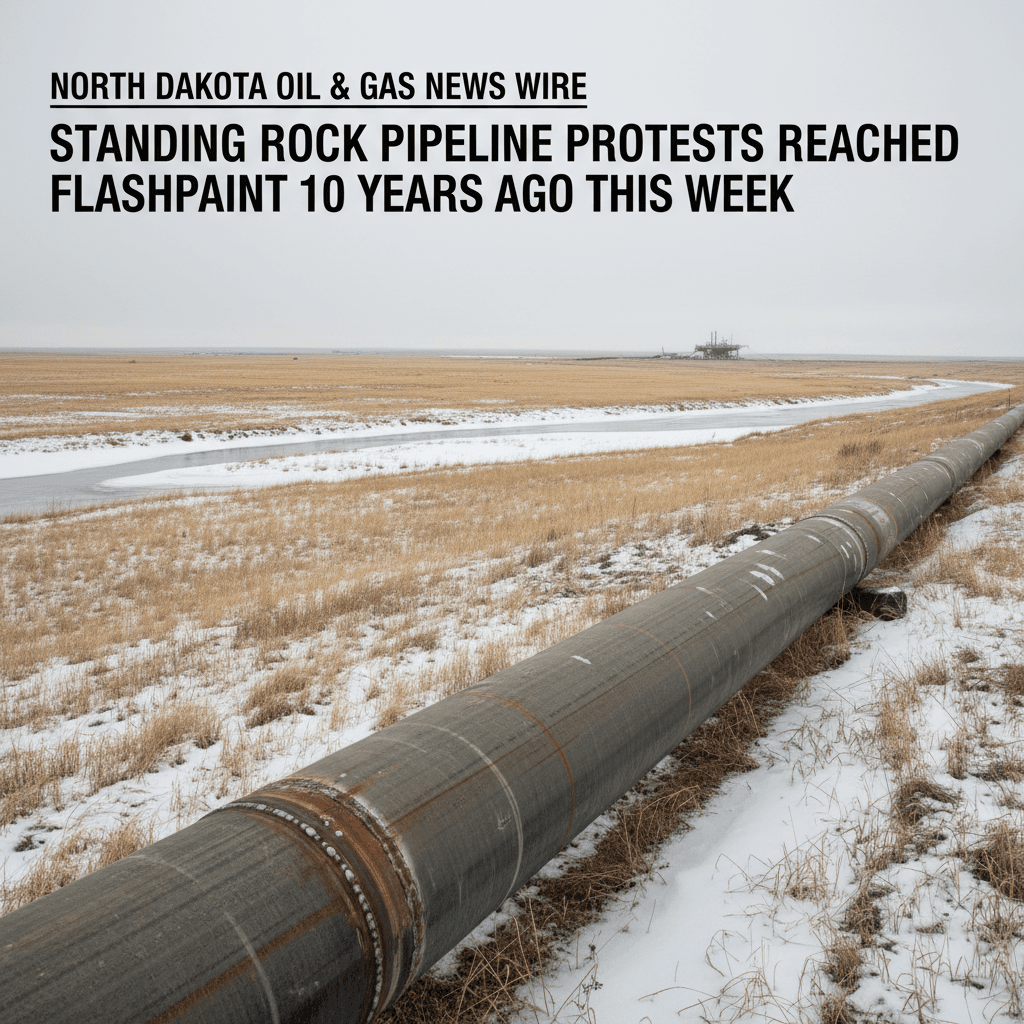
Standing Rock Pipeline Protests Reached Flashpoint 10 Years Ago This Week
The 2016 Dakota Access Pipeline conflict, which pitted energy development against tribal sovereignty, began escalating in early September.
The contentious standoff over the Dakota Access Pipeline reached a critical flashpoint in early September 2016, according to historical reports reviewed by Bakken Wire. The $3.7 billion pipeline project, designed to carry Bakken crude to market, ignited a global protest movement after receiving U.S. Army Corps of Engineers approval.
The decision pitted American energy against tribal sovereignty, according to the report. The Standing Rock Sioux Tribe and thousands of Indigenous and allied protesters argued the pipeline threatened water, sacred sites, and the environment. Developers and state officials maintained that modern steel pipelines offered safer fossil-fuel transit than railroads or trucks.
The protests, initially smaller, intensified dramatically. By early September 2016, thousands of activists had flocked to the plains south of Bismarck. Public figures, including actors Shailene Woodley and Mark Ruffalo and the Rev. Jesse Jackson, arrived in North Dakota to support the tribe. Protesters chained themselves to equipment, built resistance hubs, held prayer runs, blocked roads, and damaged pipeline equipment.
For the pipeline developer, Dakota Access Partners, the protests began costing an estimated $83.3 million per month, according to the source material. Energy Transfer Partners, the developer, grew concerned about pipeline integrity, worker safety, budgets, and profit.
Law enforcement responses escalated alongside the protests. Morton County deputies responded to incidents like one on August 31, 2016, where two protesters used devices to attach themselves to equipment. Before September 2016, arrests totaled 37, primarily for trespassing and disorderly conduct. The situation changed decisively by September 3, 2016.
The legacy of the Dakota Access Pipeline conflict continues to influence infrastructure development in North Dakota. The clash highlighted the complex balancing act between Bakken energy production, critical midstream infrastructure, and sovereign tribal rights. For operators and royalty owners, the event underscored the non-economic risks that can accompany major projects, from construction delays to sustained public opposition.
The pipeline, now operational, remains a vital artery for Bakken crude oil, but the protests of a decade ago serve as a historical marker for the region's energy and cultural landscape.
Source
Bing News (DL-Online)