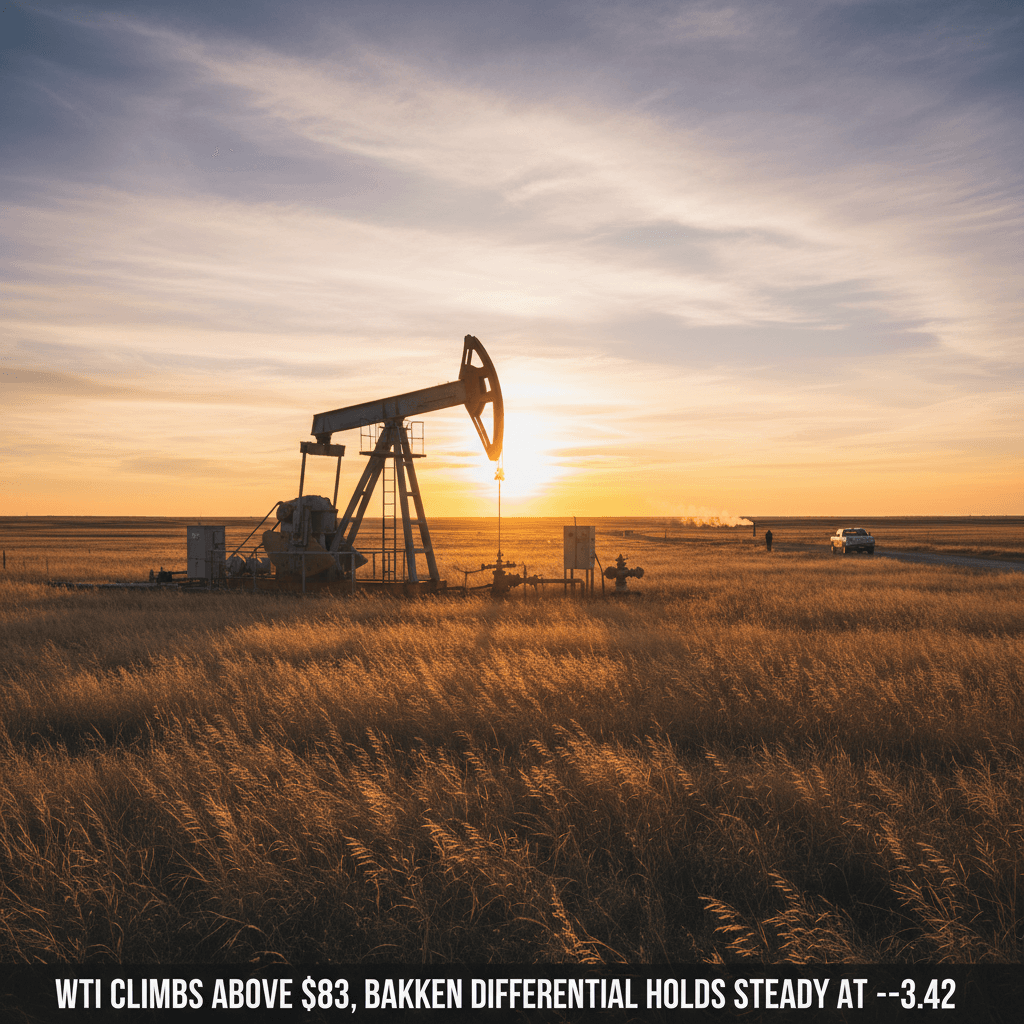
WTI Climbs Above $83, Bakken Differential Holds Steady at -$3.42
Oil prices rise in midday trading as natural gas gains despite EIA's long-term bearish price forecast.
West Texas Intermediate crude oil traded at $83.41 per barrel on Sunday, gaining $0.97 or 1.18% for the session. The global benchmark Brent crude rose to $89.95, a more modest increase of $0.51. The price for Bakken crude, a key indicator for North Dakota producers, held at a differential of $3.42 per barrel below WTI.
Natural gas prices also saw upward movement, with the commodity trading at $3.75 per MMBtu, a gain of $0.07. This near-term strength comes despite a longer-term bearish outlook from federal forecasters.
According to Rigzone, the U.S. Energy Information Administration projected in its latest short-term energy outlook that the U.S. Henry Hub spot price will drop in both 2026 and 2027. The EIA's outlook, published November 20, suggests downward pressure on natural gas prices in the coming years, contrasting with the current session's gains.
For Bakken operators, the current price environment provides a stable revenue outlook. With WTI above $83, Bakken crude is effectively priced near $80 per barrel after accounting for the regional differential. This level is generally considered supportive for continued drilling and completion activity in the Williston Basin.
The steady differential indicates consistent transportation logistics and market demand for the region's light, sweet crude. A narrow or stable discount to WTI is crucial for maximizing wellhead revenues and supporting operator margins.
The midday price strength in oil, if sustained, could contribute to positive sentiment among producers and royalty owners. However, the EIA's projection for lower natural gas prices in 2026 and 2027 highlights a potential headwind for operators with significant associated gas production, which is common in the Bakken formation. Lower gas prices can reduce the overall value of a well's production stream.
Market participants will continue to monitor broader factors including global supply decisions, inventory levels, and macroeconomic trends for direction. The current prices support active operations in North Dakota's primary oil-producing region.
Source
Live price data, Rigzone reporting on EIA outlook published November 20, 2026.