WTI Crude$--/bbl +0.00 (+0.00%)
Brent Crude$--/bbl +0.00 (+0.00%)
Natural Gas$--/MMBtu +0.00 (+0.00%)
ND Rig Count-- +0 WoW
WTI Crude$--/bbl +0.00 (+0.00%)
Brent Crude$--/bbl +0.00 (+0.00%)
Natural Gas$--/MMBtu +0.00 (+0.00%)
ND Rig Count-- +0 WoW
Bakken Rig Count Holds at 22 as Surging Oil Prices Boost Economic Outlook - Bakken Wire
Workforce & Community

Bakken Rig Count Holds at 22 as Surging Oil Prices Boost Economic Outlook

Workforce and housing demand remain stable at current activity levels, with higher crude prices strengthening regional operator cash flow.

Bakken Wire Staff·🔆Midday Wire·

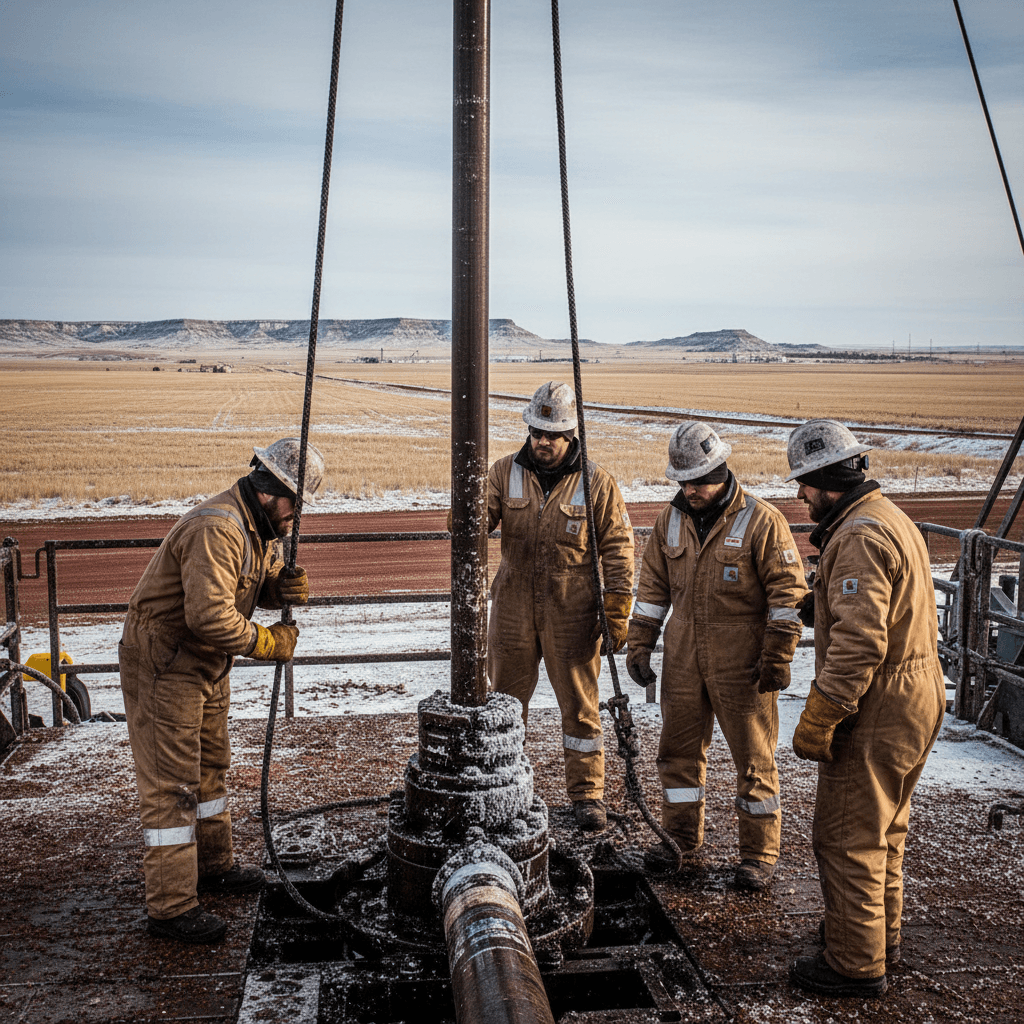
The active rig count in North Dakota's Bakken formation held steady at 22 for the week, according to live Bakken Wire data. This level of drilling activity, combined with a sharp rally in crude oil prices, points to continued stability for the region's workforce and local economies.

West Texas Intermediate (WTI) crude surged to $87.58 per barrel on Monday, a gain of $4.99 or 6.04%. The international Brent benchmark rose to $95.56. The price for Bakken crude at the wellhead is typically discounted against WTI; the current differential is -$3.42 per barrel. Natural gas prices were recorded at $2.71 per MMBtu.

The rig count is a primary indicator of oilfield employment, directly driving demand for drilling crews, completions teams, and associated service company jobs. A count in the low 20s represents a moderate, sustained level of activity for the modern Bakken, which has seen counts over 200 during previous boom periods. At this pace, hiring is likely focused on maintaining core operations rather than rapid expansion.

Housing markets and municipal revenues in western North Dakota communities are closely tied to oilfield activity. A stable rig count typically correlates with steady demand for rental housing and commercial space, avoiding the severe shortages seen during boom times or the vacancies that accompany busts. Local sales tax revenues often follow this trend, funding essential services.

The significant jump in oil prices, if sustained, improves the cash flow and profitability for Bakken operators. This financial strength supports capital expenditure budgets, which can influence longer-term hiring and contracting decisions. However, operators have largely prioritized shareholder returns and debt reduction over aggressive production growth in recent years, which tempers the immediate impact of price swings on hiring.

The current environment suggests a period of equilibrium for Bakken workforce dynamics. Employment is supported by the existing rig count and production maintenance, while soaring prices provide a favorable backdrop for the regional economy without necessarily triggering a rapid scale-up in activity that could strain community infrastructure.

Source

Bakken Wire Live Data as of Monday, April 20, 2026
rig countemploymenthousingoil priceswtibakken differentiallocal economyworkforce

Share this article

Related Articles

Bakken Rig Count Holds at 24 as Oil Prices Retreat from Highs - Bakken Wire
Workforce & Community

Bakken Rig Count Holds at 24 as Oil Prices Retreat from Highs

The North Dakota oil and gas industry is operating with 24 active drilling rigs as of midday Friday, April 24, according to live Bakken Wire data. This count, a key indicator of field activity and employment, has remained in the mid-20s range in recent months, pointing to a stabilized operational tempo in the Bakken formation. The current activity level is a fraction of the boom-era highs but represents a consistent baseline for the region's core operators. A steady rig count typically correlates with stable demand for field workers, from drilling crews to completion and production personnel, providing predictability for the local workforce after years of volatility. Midday price action showed West Texas Intermediate (WTI) crude trading at $93.54 per barrel, down $2.31 or 2.41% on the day. The global benchmark Brent crude was at $98.49, down 0.87%. The Bakken crude differential—the discount at which local crude trades against WTI—was $3.42....

🔆Midday Wire·Apr 24
Bakken Rig Count Holds at 22 as Oil Prices Rally Above $94 - Bakken Wire
Workforce & Community

Bakken Rig Count Holds at 22 as Oil Prices Rally Above $94

North Dakota's Bakken oil region continues to operate with a stable level of drilling activity, with the state's active rig count holding at 22 on Thursday, April 23, 2026. This operational tempo, coupled with a significant rally in oil prices, provides a consistent backdrop for local employment and community economies in western North Dakota. The benchmark WTI crude price rose $1.69 to $94.65 per barrel, a gain of 1.82%, while Brent crude climbed to $103.81. The Bakken crude differential stood at -$3.42 against WTI. Historically, the number of active drilling rigs is a direct indicator of oilfield employment levels, encompassing jobs for drillers, service crews, transportation, and support staff. A steady rig count suggests a corresponding stability in the oilfield workforce. The relationship between oil activity and community impact in the Bakken is well-established. When drilling activity is high and sustained, it drives demand for housing, supports local businesses from...

🔆Midday Wire·Apr 23
Bakken Rig Count Holds at 21 as Crude Rally Boosts Revenue - Bakken Wire
Workforce & Community

Bakken Rig Count Holds at 21 as Crude Rally Boosts Revenue

The number of active drilling rigs in North Dakota remained unchanged at 21 for the week, according to live Bakken Wire data. This count represents a sustained period of low activity that continues to define the operational landscape in the Bakken formation. The stability in rig activity comes alongside a significant rally in oil markets. West Texas Intermediate crude surged $3.94 to settle at $86.53 per barrel on Monday, April 20, a gain of 4.77%. The global Brent benchmark also rose sharply, adding $4.33 to reach $94.71. The price for Bakken crude, priced at a discount of $3.42 to WTI, would be approximately $83.11 per barrel. In the Bakken, the rig count is a primary leading indicator for direct oilfield employment, including drilling crews, roustabouts, and field service personnel. A count of 21 rigs suggests a stabilized but historically low level of drilling activity. This plateau, after a period of...

🌅Afternoon Wire·Apr 20