Bakken Rig Count Holds at 24 as Oil Prices Retreat from Highs
Steady activity level suggests stable workforce demand despite a midday dip in crude benchmarks.
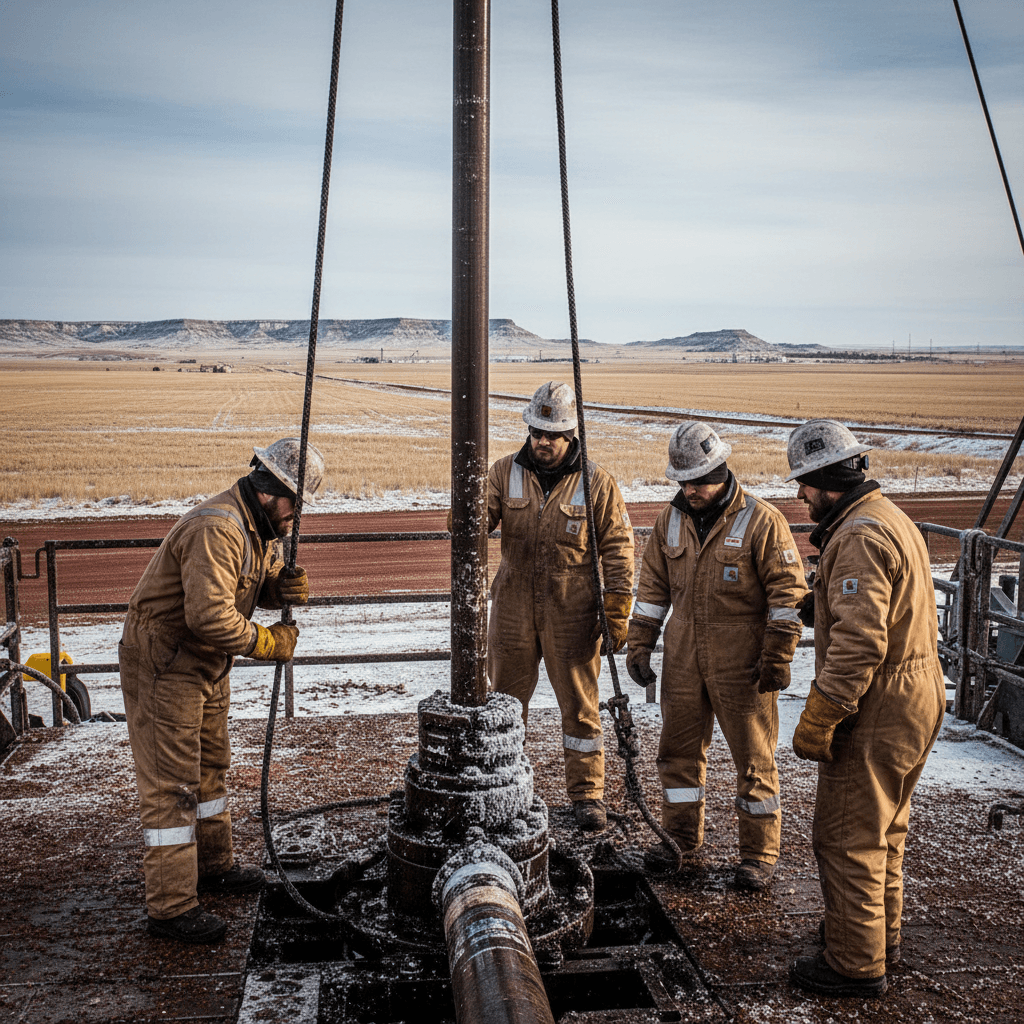
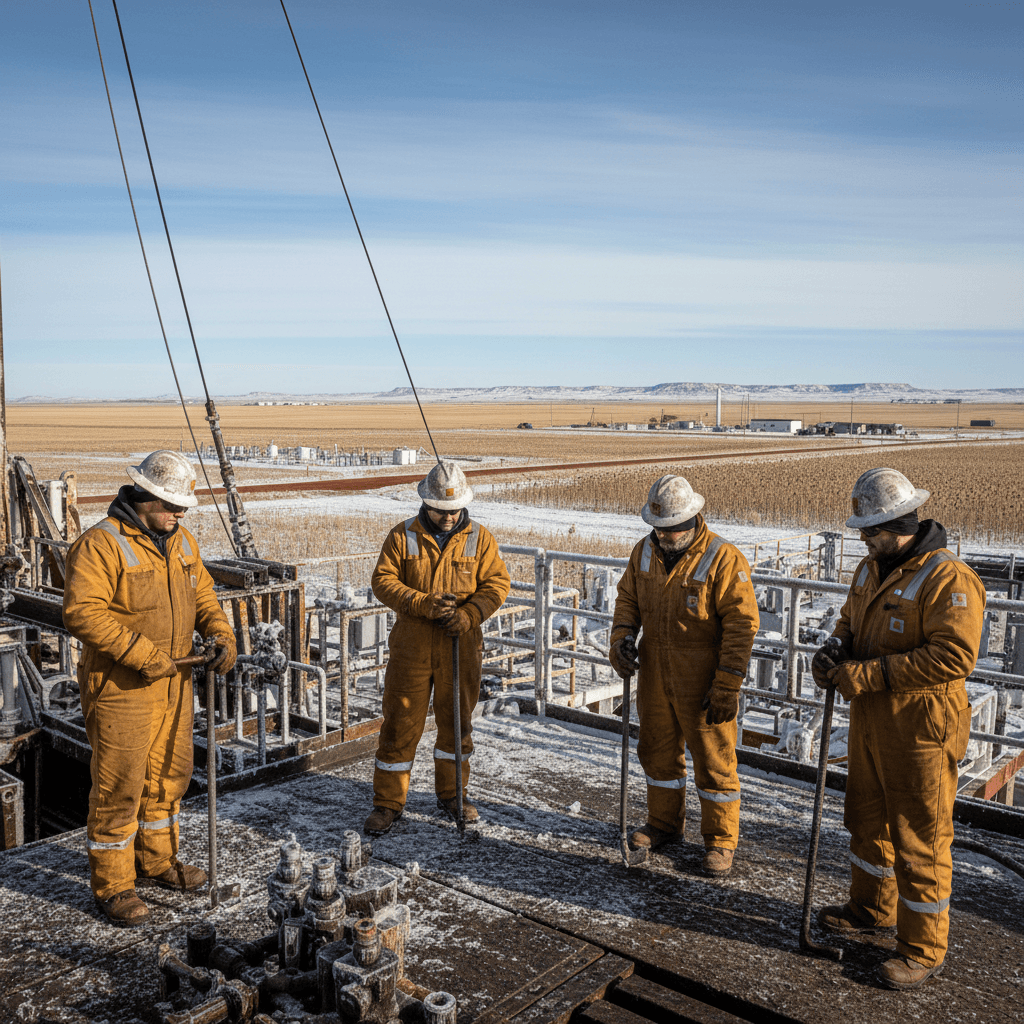
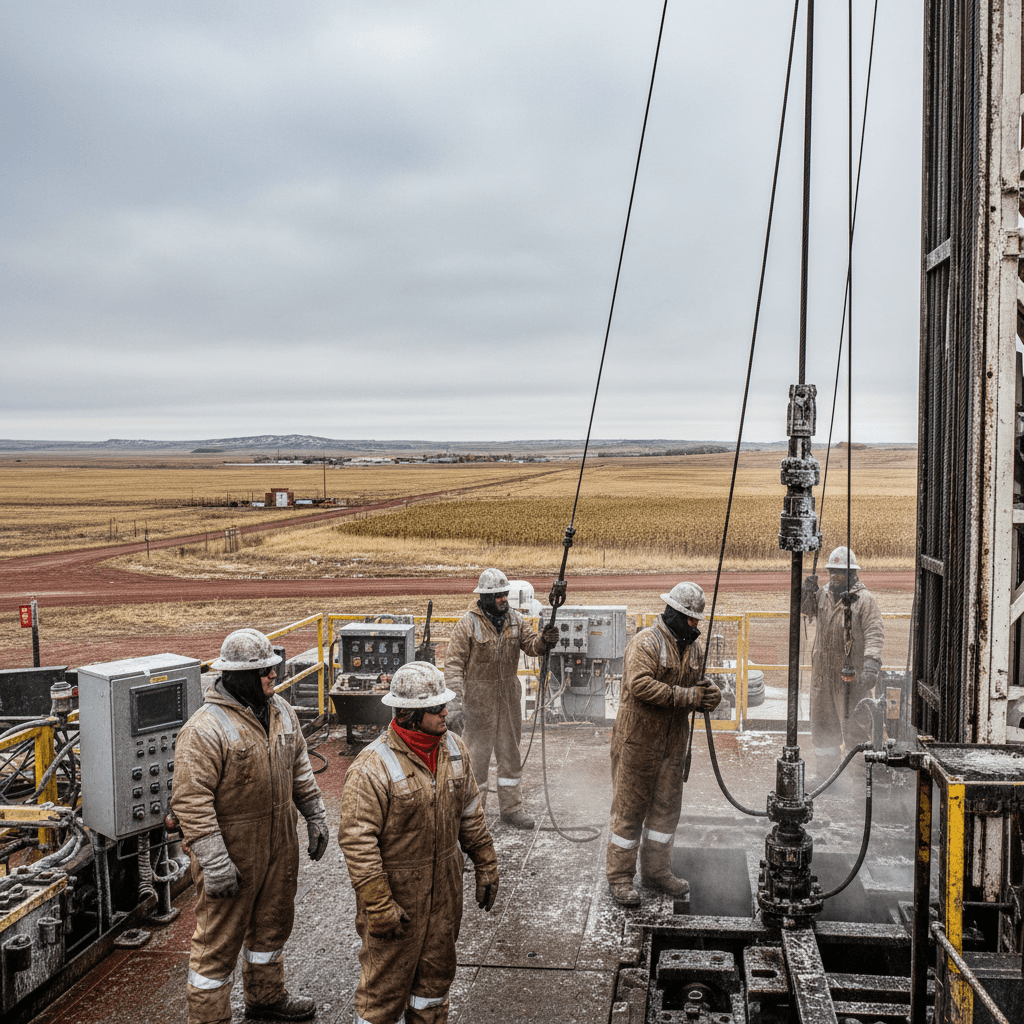
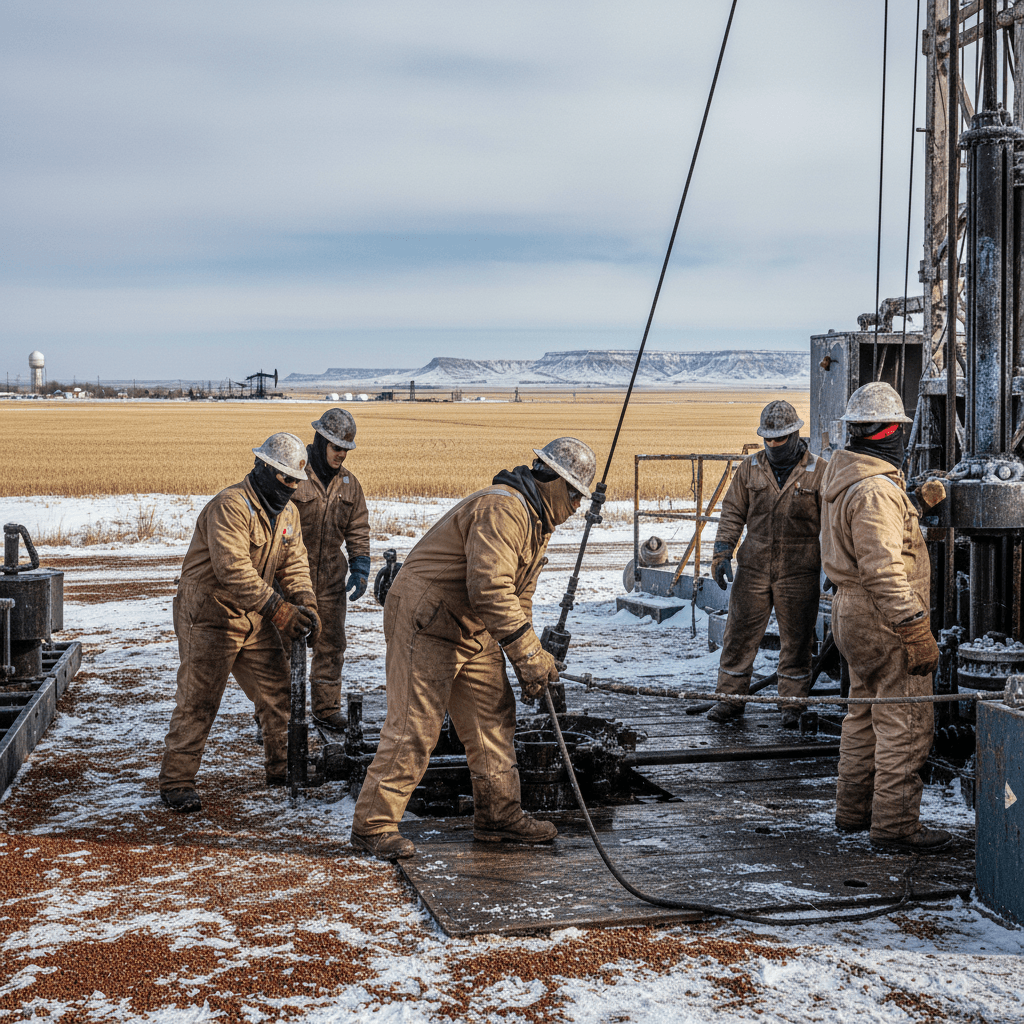
The North Dakota oil and gas industry is operating with 24 active drilling rigs as of midday Friday, April 24, according to live Bakken Wire data. This count, a key indicator of field activity and employment, has remained in the mid-20s range in recent months, pointing to a stabilized operational tempo in the Bakken formation.
The current activity level is a fraction of the boom-era highs but represents a consistent baseline for the region's core operators. A steady rig count typically correlates with stable demand for field workers, from drilling crews to completion and production personnel, providing predictability for the local workforce after years of volatility.
Midday price action showed West Texas Intermediate (WTI) crude trading at $93.54 per barrel, down $2.31 or 2.41% on the day. The global benchmark Brent crude was at $98.49, down 0.87%. The Bakken crude differential—the discount at which local crude trades against WTI—was $3.42. While prices remain supportive for drilling, the pullback from recent multi-month highs may reinforce a cautious approach to accelerating activity.
The relationship between rig count, oil prices, and community health is direct in western North Dakota. Sustained activity supports not only oilfield jobs but also service companies, trucking firms, and equipment suppliers. Housing markets in communities like Williston, Watford City, and Dickinson, which experienced extreme strain during previous booms, are more balanced during periods of steady, moderate activity.
Local tax revenues, heavily dependent on oil production and extraction taxes, benefit from consistent output. Current production levels, sustained by the existing rig fleet drilling new wells and a large inventory of drilled but uncompleted wells (DUCs), help maintain municipal and county budgets without the inflationary pressures of a rapid expansion.
Natural gas prices, reported at $2.65 per MMBtu, remain a persistent challenge for operators, limiting the economic incentive to capture associated gas and impacting gas-focused midstream and processing employment.
For royalty owners, the current environment of stable production and moderately high oil prices continues to generate reliable monthly income. The midday price dip serves as a reminder of the commodity's inherent volatility, but the foundational activity level signaled by the rig count suggests near-term continuity for the region's economic engine.
Source
Bakken Wire live data as of April 24, 2026