WTI Crude--
Brent Crude--
Natural Gas--
ND Rig Count--
WTI Crude--
Brent Crude--
Natural Gas--
ND Rig Count--
Bakken Rig Count Holds at 23 as Oil Price Slide Tests Workforce Stability - Bakken Wire
Workforce & Community

Bakken Rig Count Holds at 23 as Oil Price Slide Tests Workforce Stability

Western North Dakota communities face renewed economic pressure as crude prices drop over 5%, keeping drilling activity at a low plateau.

Bakken Wire Staff·🔆Midday Wire·

The active rig count in North Dakota held steady at 23 on Tuesday, a level indicative of subdued drilling activity that continues to shape workforce and community dynamics across the Bakken region. The stability in rigs comes amid a sharp midday sell-off in oil markets, with West Texas Intermediate crude trading at $78.43, down $4.18 or 5.06% for the day, according to live Bakken Wire data.

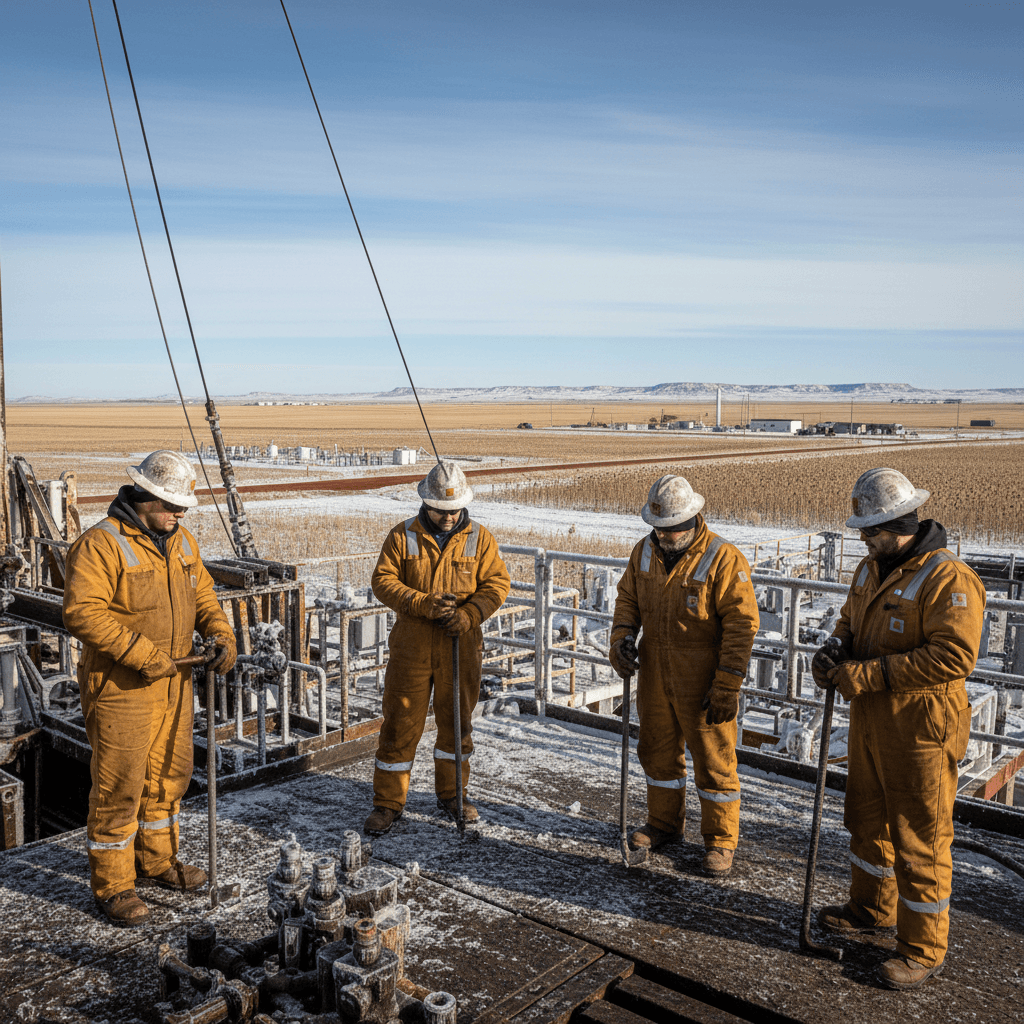
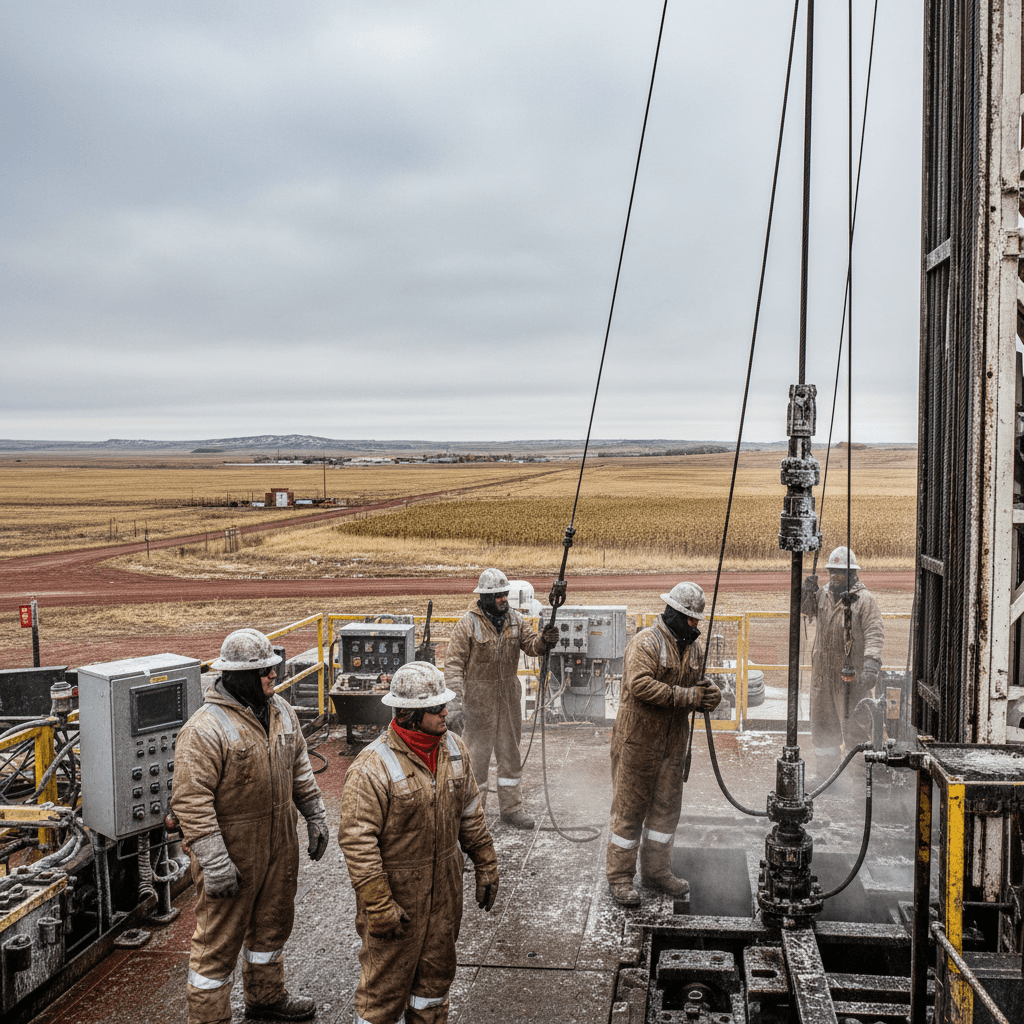
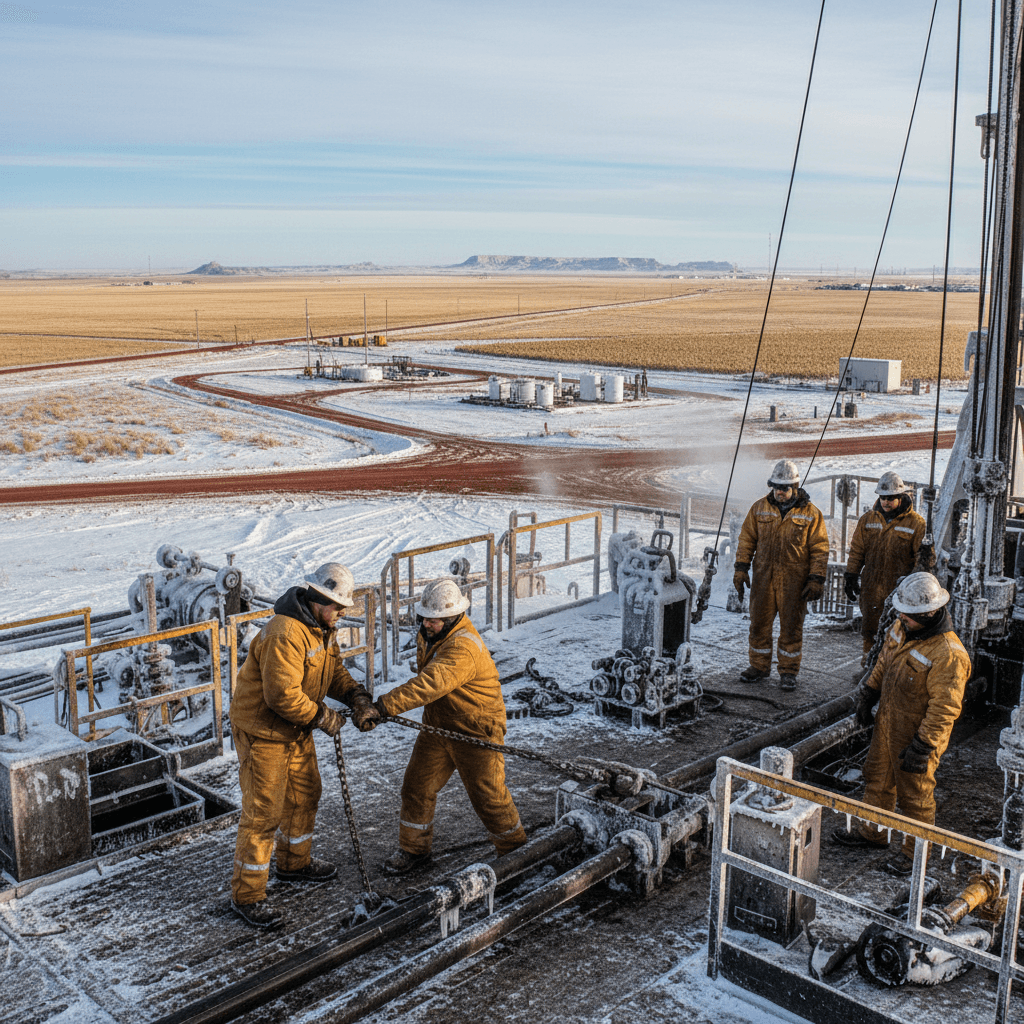
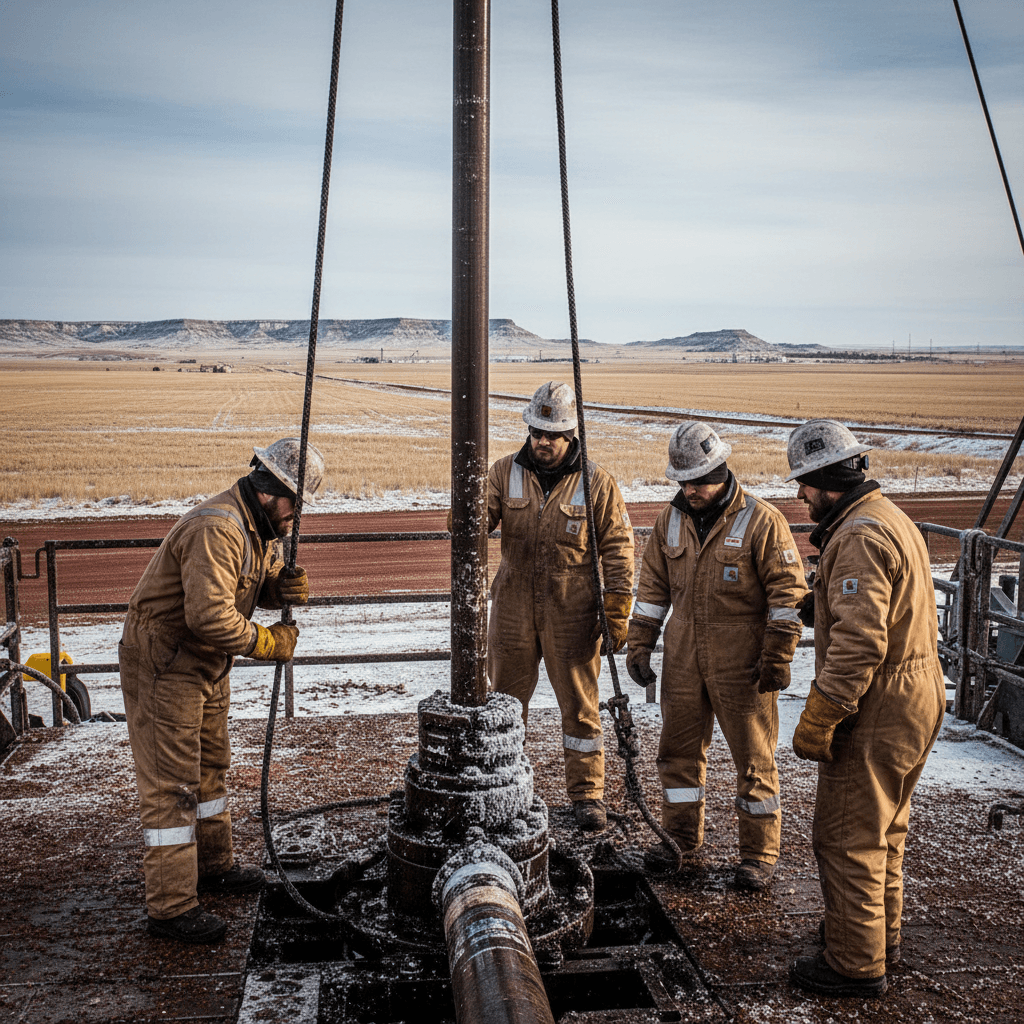
The current rig count, a primary driver of direct oilfield employment, remains near multi-year lows, suggesting a tight labor market for drilling and completion crews. Historically, rig counts below 30 correlate with reduced demand for field workers, decreased man-camp occupancy, and less pressure on local housing markets in oil-producing counties like McKenzie, Williams, and Mountrail.

"Rig activity is the heartbeat of the Bakken economy," said a longtime Williston business owner, speaking on background about the broader trends. "When it's low and stable like this, it allows communities to catch their breath from the boom cycles, but it also means fewer high-wage jobs supporting local businesses."

The midday price plunge, which also saw Brent crude fall 5.35% to $83.63, introduces fresh uncertainty for operators' near-term budgets. The Bakken differential—the discount for Bakken crude compared to WTI—was recorded at $-3.42, providing a net price at the wellhead of approximately $75.01. Sustained prices at this level could reinforce capital discipline and limit any near-term increase in activity that would spur hiring.

For local economies, a low and stable rig count translates to predictable sales tax revenues and steady demand for services, avoiding the wild swings of the past. However, it also caps the potential for significant population growth and the associated strain—or stimulus—for housing, schools, and infrastructure. The current environment suggests a period of consolidation rather than expansion for the regional workforce.

The price of natural gas, a secondary revenue stream for many Bakken wells, was listed at $2.69 per MMBtu, a level that does little to incentivize increased gas capture or processing investments that would create construction jobs.

The combined data paints a picture of a Bakken region in a holding pattern. Communities built to withstand the volatility of the oil patch are navigating an era of moderated activity, where workforce stability is preferred over boom-bust cycles but overall economic vitality remains closely tethered to the fortunes of crude oil.

Source

Bakken Wire live data as of Tuesday, July 28, 2026.
rig countemploymentoil pricesbakken differentiallocal economynorth dakotaworkforcehousing

Share this article

Related Articles

Bakken Rig Count Holds at 34 as Strong Prices Support Regional Stability - Bakken Wire
Workforce & Community

Bakken Rig Count Holds at 34 as Strong Prices Support Regional Stability

The number of active drilling rigs in North Dakota held steady at 34, according to live Bakken data for Thursday, August 20, 2026. This operational tempo, supported by West Texas Intermediate crude trading at $86.48 per barrel, provides a baseline for the region's workforce and local economies. In the Bakken formation, the rig count is a leading indicator for direct and indirect employment. A count in the mid-30s suggests a stabilized industry posture, sustaining core oilfield jobs but without the rapid hiring surges or steep layoffs associated with more volatile periods. The current price environment, with WTI up $2.09 on the day, offers operators the economic confidence to maintain this pace of development. The relationship between drilling activity and community impact is direct. Steady rig counts support consistent demand for housing, from man-camps to rental units, helping to stabilize vacancy rates and prices in communities like Williston, Dickinson, and Watford...

🌅Afternoon Wire·Aug 20
Bakken Rig Count Holds at 33 as Oil Prices Surge - Bakken Wire
Workforce & Community

Bakken Rig Count Holds at 33 as Oil Prices Surge

The number of active drilling rigs in North Dakota's Bakken formation remained at 33 on Thursday, according to live data, holding steady as oil prices posted significant gains. West Texas Intermediate (WTI) crude rose $2.07 to $86.46 per barrel, a 2.45% increase. The international benchmark, Brent crude, also climbed to $93.57 per barrel. The current rig count reflects a stabilized level of drilling activity in the region. This figure, while substantially higher than the lows seen during industry downturns, remains far below the peak of over 200 rigs active in the Bakken during the early 2010s boom. The direct employment tied to drilling and completion crews is closely correlated to this rig count. Industry analysts note that the relationship between oil prices, rig activity, and local community impact in western North Dakota is direct. Sustained higher commodity prices, as seen with WTI holding above $86, provide the economic incentive for...

🔆Midday Wire·Aug 20
Bakken Rig Count Holds at 33 Amid Stable Oil Prices - Bakken Wire
Workforce & Community

Bakken Rig Count Holds at 33 Amid Stable Oil Prices

The active rig count in North Dakota held steady at 33 on Tuesday, as oil prices posted modest gains, indicating a period of sustained but moderate activity for the Bakken region's workforce and communities. West Texas Intermediate crude traded at $84.53 per barrel, according to midday data. The current rig level, while significantly below the peak boom years, represents a stable operational base for the state's primary oil-producing region. Analysts typically view rig count as a leading indicator for oilfield employment, with each active rig supporting a wide range of direct and indirect jobs. "For communities in the Williston Basin, the rig count is a pulse check," said a longtime Bakken industry observer. "Thirty-three rigs suggests a focused, efficient industry that supports local businesses and provides steady employment without the extreme boom-bust cycles of the past." The stability in activity is reflected in local housing and commercial real estate markets,...

🔆Midday Wire·Aug 18