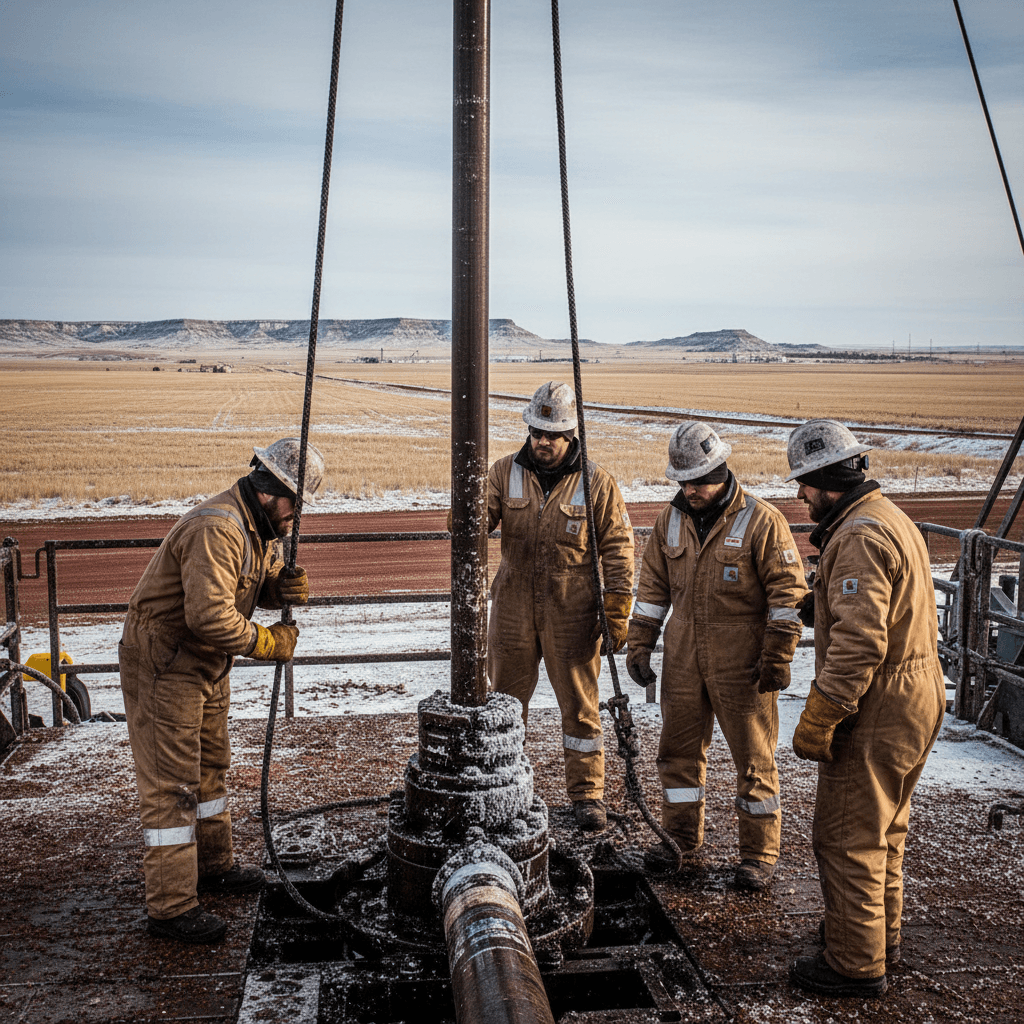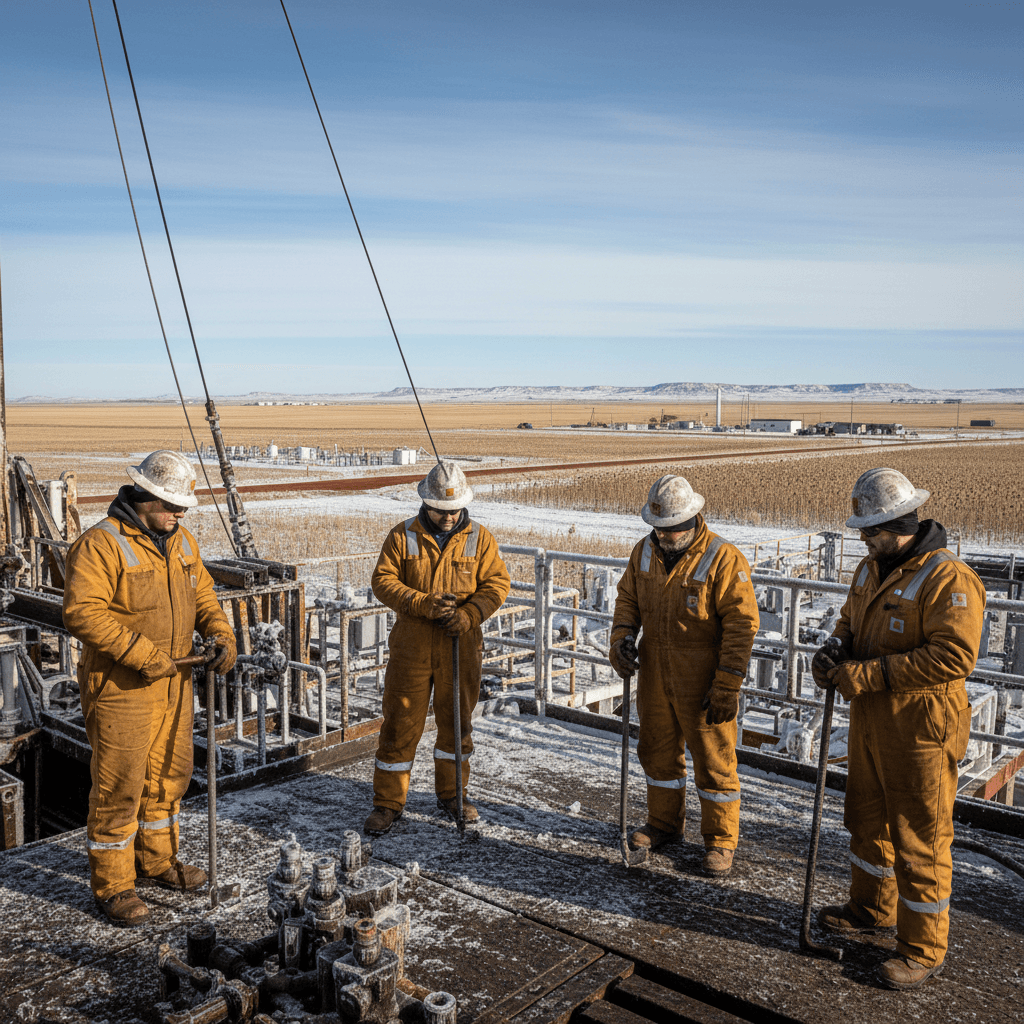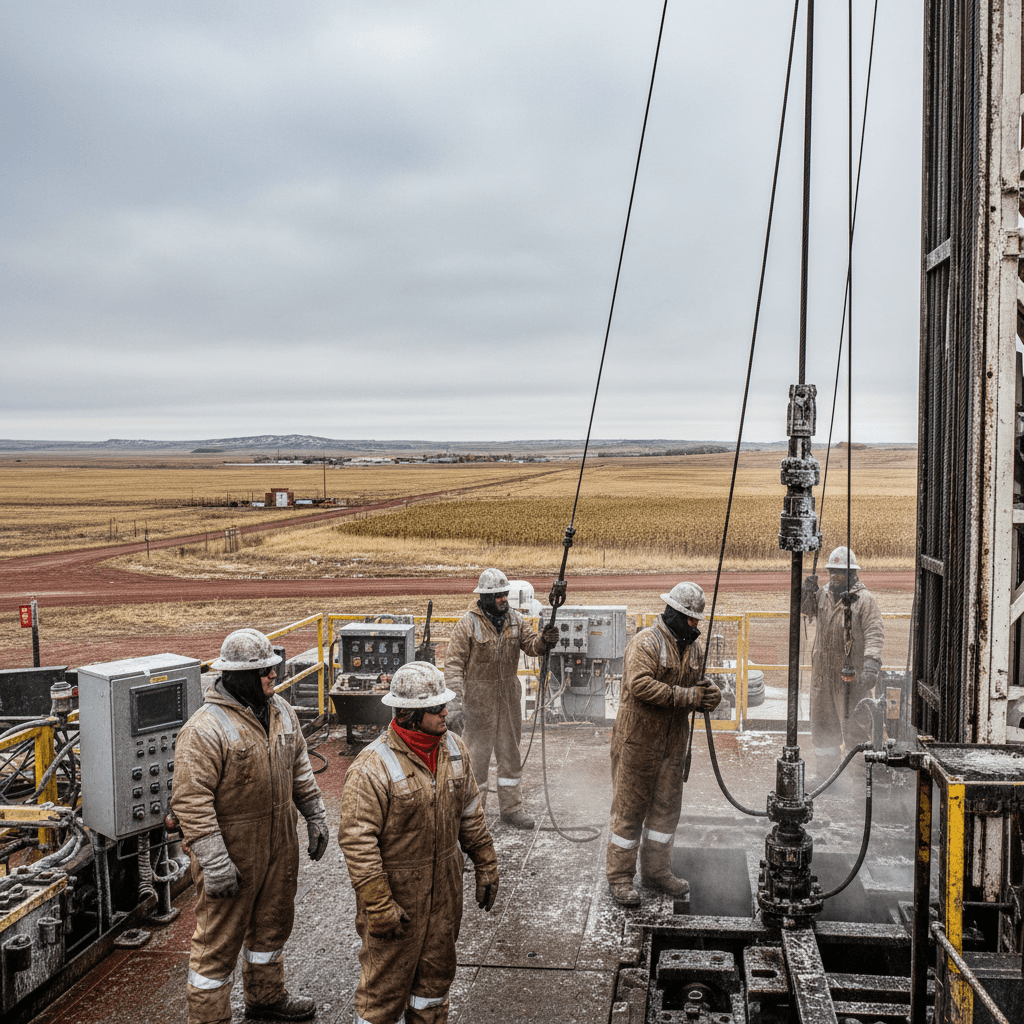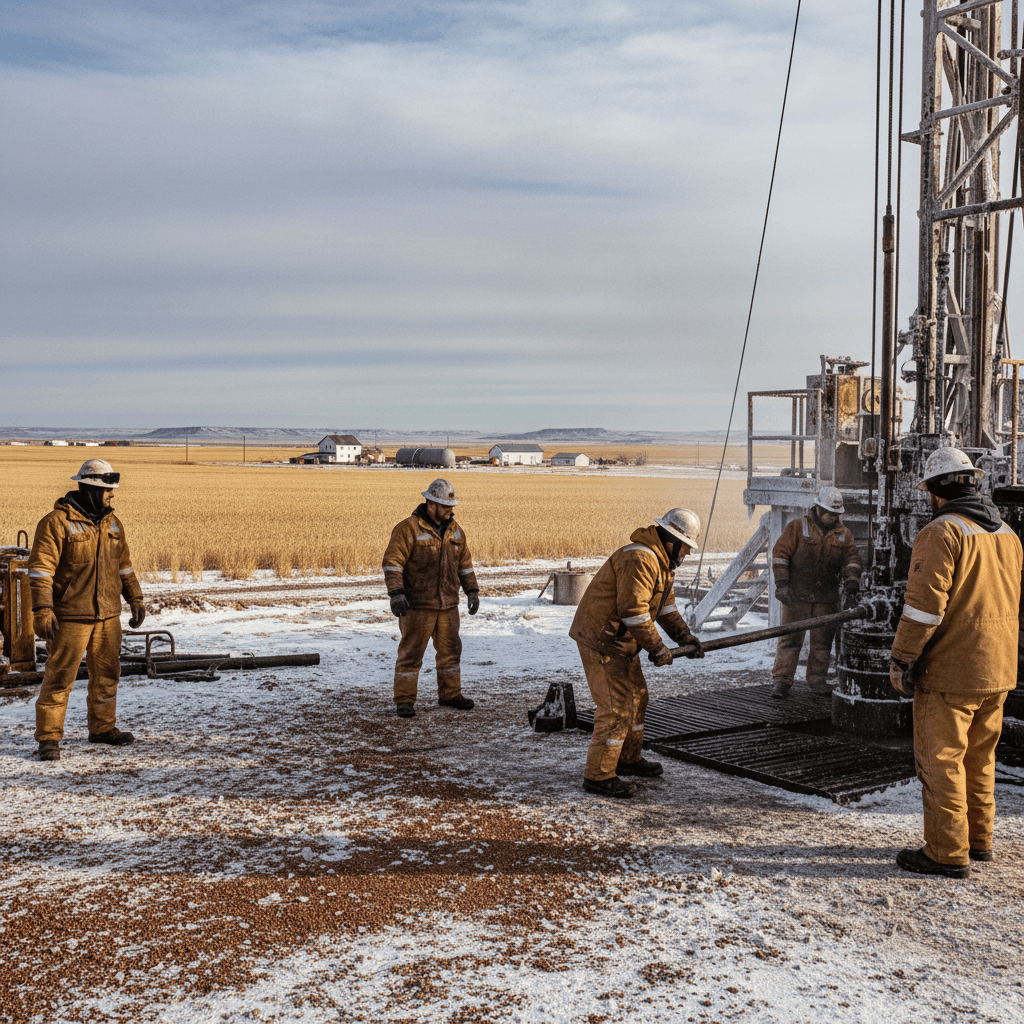
Bakken Rig Count Holds at 23 as Oil Prices Surge Past $98
High crude prices bolster operator economics, but stable drilling activity suggests measured workforce and community impact in North Dakota's oil region.
The active drilling rig count in North Dakota held steady at 23 on Monday, May 11, 2026, as global oil prices surged, providing a strong revenue backdrop for Bakken shale operators. West Texas Intermediate (WTI) crude settled at $98.01 per barrel, a gain of $2.59, while the international Brent benchmark rose to $104.06.
The current rig level, a key indicator of future oil production and employment, remains significantly below the boom-era peaks but reflects a stabilized pace of activity. The high price environment, with Bakken crude priced at a $3.42 discount to WTI, supports drilling economics but has not yet triggered a sharp increase in new well permits or rig mobilization.
For Bakken workforce and communities, this dynamic suggests a period of consistency rather than rapid expansion. Direct oilfield employment, including drilling, completion, and production crews, is closely tied to the rig count. A stable count near two dozen rigs indicates steady demand for field personnel without the intense hiring pressures or labor shortages seen during previous cycles.
The impact on local economies in western North Dakota, including housing and service sectors, follows a similar pattern. Periods of high rig counts historically led to housing crunches, increased cost of living, and strained public infrastructure. The current activity level is more likely to sustain existing demand for housing and commercial services without overwhelming capacity.
Municipal and county budgets, which rely heavily on oil and gas tax revenues, benefit from sustained production at higher price points. Strong oil prices increase the value of each barrel produced, boosting state and local tax collections even if the number of new wells remains flat. This revenue supports community services and infrastructure maintenance.
The natural gas price, reported at $2.89 per MMBtu, remains a secondary factor for the primarily oil-focused Bakken, though it influences the economics of gas capture and processing investments.
Source
Bakken Wire Live Data for May 11, 2026