WTI Crude--
Brent Crude--
Natural Gas--
ND Rig Count--
WTI Crude--
Brent Crude--
Natural Gas--
ND Rig Count--
Bakken Rig Count Holds at 27 Amid Subdued Oil Prices - Bakken Wire
Workforce & Community

Bakken Rig Count Holds at 27 Amid Subdued Oil Prices

Steady activity level suggests stable employment and community conditions in North Dakota's oil region, despite slight dip in crude benchmarks.

Bakken Wire Staffยท๐ŸŒ…Afternoon Wireยท

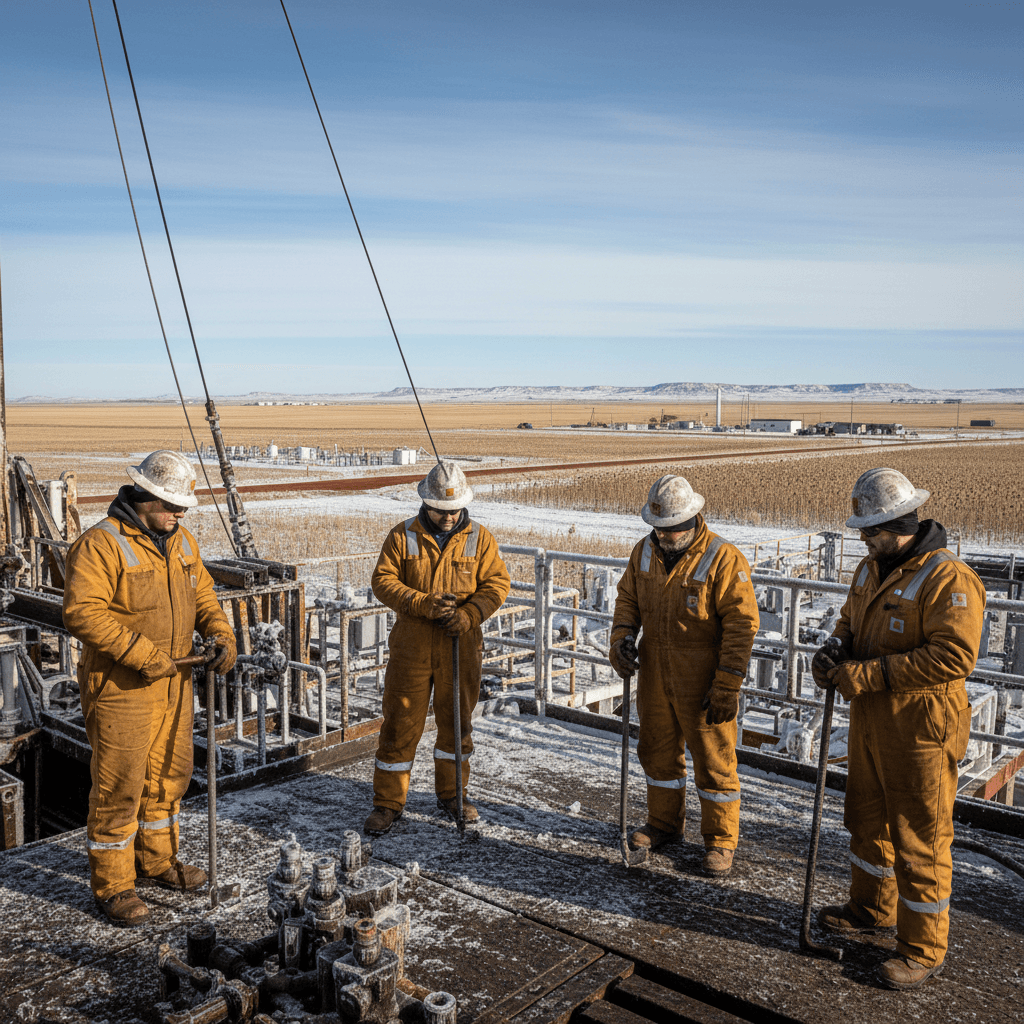
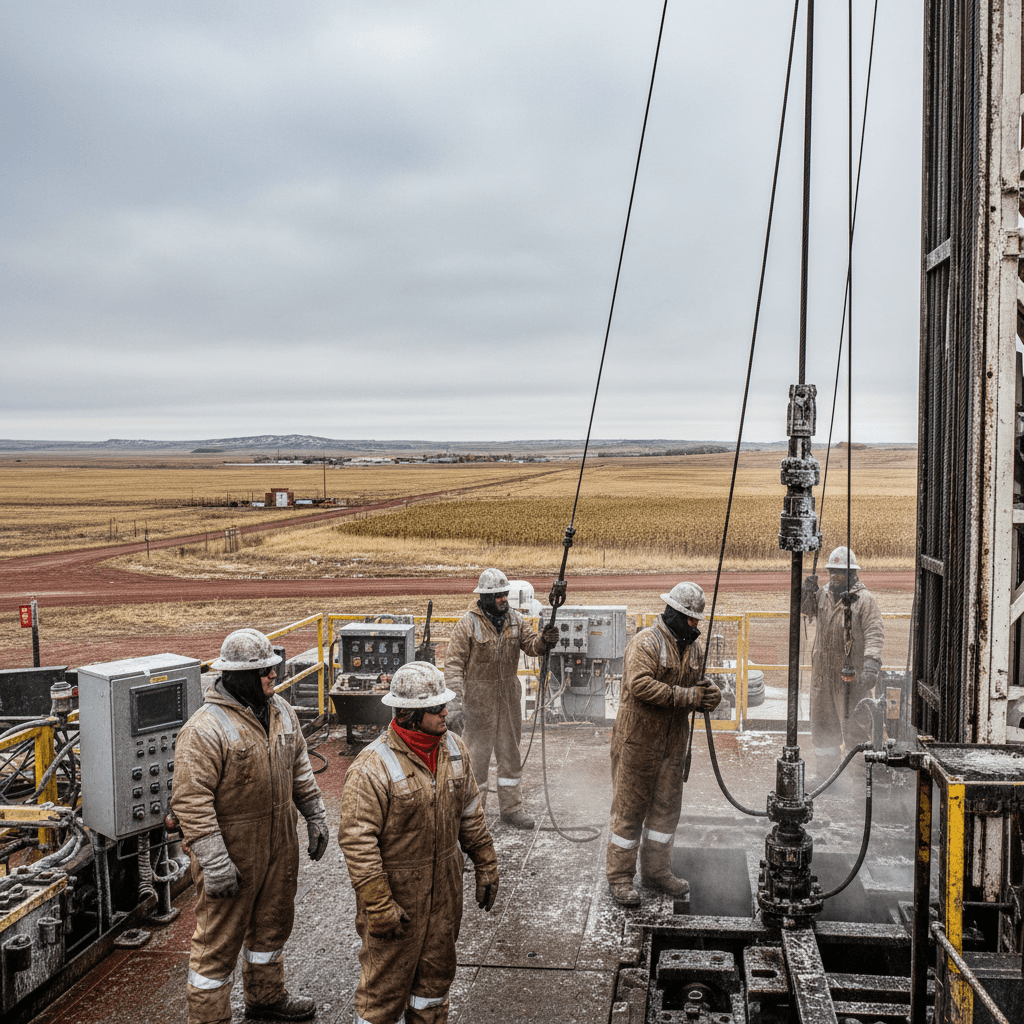
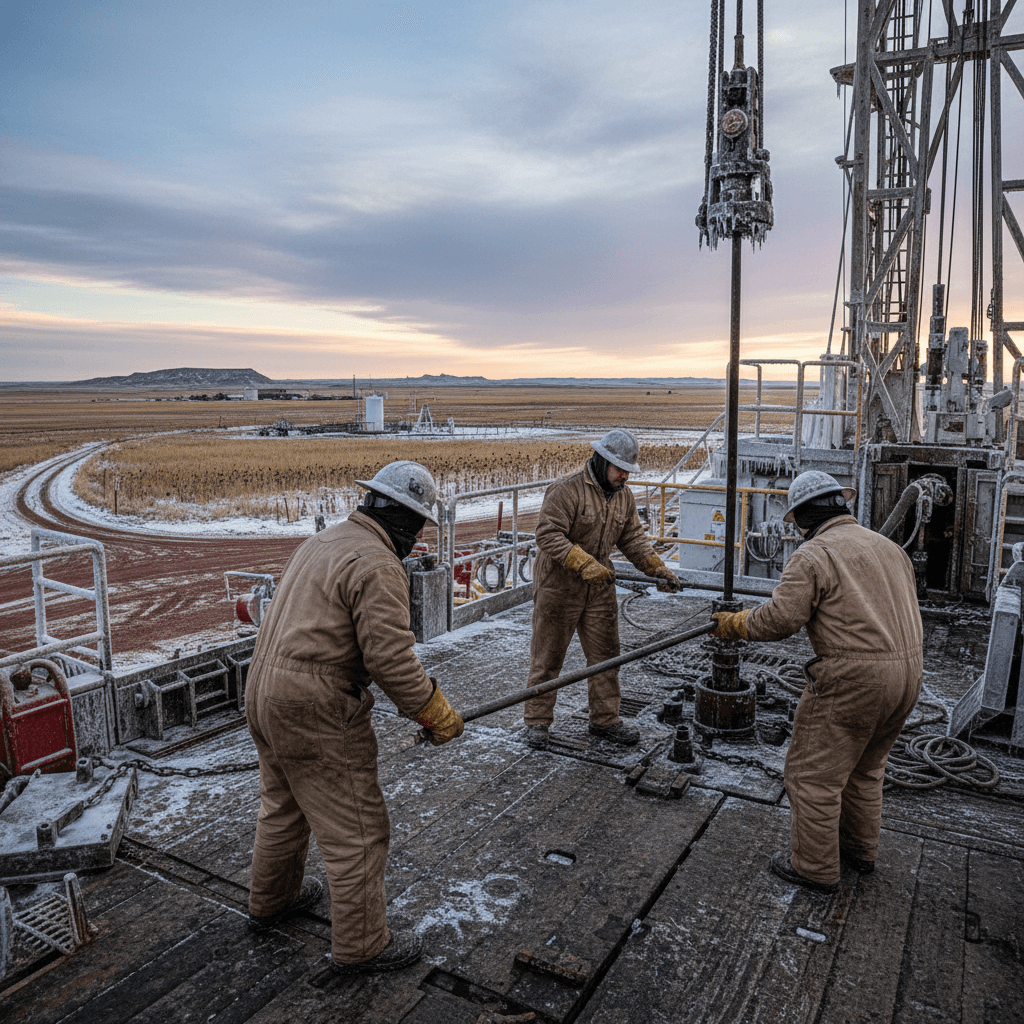
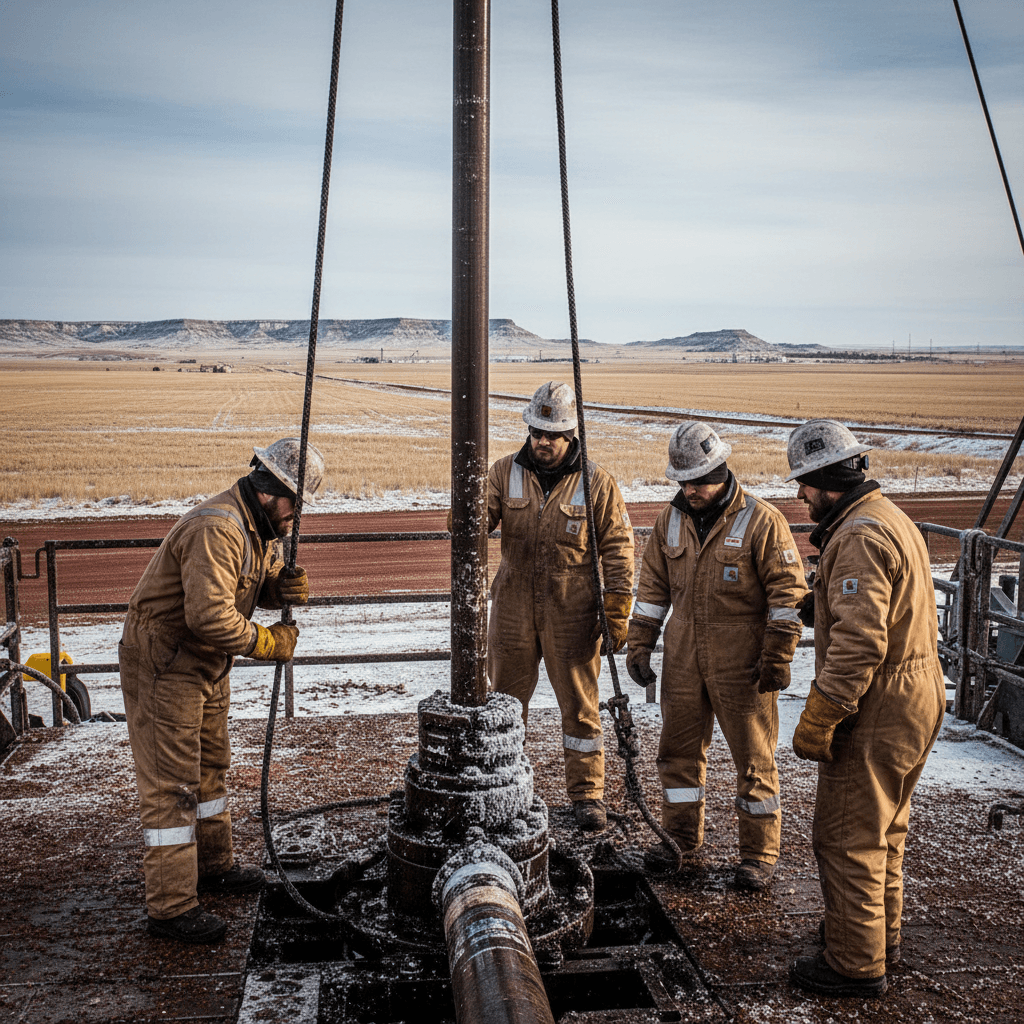
The active drilling rig count in North Dakota held steady at 27 as of Wednesday, June 17, 2026, according to live Bakken data. This plateau in operational activity, coupled with moderately priced crude oil, points toward a period of workforce and economic stability for the region's oil-dependent communities.

West Texas Intermediate (WTI) crude traded at $75.04 per barrel, down 31 cents for the day, while the international Brent benchmark was $78.67. The Bakken crude differential was $-3.42 versus WTI. Industry analysts generally consider these price levels sufficient to support measured, but not aggressive, drilling campaigns in the play.

The rig count is a primary indicator of direct oilfield employment, influencing demand for drillers, fracking crews, and well service personnel. A count in the mid-to-high 20s, sustained over time, suggests a consistent level of jobs without the severe boom-and-bust cycles that have historically challenged the region. This stability aids long-term workforce planning for both operators and service companies.

Beyond direct employment, the activity level has cascading effects on local economies. A stable rig count supports service industries, from trucking and logistics to hotels and restaurants in hubs like Williston, Dickinson, and Watford City. It also influences the housing market; a dramatic surge in rigs can lead to shortages and inflated rents, while a sharp decline can leave vacancies. The current figure is unlikely to trigger major swings in housing demand.

The health of the Bakken oil sector remains foundational to North Dakota's state finances and the prosperity of western North Dakota communities. Royalty payments to mineral owners, tax revenues for local governments, and spending by industry workers are all tied to the pace of drilling and production. The current environment of steady, if unspectacular, activity provides a predictable economic baseline.

While the rig count is stable, the slight daily decline in oil prices underscores the constant market pressures facing operators. Profitability margins are influenced by the price of Bakken crude, which is discounted against the WTI benchmark. Continued discipline in capital spending by producers is expected to maintain the current operational tempo absent a significant shift in commodity prices.

Source

Live Bakken Data, June 17, 2026
rig countemploymentbakken economyworkforcehousingoil pricesnorth dakota

Share this article

Related Articles

Bakken Rig Count Holds at 34 as Strong Prices Support Regional Stability - Bakken Wire
Workforce & Community

Bakken Rig Count Holds at 34 as Strong Prices Support Regional Stability

The number of active drilling rigs in North Dakota held steady at 34, according to live Bakken data for Thursday, August 20, 2026. This operational tempo, supported by West Texas Intermediate crude trading at $86.48 per barrel, provides a baseline for the region's workforce and local economies. In the Bakken formation, the rig count is a leading indicator for direct and indirect employment. A count in the mid-30s suggests a stabilized industry posture, sustaining core oilfield jobs but without the rapid hiring surges or steep layoffs associated with more volatile periods. The current price environment, with WTI up $2.09 on the day, offers operators the economic confidence to maintain this pace of development. The relationship between drilling activity and community impact is direct. Steady rig counts support consistent demand for housing, from man-camps to rental units, helping to stabilize vacancy rates and prices in communities like Williston, Dickinson, and Watford...

๐ŸŒ…Afternoon WireยทAug 20
Bakken Rig Count Holds at 33 as Oil Prices Surge - Bakken Wire
Workforce & Community

Bakken Rig Count Holds at 33 as Oil Prices Surge

The number of active drilling rigs in North Dakota's Bakken formation remained at 33 on Thursday, according to live data, holding steady as oil prices posted significant gains. West Texas Intermediate (WTI) crude rose $2.07 to $86.46 per barrel, a 2.45% increase. The international benchmark, Brent crude, also climbed to $93.57 per barrel. The current rig count reflects a stabilized level of drilling activity in the region. This figure, while substantially higher than the lows seen during industry downturns, remains far below the peak of over 200 rigs active in the Bakken during the early 2010s boom. The direct employment tied to drilling and completion crews is closely correlated to this rig count. Industry analysts note that the relationship between oil prices, rig activity, and local community impact in western North Dakota is direct. Sustained higher commodity prices, as seen with WTI holding above $86, provide the economic incentive for...

๐Ÿ”†Midday WireยทAug 20
Bakken Rig Count Holds at 33 Amid Stable Oil Prices - Bakken Wire
Workforce & Community

Bakken Rig Count Holds at 33 Amid Stable Oil Prices

The active rig count in North Dakota held steady at 33 on Tuesday, as oil prices posted modest gains, indicating a period of sustained but moderate activity for the Bakken region's workforce and communities. West Texas Intermediate crude traded at $84.53 per barrel, according to midday data. The current rig level, while significantly below the peak boom years, represents a stable operational base for the state's primary oil-producing region. Analysts typically view rig count as a leading indicator for oilfield employment, with each active rig supporting a wide range of direct and indirect jobs. "For communities in the Williston Basin, the rig count is a pulse check," said a longtime Bakken industry observer. "Thirty-three rigs suggests a focused, efficient industry that supports local businesses and provides steady employment without the extreme boom-bust cycles of the past." The stability in activity is reflected in local housing and commercial real estate markets,...

๐Ÿ”†Midday WireยทAug 18