WTI Crude--
Brent Crude--
Natural Gas--
ND Rig Count--
WTI Crude--
Brent Crude--
Natural Gas--
ND Rig Count--
Bakken Rig Count Holds at 27 as Oil Prices Trade Above $90 - Bakken Wire
Workforce & Community

Bakken Rig Count Holds at 27 as Oil Prices Trade Above $90

Stable, moderate activity level suggests a steady demand for labor and support services in western North Dakota communities.

Bakken Wire Staff·🔆Midday Wire·

The number of active drilling rigs in North Dakota held steady at 27 this week, according to Bakken Wire live data, as oil prices continued to trade at elevated levels. West Texas Intermediate (WTI) crude was priced at $90.88 per barrel on Thursday, a gain of nearly 1% on the day.

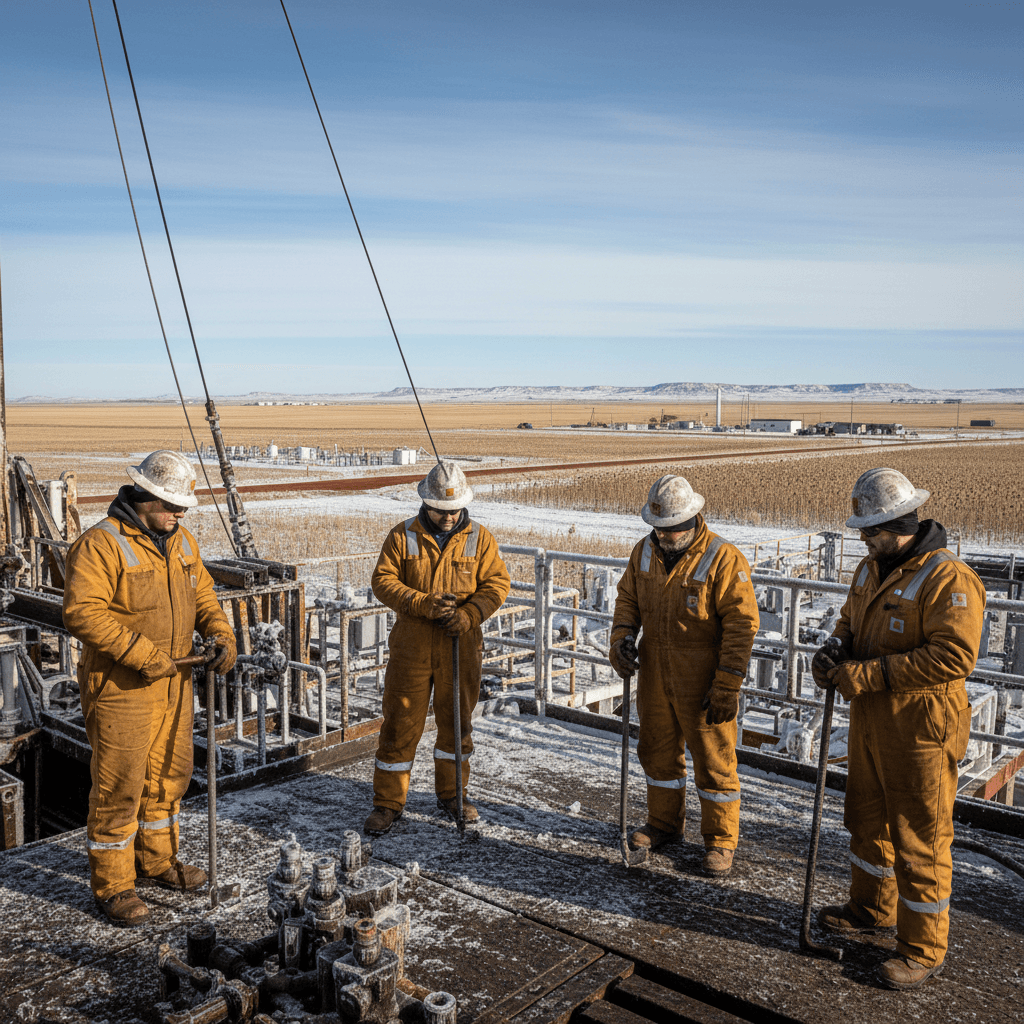
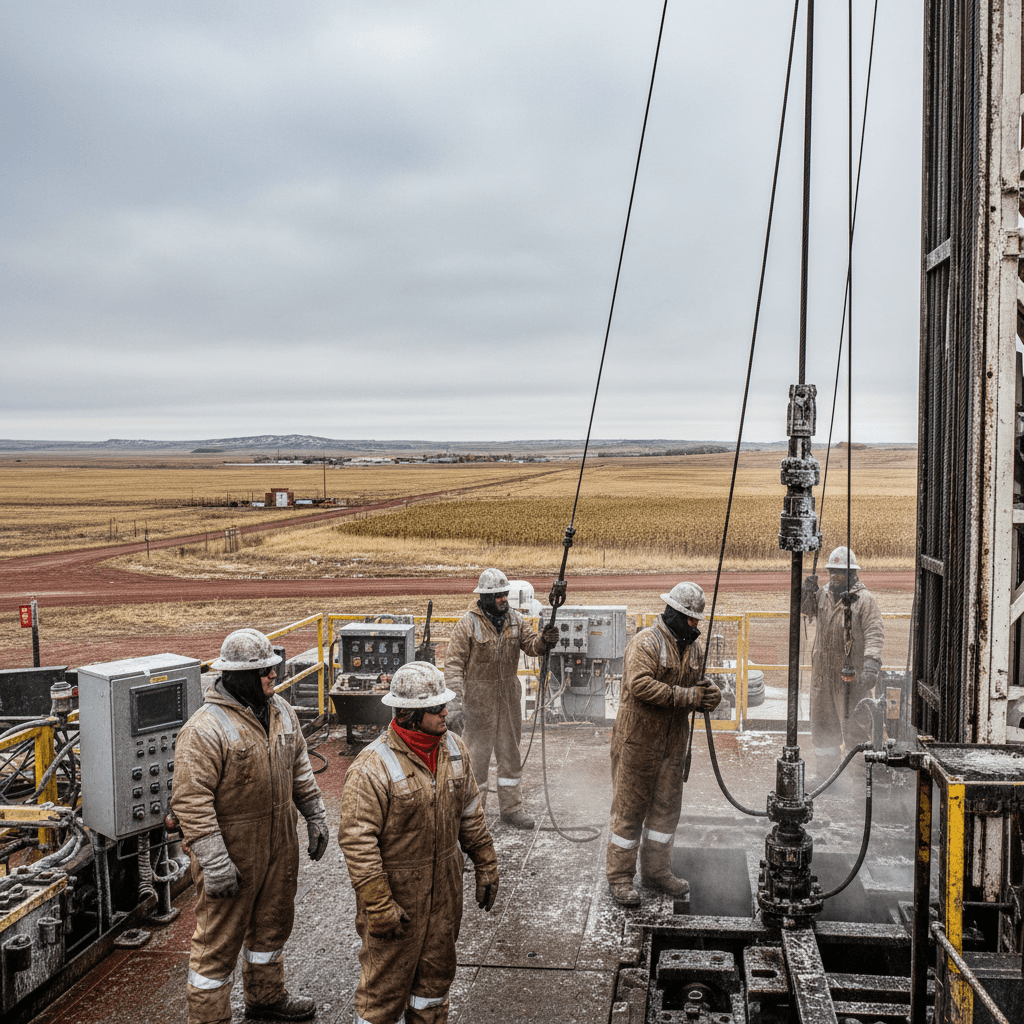
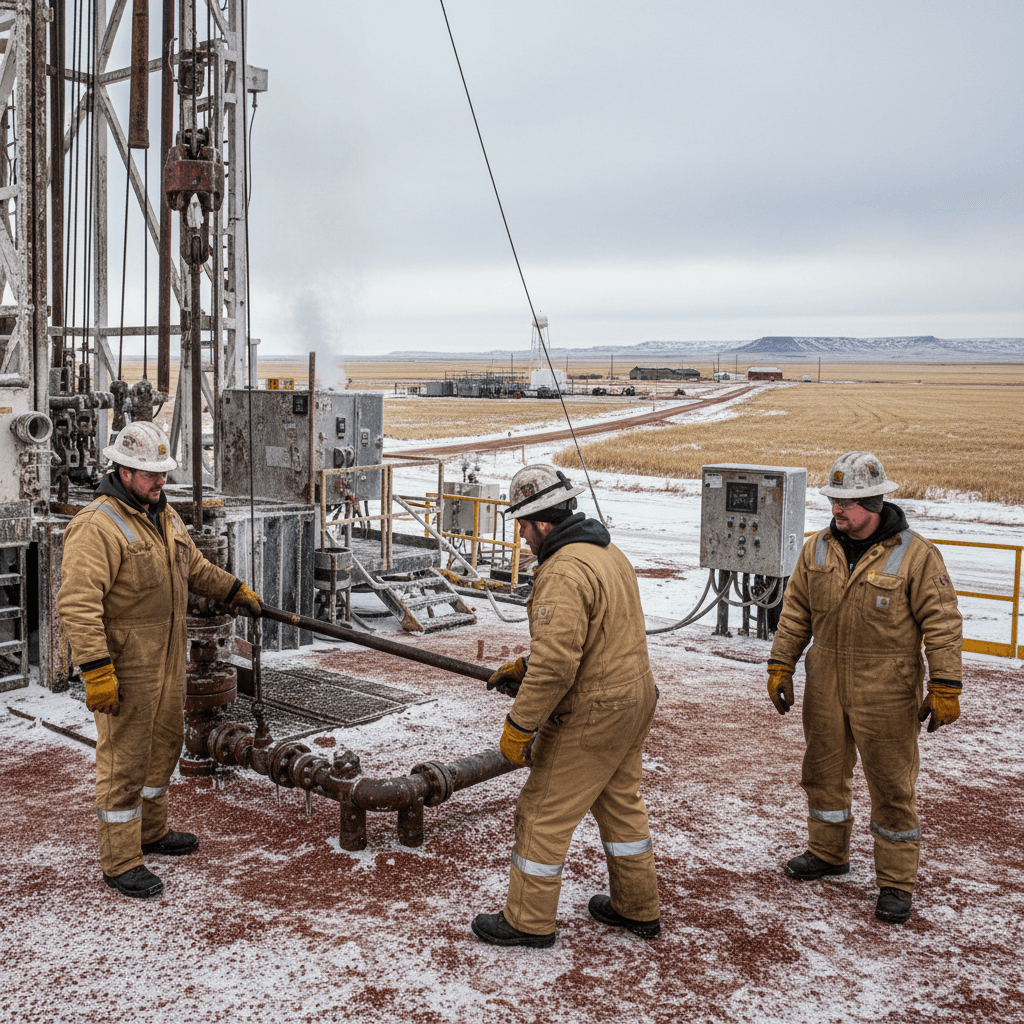
This combination of a stable, moderate rig count and strong commodity prices underpins the current state of the Bakken region's workforce and local economies. The rig count, a key indicator of future oil production and employment in the oilfield services sector, has remained in a narrow band around this level for several months, suggesting a period of controlled, capital-disciplined activity by operators.

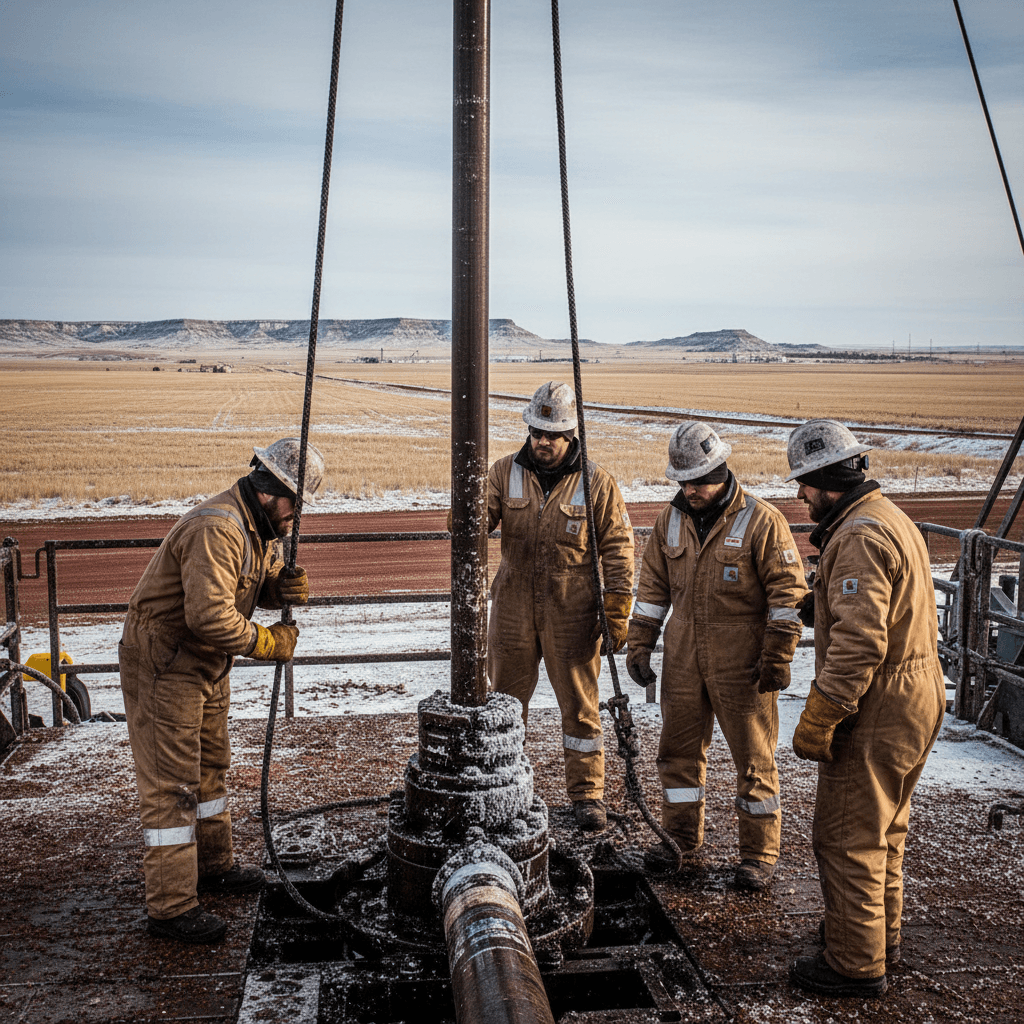
For Bakken communities, this translates to a sustained but not booming demand for workers. Direct oilfield employment—including roles for rig crews, frac hands, and well maintenance technicians—is likely consistent with the current activity pace. The $90-plus oil price environment provides operators with the revenue to maintain these operations and support jobs, even as the focus remains on efficiency and shareholder returns rather than aggressive growth.

The local economic ripple effects from 27 active rigs are also significant but measured. Service companies, trucking firms, and equipment suppliers experience steady work, supporting employment in these ancillary industries. Housing markets in core Bakken counties, which saw extreme volatility during past boom-and-bust cycles, are likely experiencing stability. Rental vacancies and home prices are more closely aligned with a mature, steady-state industry rather than the rapid influx of workers seen a decade ago.

Municipal and county budgets, heavily reliant on oil and gas tax revenues, benefit from the high price environment even with moderated production growth. Revenues from existing wells remain robust, funding local infrastructure and services.

The Bakken crude price differential, a discount applied to Bakken barrels priced against WTI, was reported at -$3.42 on Thursday. This relatively narrow discount indicates healthy demand for Bakken crude in the market, which supports the economics of continued production and the employment that depends on it.

While the current rig count is a fraction of the peak seen in the early 2010s, today's activity is characterized by higher well productivity and greater operational efficiency. This means each rig supports substantial eventual production and requires a highly skilled, albeit potentially smaller, workforce compared to prior boom periods. The current data suggests the Bakken region is in a phase of mature, price-supported stability.

Source

Bakken Wire Live Data for June 11, 2026
rig countemploymentworkforcebakkenoil priceswtilocal economynorth dakota

Share this article

Related Articles

Bakken Rig Count Holds at 34 as Strong Prices Support Regional Stability - Bakken Wire
Workforce & Community

Bakken Rig Count Holds at 34 as Strong Prices Support Regional Stability

The number of active drilling rigs in North Dakota held steady at 34, according to live Bakken data for Thursday, August 20, 2026. This operational tempo, supported by West Texas Intermediate crude trading at $86.48 per barrel, provides a baseline for the region's workforce and local economies. In the Bakken formation, the rig count is a leading indicator for direct and indirect employment. A count in the mid-30s suggests a stabilized industry posture, sustaining core oilfield jobs but without the rapid hiring surges or steep layoffs associated with more volatile periods. The current price environment, with WTI up $2.09 on the day, offers operators the economic confidence to maintain this pace of development. The relationship between drilling activity and community impact is direct. Steady rig counts support consistent demand for housing, from man-camps to rental units, helping to stabilize vacancy rates and prices in communities like Williston, Dickinson, and Watford...

🌅Afternoon Wire·Aug 20
Bakken Rig Count Holds at 33 as Oil Prices Surge - Bakken Wire
Workforce & Community

Bakken Rig Count Holds at 33 as Oil Prices Surge

The number of active drilling rigs in North Dakota's Bakken formation remained at 33 on Thursday, according to live data, holding steady as oil prices posted significant gains. West Texas Intermediate (WTI) crude rose $2.07 to $86.46 per barrel, a 2.45% increase. The international benchmark, Brent crude, also climbed to $93.57 per barrel. The current rig count reflects a stabilized level of drilling activity in the region. This figure, while substantially higher than the lows seen during industry downturns, remains far below the peak of over 200 rigs active in the Bakken during the early 2010s boom. The direct employment tied to drilling and completion crews is closely correlated to this rig count. Industry analysts note that the relationship between oil prices, rig activity, and local community impact in western North Dakota is direct. Sustained higher commodity prices, as seen with WTI holding above $86, provide the economic incentive for...

🔆Midday Wire·Aug 20
Bakken Rig Count Holds at 33 Amid Stable Oil Prices - Bakken Wire
Workforce & Community

Bakken Rig Count Holds at 33 Amid Stable Oil Prices

The active rig count in North Dakota held steady at 33 on Tuesday, as oil prices posted modest gains, indicating a period of sustained but moderate activity for the Bakken region's workforce and communities. West Texas Intermediate crude traded at $84.53 per barrel, according to midday data. The current rig level, while significantly below the peak boom years, represents a stable operational base for the state's primary oil-producing region. Analysts typically view rig count as a leading indicator for oilfield employment, with each active rig supporting a wide range of direct and indirect jobs. "For communities in the Williston Basin, the rig count is a pulse check," said a longtime Bakken industry observer. "Thirty-three rigs suggests a focused, efficient industry that supports local businesses and provides steady employment without the extreme boom-bust cycles of the past." The stability in activity is reflected in local housing and commercial real estate markets,...

🔆Midday Wire·Aug 18