Bakken Rig Count Holds at 28 Amid Sharp Oil Price Decline
Workforce and communities brace for potential slowdown as WTI crude prices fall below $76.
The number of active drilling rigs in North Dakota held steady at 28 on Tuesday, August 4, 2026, even as global oil prices experienced a significant sell-off. West Texas Intermediate (WTI) crude traded at $75.96, down $4.38 or 5.45% for the day, according to live Bakken data.
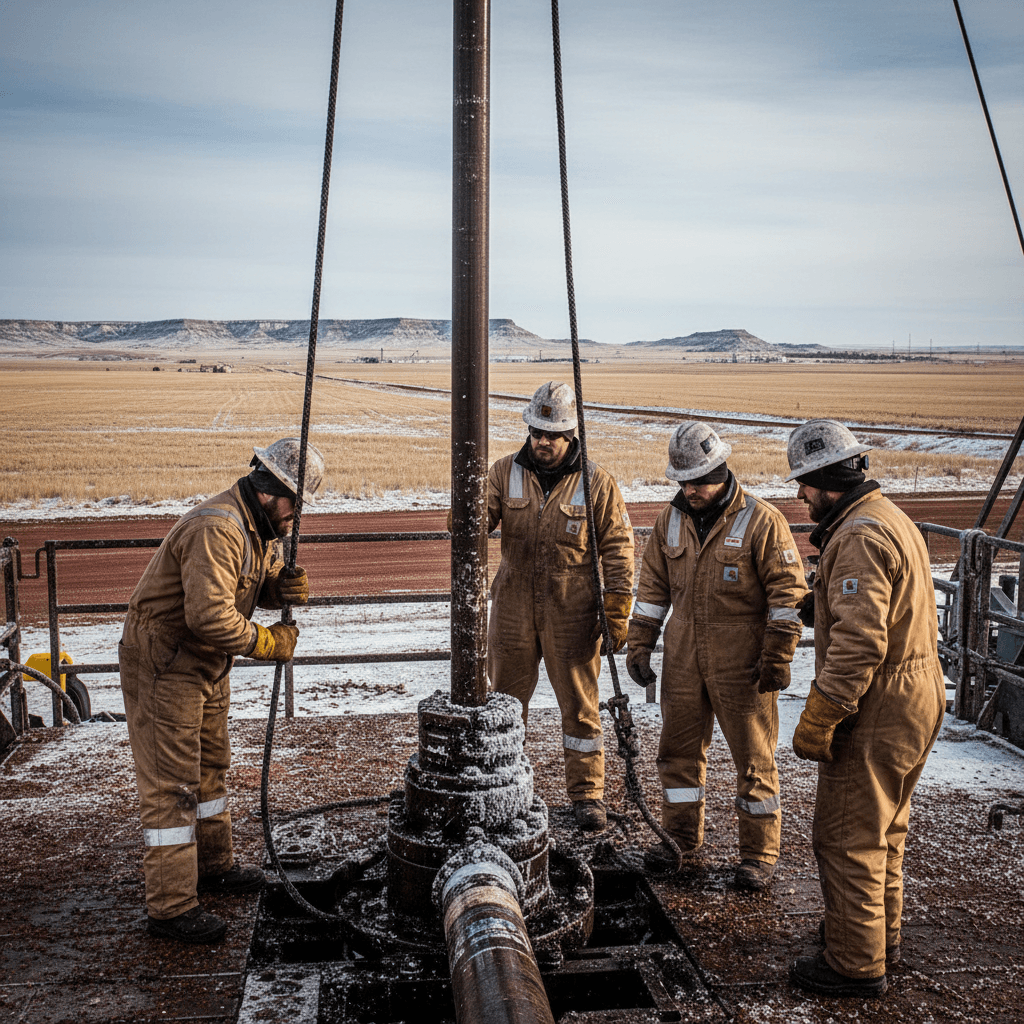
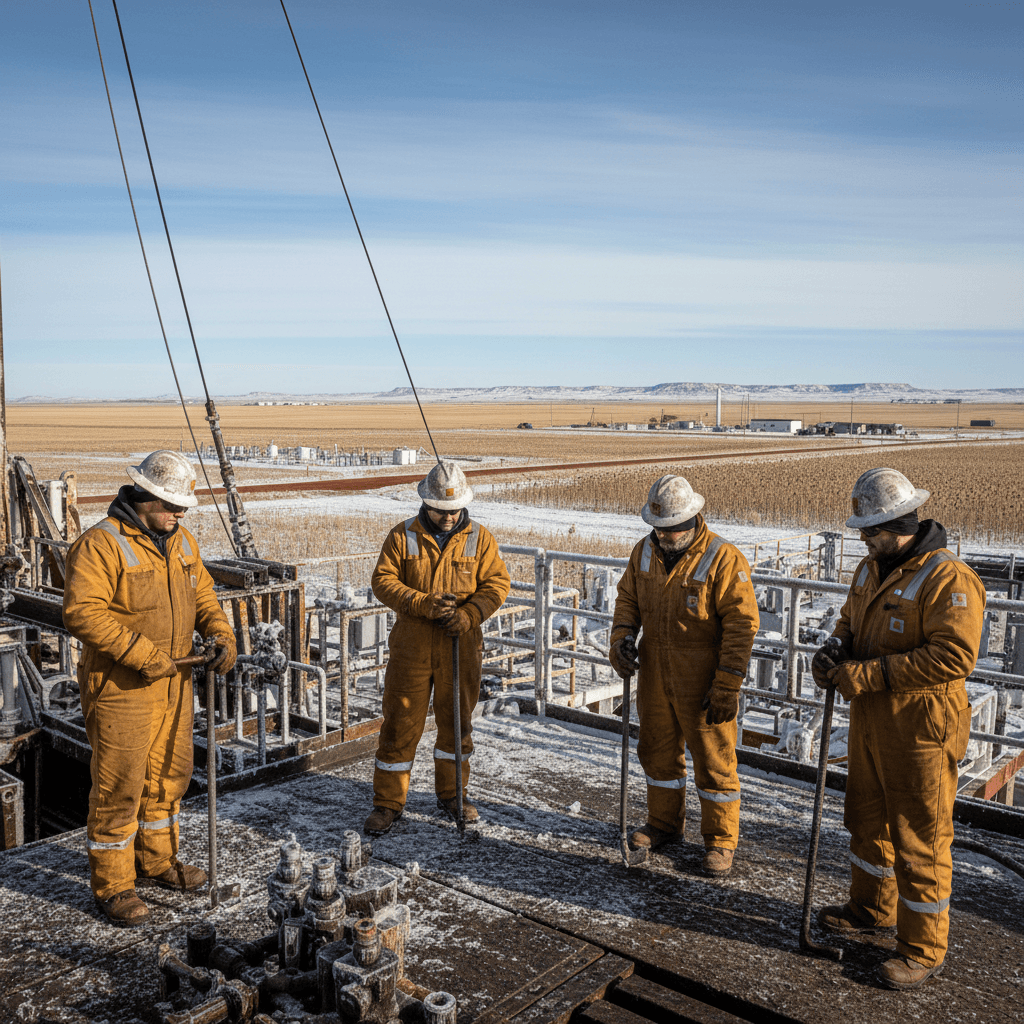
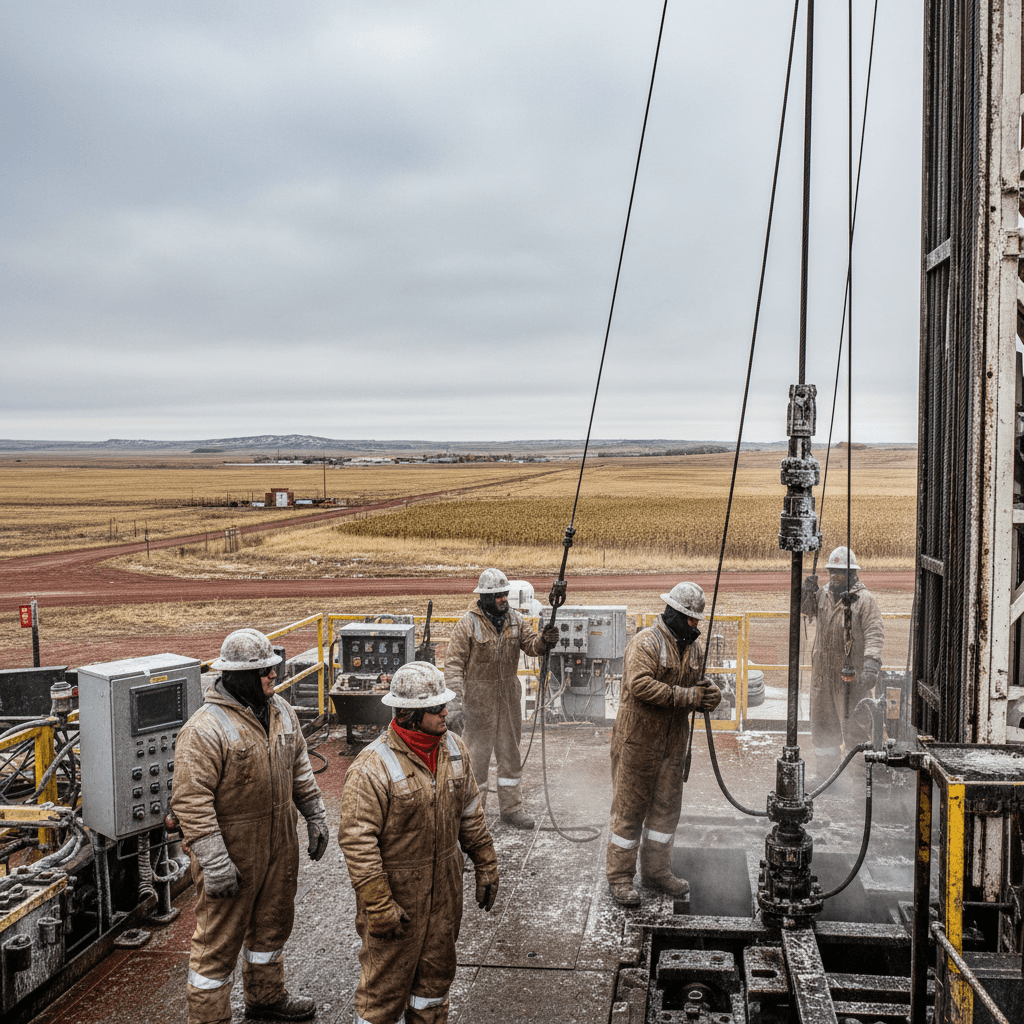
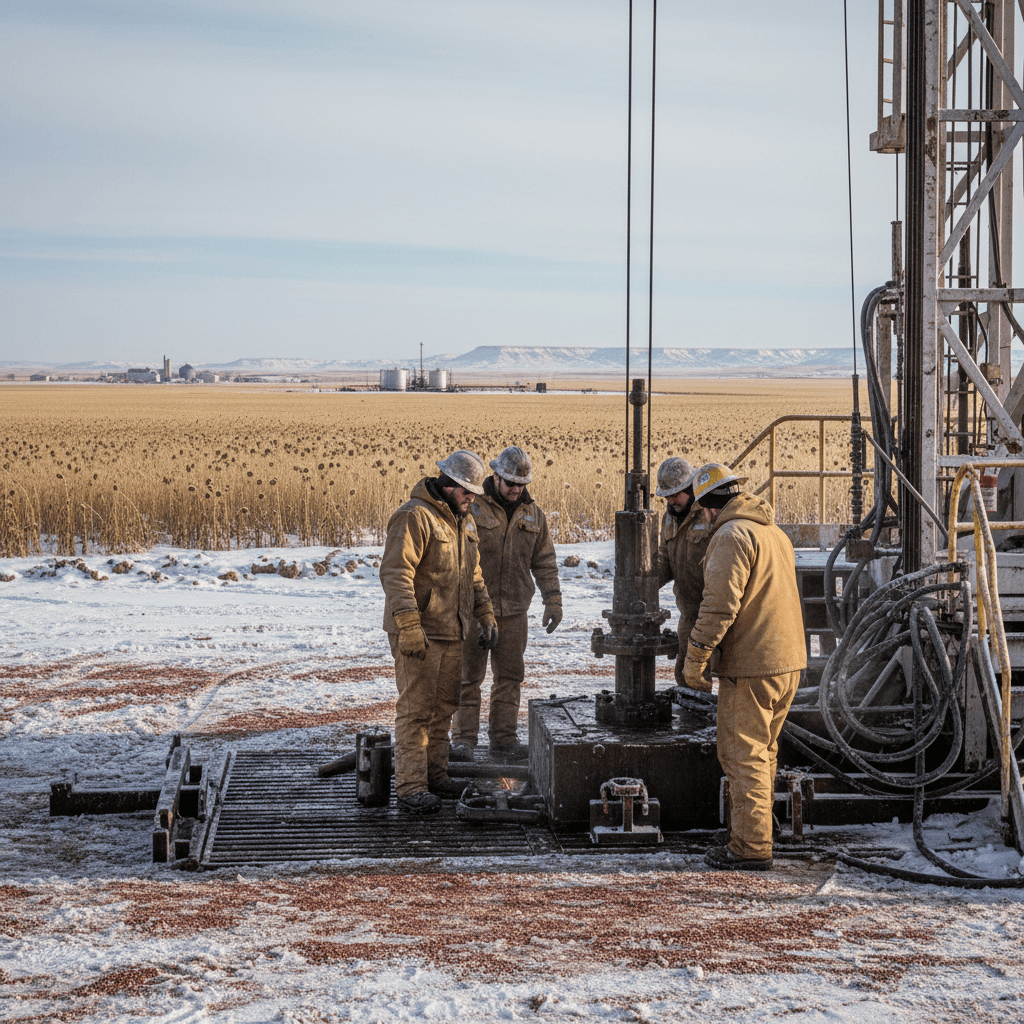
The current rig count, a key indicator of oilfield activity, reflects a sustained but historically modest level of drilling operations in the Bakken formation. The direct relationship between rig count, employment, and local economic health means this stability is a critical factor for western North Dakota communities. However, the sharp drop in oil prices introduces uncertainty for future activity levels.
Historically, the Bakken region's workforce, housing market, and municipal revenues are tightly coupled to the pace of oil and gas development. A higher rig count typically translates to increased demand for oilfield service workers, truck drivers, and support staff, bolstering employment and putting upward pressure on housing and rental costs in towns like Williston, Dickinson, and Watford City. Conversely, a sustained period of low prices or declining activity can lead to workforce reductions and softened demand for housing.
The Bakken crude differential—the discount at which Bakken oil trades compared to WTI—was reported at -$3.42 on Tuesday. This differential affects the net revenue realized by producers in the region. Natural gas prices were recorded at $2.67 per MMBtu.
With WTI now trading below $76, operators may begin to reassess capital spending plans for the remainder of the year. Drilling and completion activity are sensitive to price signals, and prolonged price weakness could pressure the current rig count lower, potentially impacting the regional job market.
Local economies that have adapted to the boom-and-bust cycles of the oil industry are now monitoring these price movements closely. Sales tax revenues, school funding, and business investment in the Bakken often follow trends in oilfield activity, making the stability of the 28-rig count a focal point for community planners and residents alike.
Source
Live Bakken Data for Tuesday, August 4, 2026