Bakken Rig Count Holds at 29 as High Oil Prices Support Workforce Stability
Sustained WTI prices near $96 provide economic floor for communities, though activity remains far below boom-era levels.
The North Dakota oil and gas workforce is operating on a stable, but moderated, platform as the active rig count held at 29 amid strong crude prices, according to live Bakken data for June 3, 2026. West Texas Intermediate (WTI) crude traded at $95.85 per barrel, a gain of $2.09 on the day.
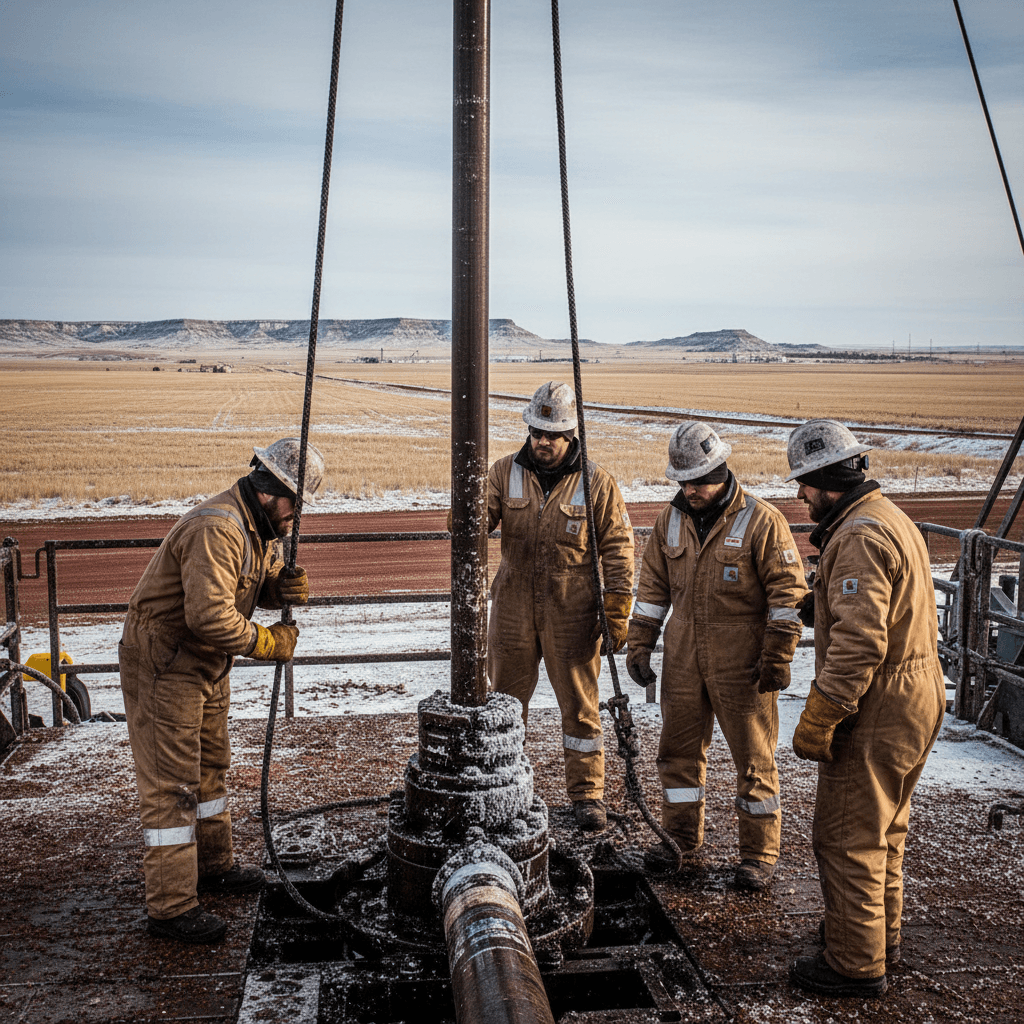
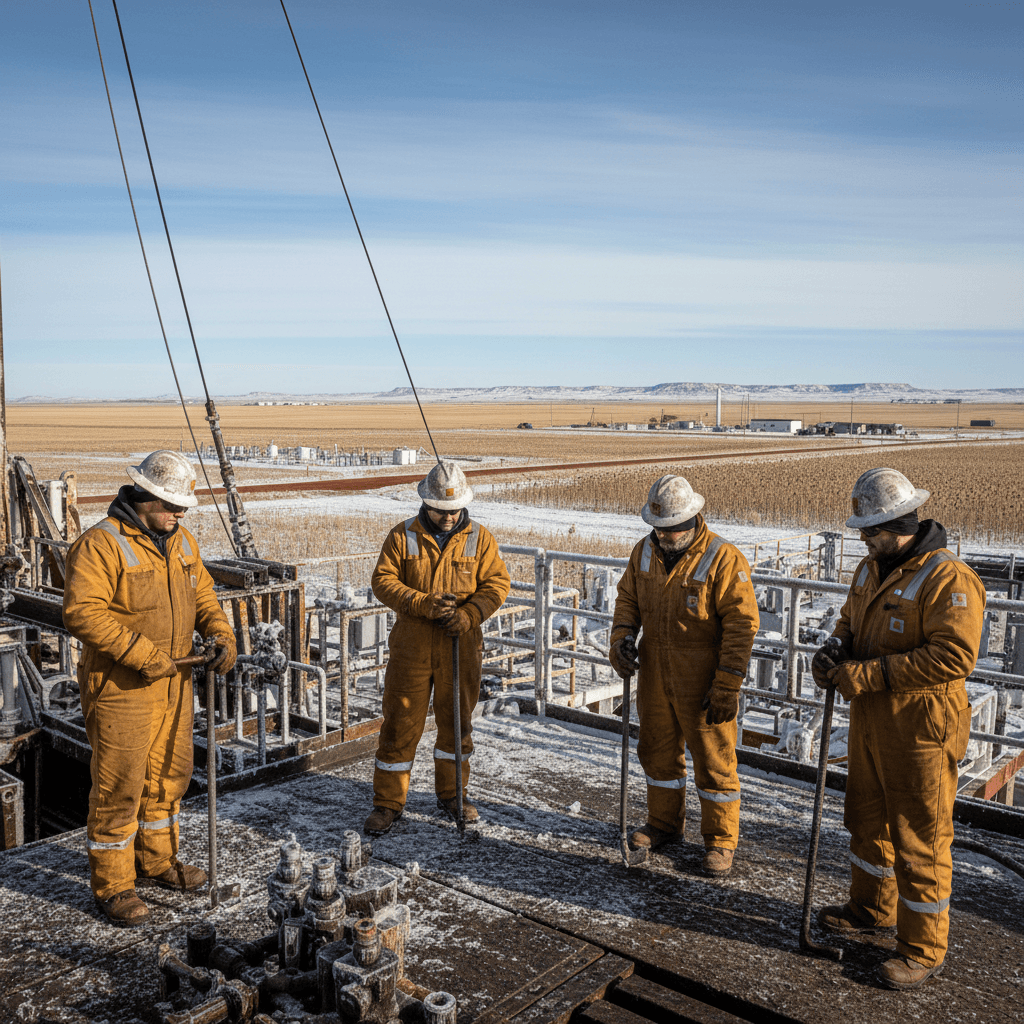
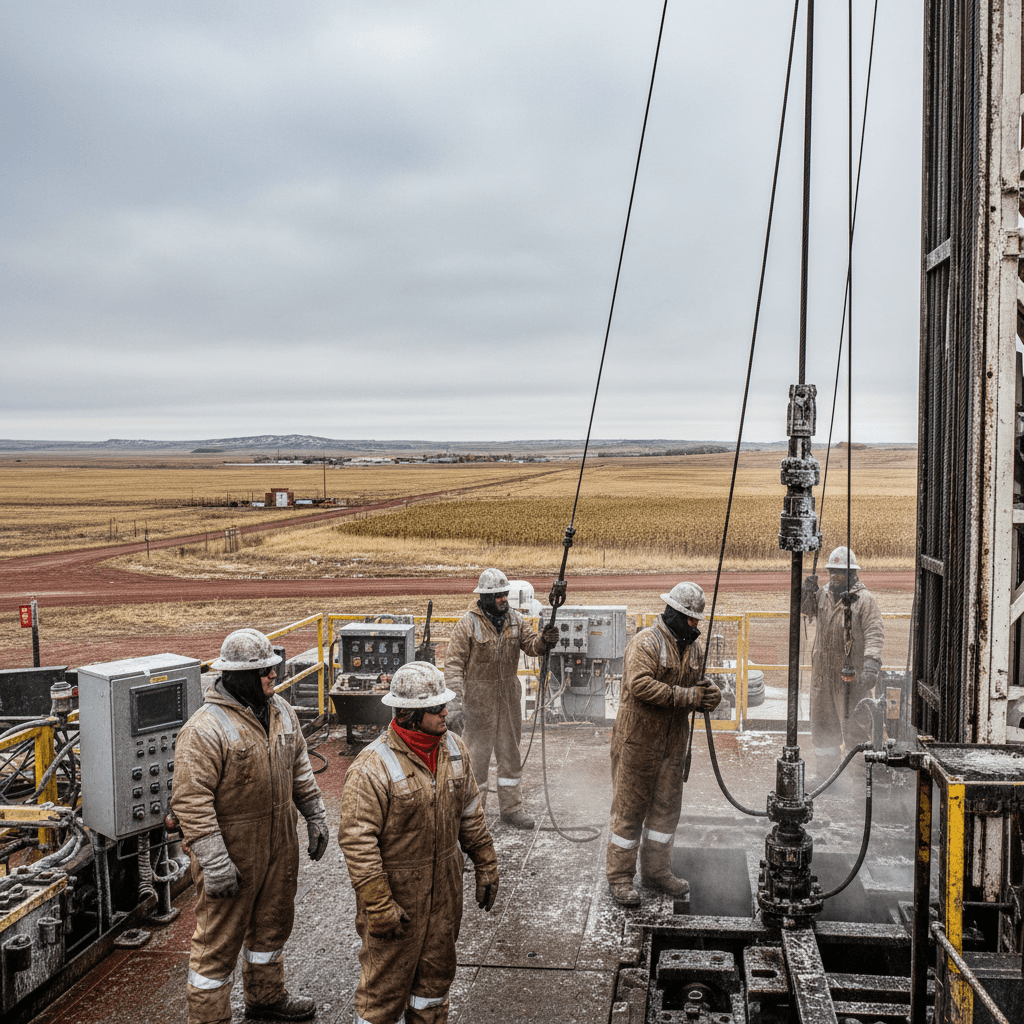
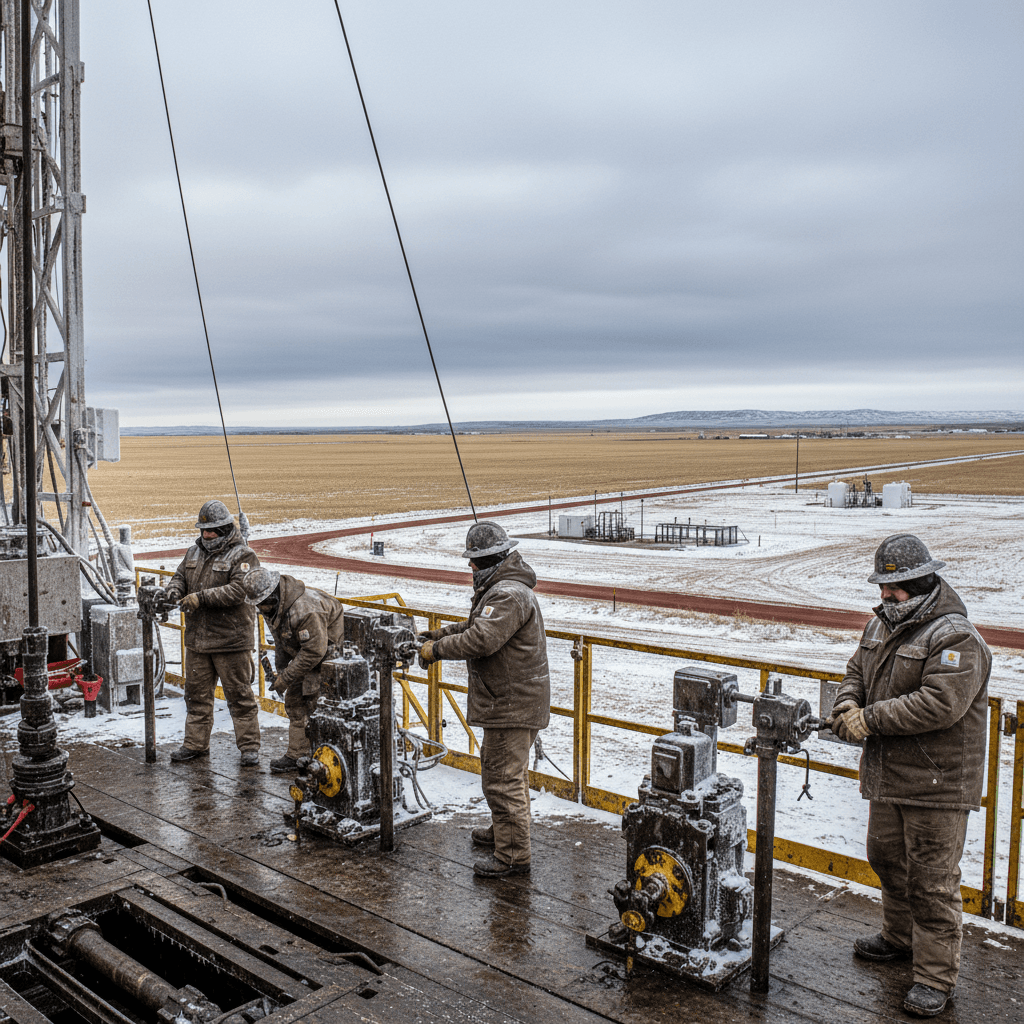
The current rig count, a key indicator of drilling activity and direct oilfield employment, reflects a carefully managed pace of operations by Bakken producers. While significantly lower than the peak of over 200 rigs during the previous boom, the current level suggests a consolidation around core, high-efficiency areas of the Williston Basin.
High commodity prices provide a crucial economic foundation for western North Dakota communities. With WTI sustaining levels above $95 and the Bakken price differential at a relatively narrow $-3.42 per barrel versus WTI, operators have the revenue certainty to maintain current staffing levels and capital plans. This stability helps support direct oilfield jobs and the vast network of service companies that employ truck drivers, mechanics, and field technicians.
The relationship between rig activity, oil prices, and community impact is direct. During boom cycles, high rig counts drive rapid population influx, straining housing, infrastructure, and local services. The current environment of high prices but controlled activity likely results in a more sustainable balance. Housing pressures in hubs like Williston, Watford City, and Dickinson are less acute than a decade ago, but vacancy rates remain sensitive to any sustained increase in drilling.
Local economies, from retail to hospitality, benefit from the consistent payroll generated by a stable oil sector. However, municipalities and counties that rely heavily on oil tax revenue now budget based on this more moderated level of production and price, as opposed to the volatile boom-and-bust cycles of the past.
Natural gas prices, recorded at $3.21 per MMBtu, provide a secondary revenue stream for operators but remain a focus for flaring reduction and gas capture infrastructure investments, which also create localized construction and maintenance jobs.
The sustained high oil price environment acts as a buffer for the Bakken workforce, allowing for steady employment even at a fractional rig count compared to historical highs. The focus for operators continues to be on maximizing output from each well and rig, which supports a stable, specialized workforce rather than one poised for rapid expansion.
Source
Live Bakken Data for June 3, 2026