Bakken Rig Count Holds at 30 as Oil Prices Retreat from Recent Highs
Workforce and community stability persists amid moderated oil market activity, with employment and housing markets reflecting current activity levels.
The active drilling rig count in North Dakota held steady at 30 on Saturday, as crude oil prices pulled back from recent highs, according to live Bakken data. West Texas Intermediate (WTI) crude traded at $87.36 per barrel, down $1.54 for a decline of 1.73%. The Brent crude benchmark followed a similar path, falling 1.7% to $91.12 per barrel.
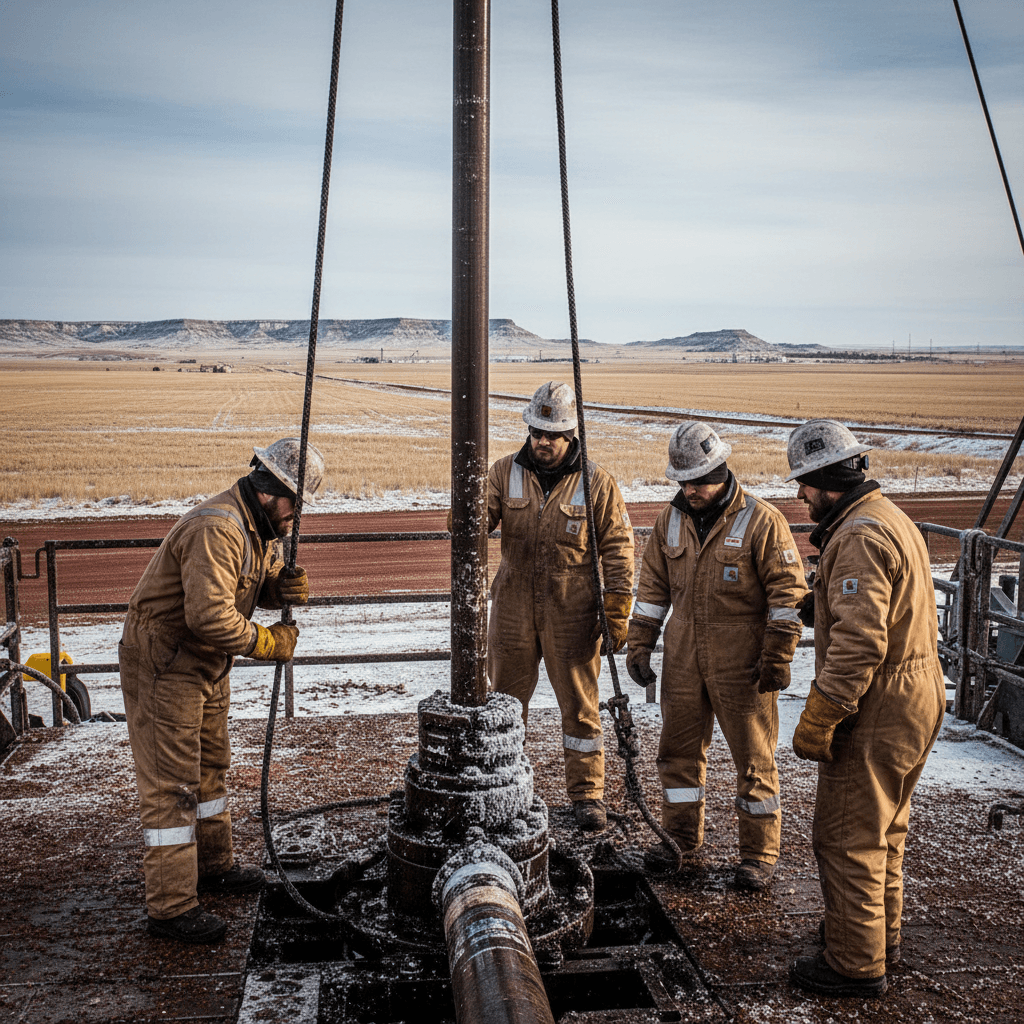
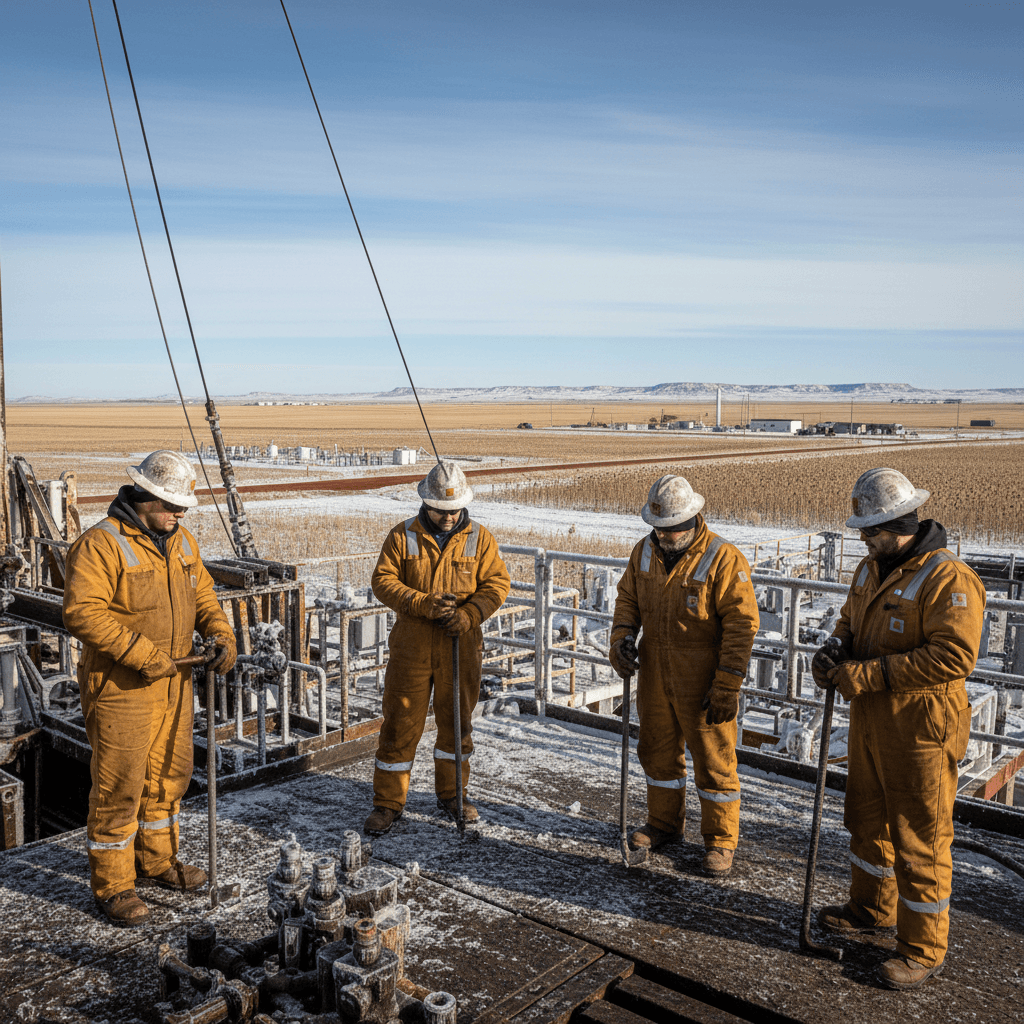
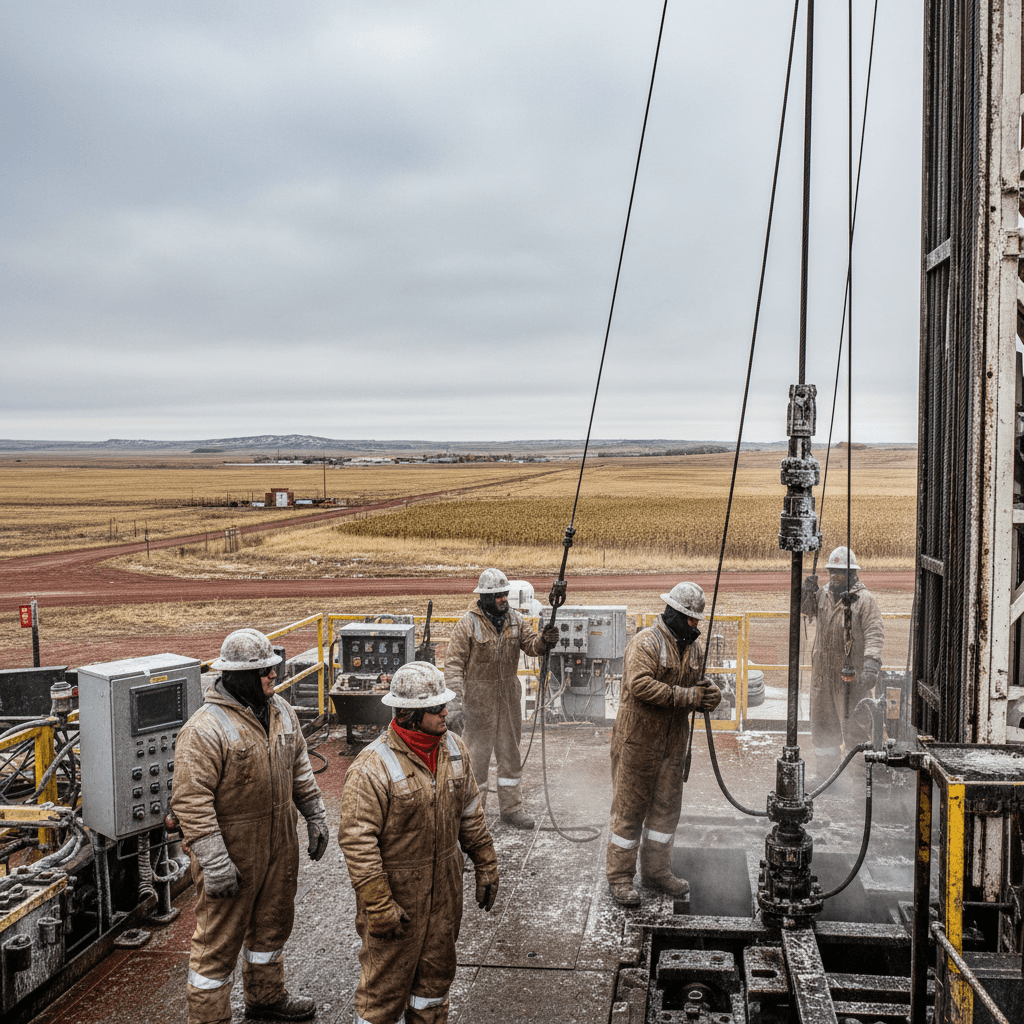
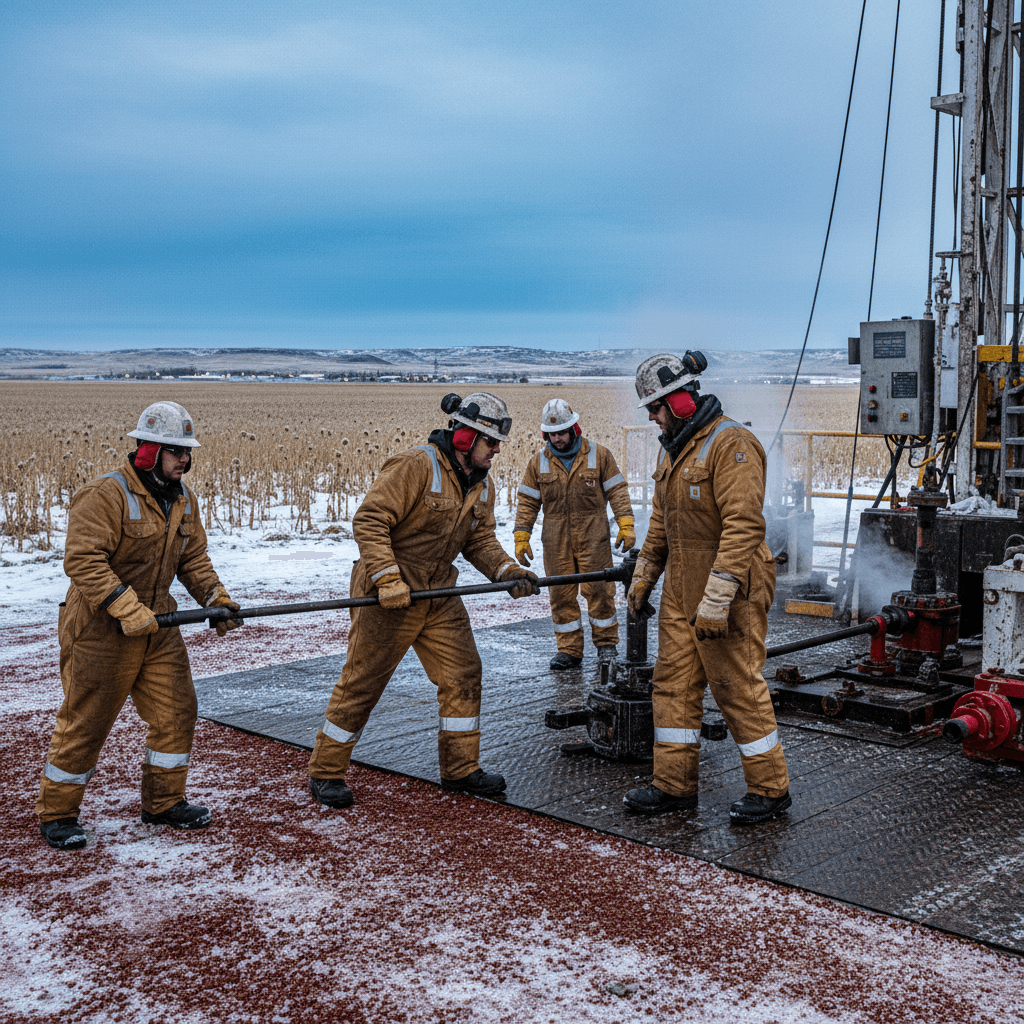
The sustained rig count, a key indicator of oilfield activity and employment demand, remains significantly below the boom-era peaks but represents a stabilized level of operations for the Bakken formation. The current price environment, despite the day's decline, continues to support drilling and completion work by operators, which in turn supports oilfield service companies and their payrolls.
General industry knowledge indicates a direct correlation between rig activity, oil prices, and regional economic health in western North Dakota. At 30 rigs, the workforce required is a fraction of that needed during periods with over 200 active rigs, leading to a more normalized and sustainable employment market in the region's oil-dependent communities. This level of activity typically supports a core workforce without triggering the severe labor shortages or rapid population influxes seen in previous cycles.
Housing markets in cities like Williston, Watford City, and Dickinson are also closely tied to oilfield activity. The current rig count suggests a stable demand for housing, avoiding the extreme shortages and price spikes of the past while also preventing a major downturn in property values that can accompany a sharp drop in drilling.
The Bakken crude differential, a discount applied to Bakken crude versus the WTI benchmark, was reported at -$3.42 per barrel on Saturday. This differential affects the realized price for local producers and can influence operator budgets and spending decisions. Natural gas prices were listed at $3.29 per MMBtu.
For Bakken communities, the current data points to a period of relative equilibrium. Local economies, which have diversified somewhat since the initial boom, are less vulnerable to the extreme swings in oilfield employment that characterized the last decade. However, the economic fortunes of the region remain fundamentally linked to the health of the oil and gas industry, as reflected in the daily rig count and commodity prices.
Source
Live Bakken Data, May 30, 2026