Bakken Rig Count Steady at 27 Amid Midday Price Drop
Workforce and community stability persists as operational activity remains consistent despite a midday decline in oil prices.
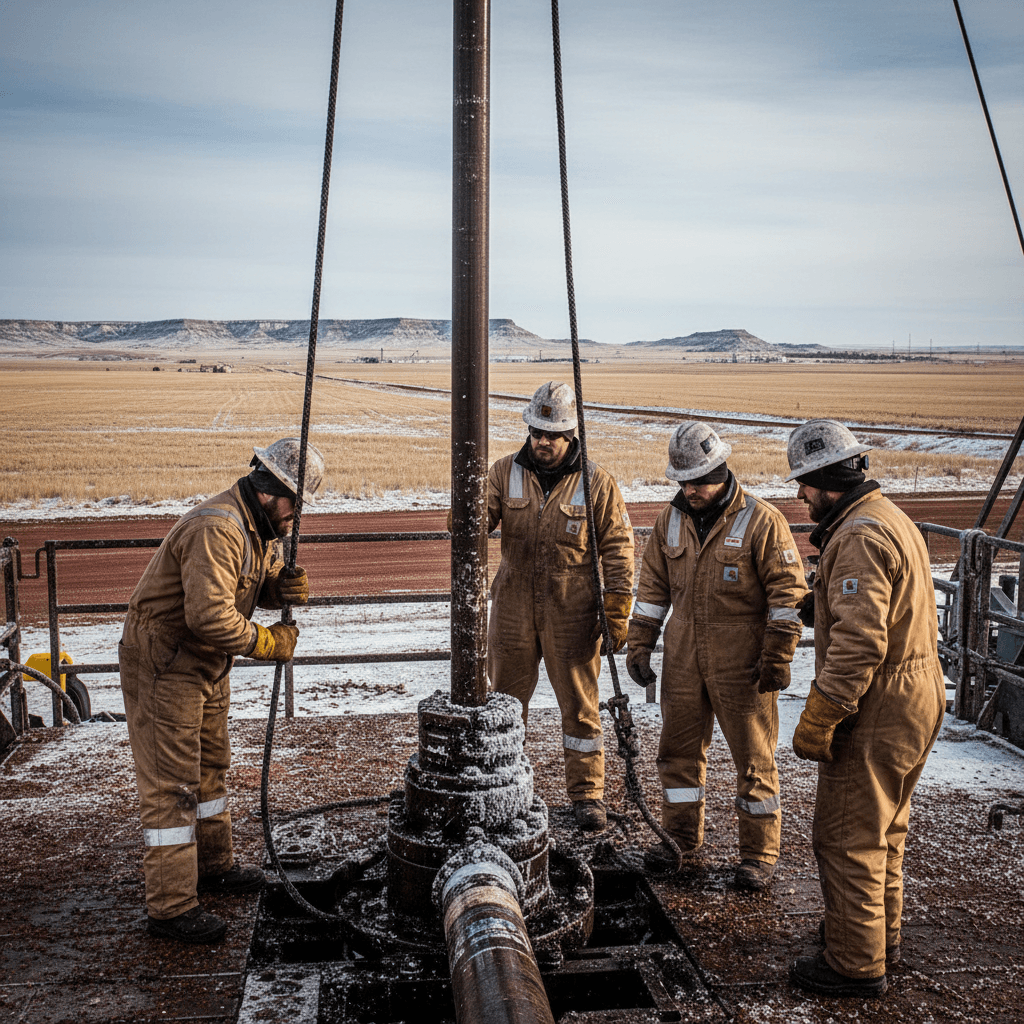
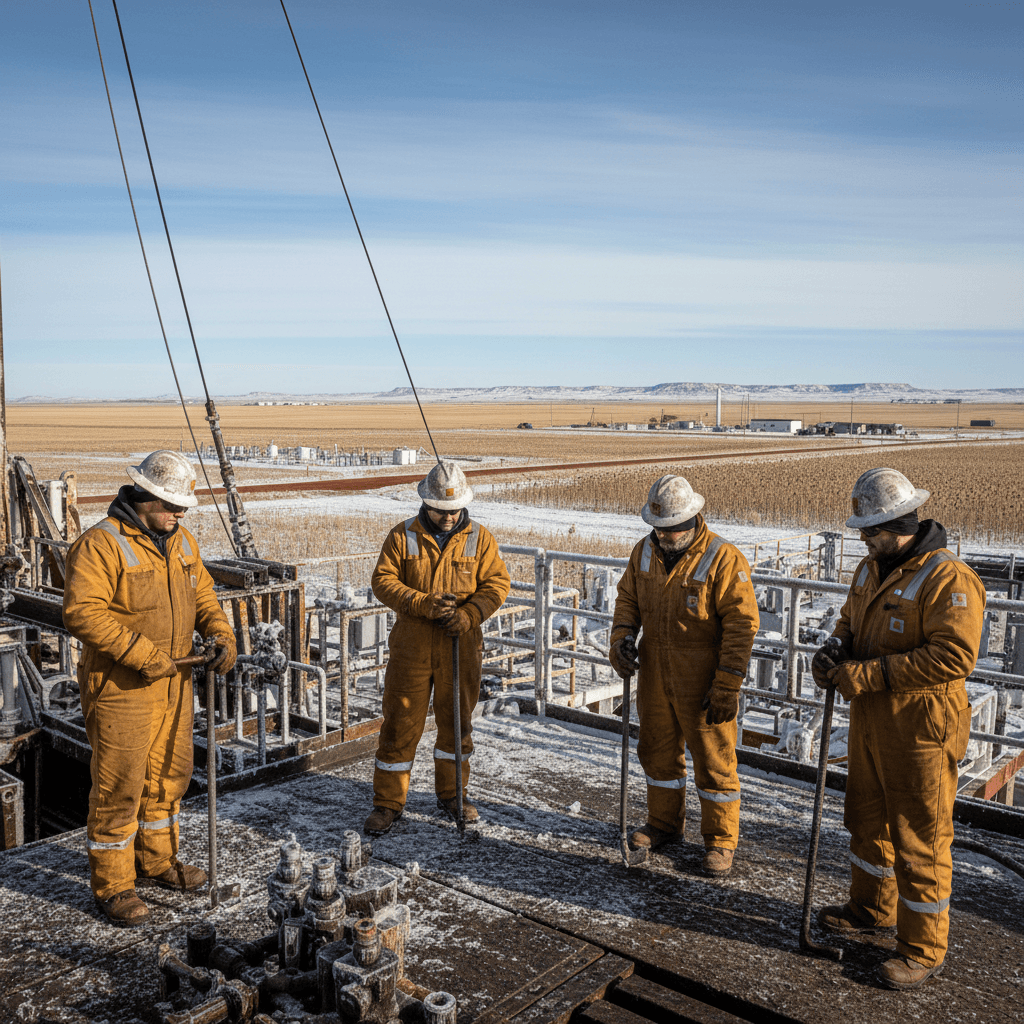
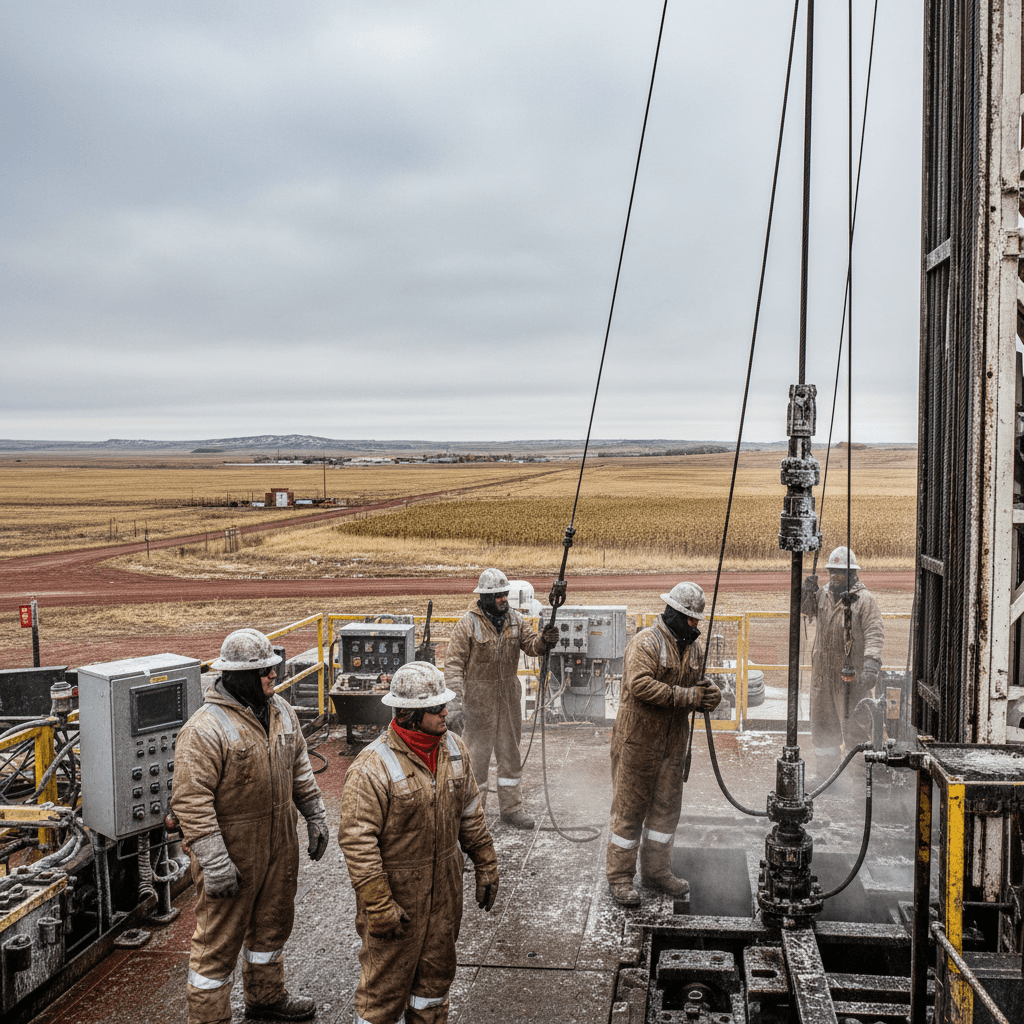
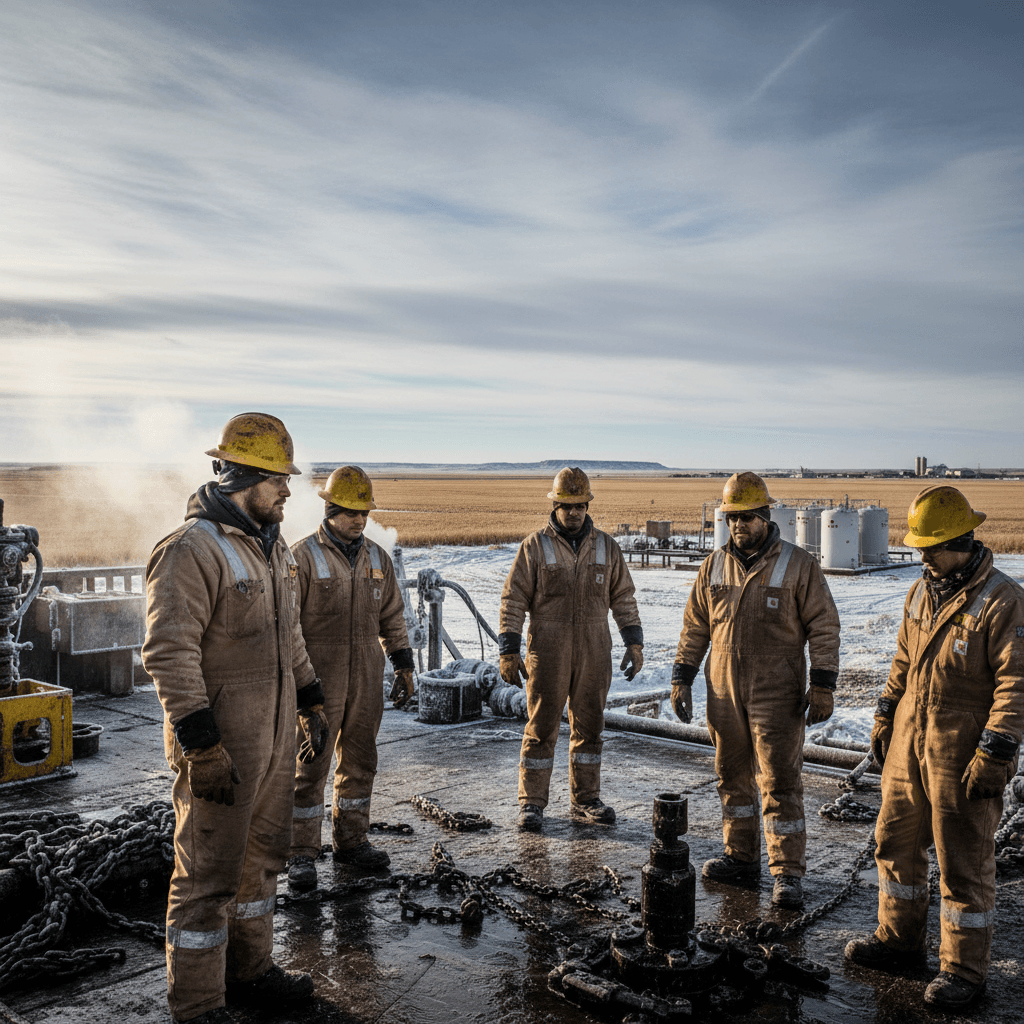
The number of active drilling rigs in North Dakota held steady at 27 on Friday, June 5, 2026, according to Bakken Wire's live data. This level of operational activity provides a foundational indicator for workforce demand and economic conditions in the region's oil-producing communities.
Midday trading showed a pullback in crude prices, with West Texas Intermediate (WTI) at $90.87, down $2.17, and Brent crude at $93.53, down $1.50. The Bakken crude differential stood at $-3.42 versus WTI, and natural gas was priced at $3.24. Historically, sustained rig counts at this level suggest a stable, though moderated, demand for field personnel including drillers, field operators, and support staff across the Williston Basin.
The Bakken formation's workforce and local economies are closely tied to the pace of drilling and completion activity. A rig count of 27, while significantly lower than the boom-era peaks exceeding 200, represents a consistent base of industrial employment. This supports direct oilfield jobs and indirect employment in sectors such as housing, transportation, retail, and professional services in cities like Williston, Dickinson, and Minot.
For community indicators such as housing demand and commercial activity, a steady rig count often correlates with stable population levels and less volatile economic conditions compared to periods of rapid expansion or contraction. Current price levels, even with the midday decline, remain sufficiently high to support ongoing production and maintenance work, which underpins long-term employment for many in the region.
The relationship between oil prices, rig activity, and community impact is fundamental in western North Dakota. When drilling activity is sustained, it generates royalty income for landowners, tax revenue for local governments, and sustained business for service companies. The current operational tempo suggests communities are experiencing a period of equilibrium, avoiding the sharp swings that previously challenged housing availability and local infrastructure.
Source
Bakken Wire Live Data, June 5, 2026