Bakken Workforce Braces for Pressure as Oil Prices Plunge, Rig Count Holds
The sharp midday price drop and sustained low activity level signal continued challenges for employment and local economies in western North Dakota.
The workforce and communities in North Dakota's Bakken region face ongoing economic headwinds as crude oil prices experienced a significant midday sell-off on Monday, August 3, while drilling activity remained at a depressed level. The current rig count of 27 underscores a prolonged period of restrained operational tempo.
According to live Bakken data, West Texas Intermediate (WTI) crude was trading at $79.66 per barrel, down $5.01 or 5.92% for the day. The international benchmark Brent crude fell to $83.76, a drop of $4.17. The Bakken crude differential was $-3.42 versus WTI. Natural gas held at $2.77.
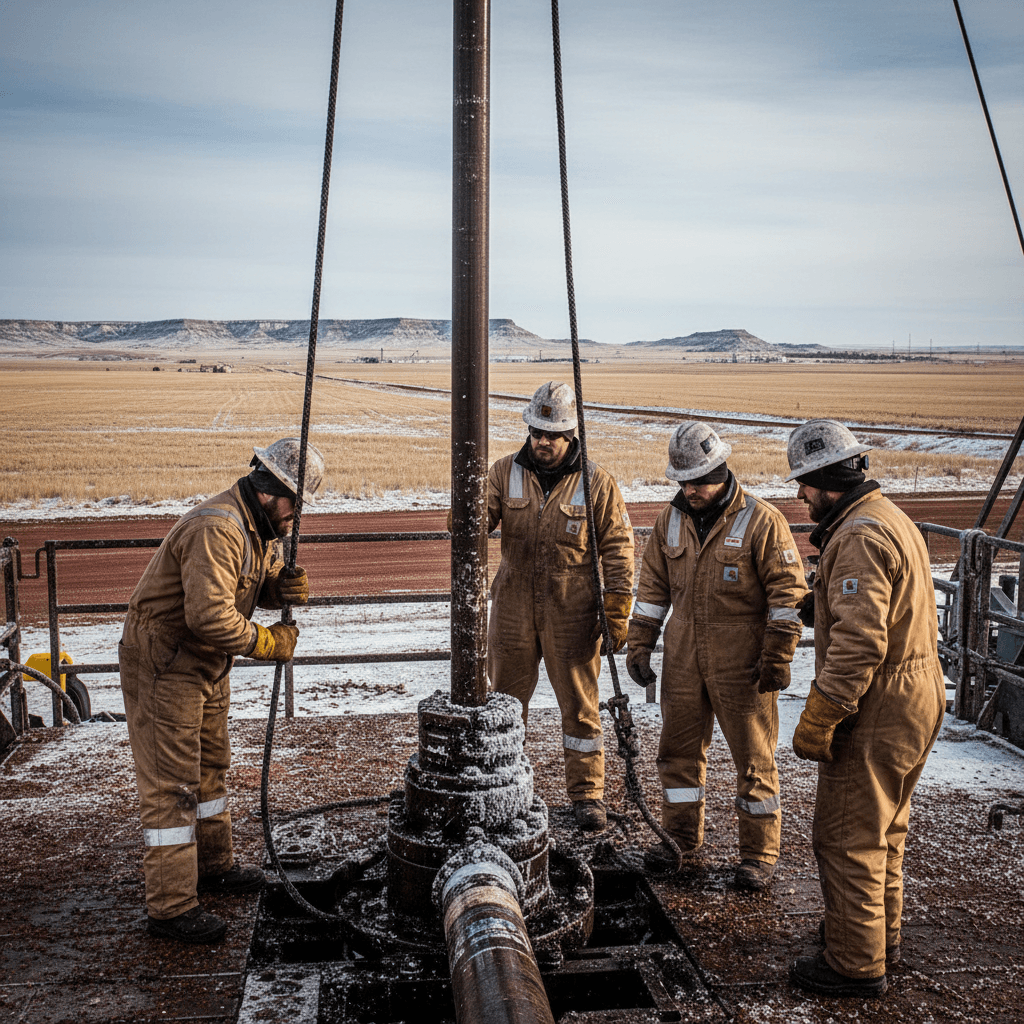
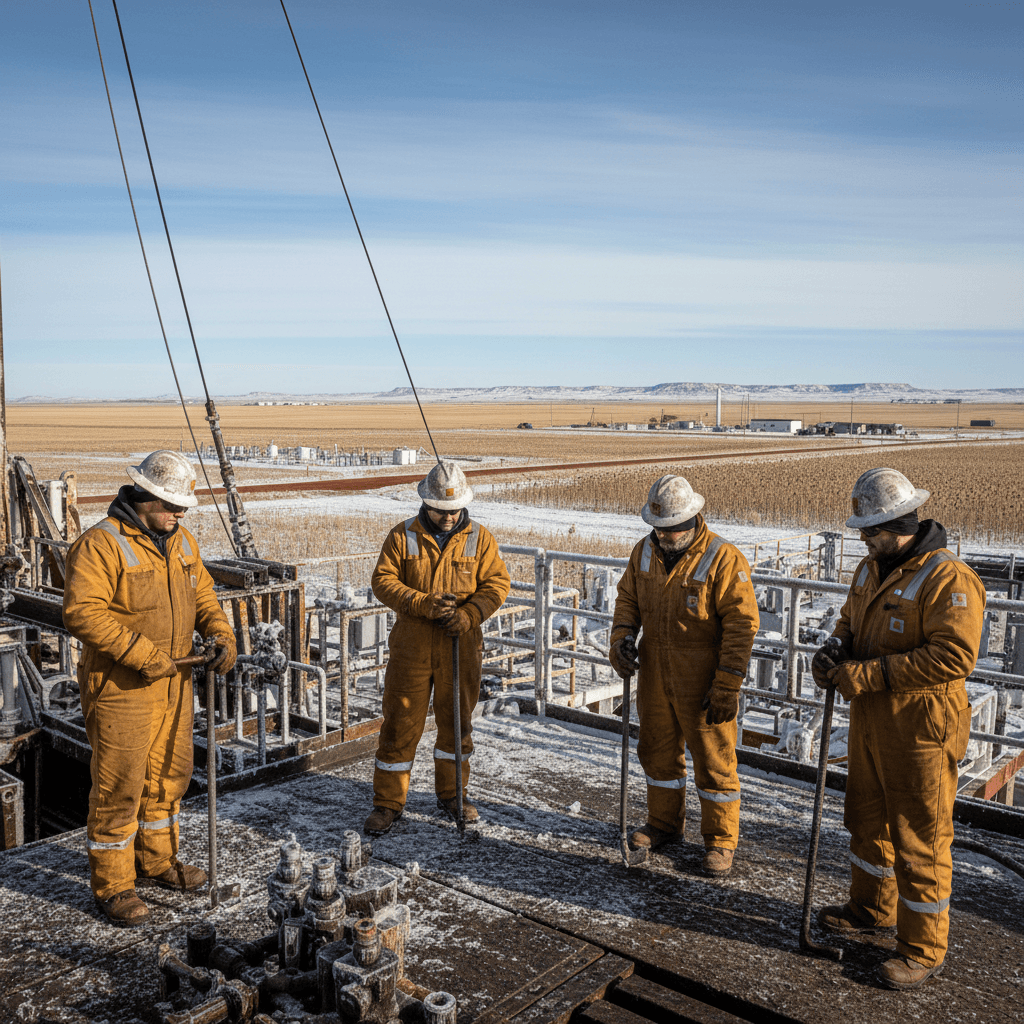
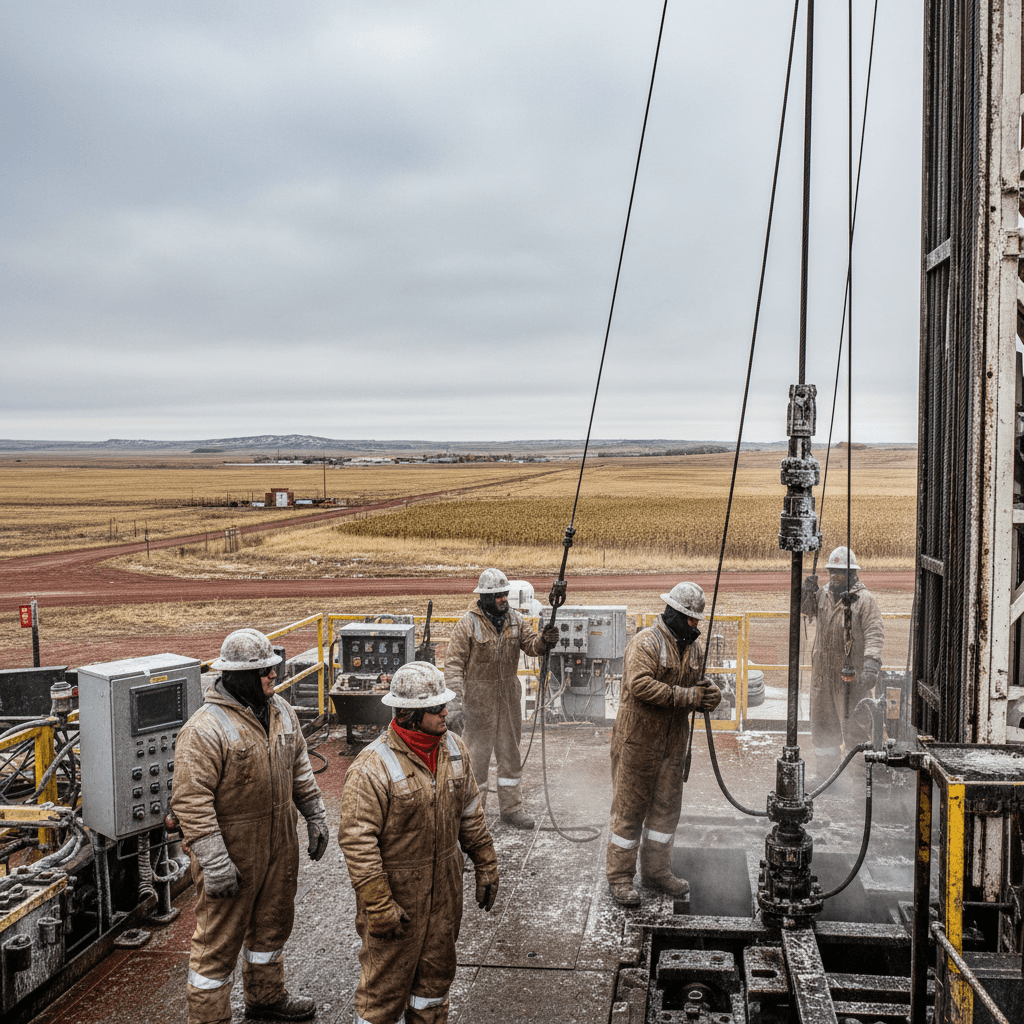
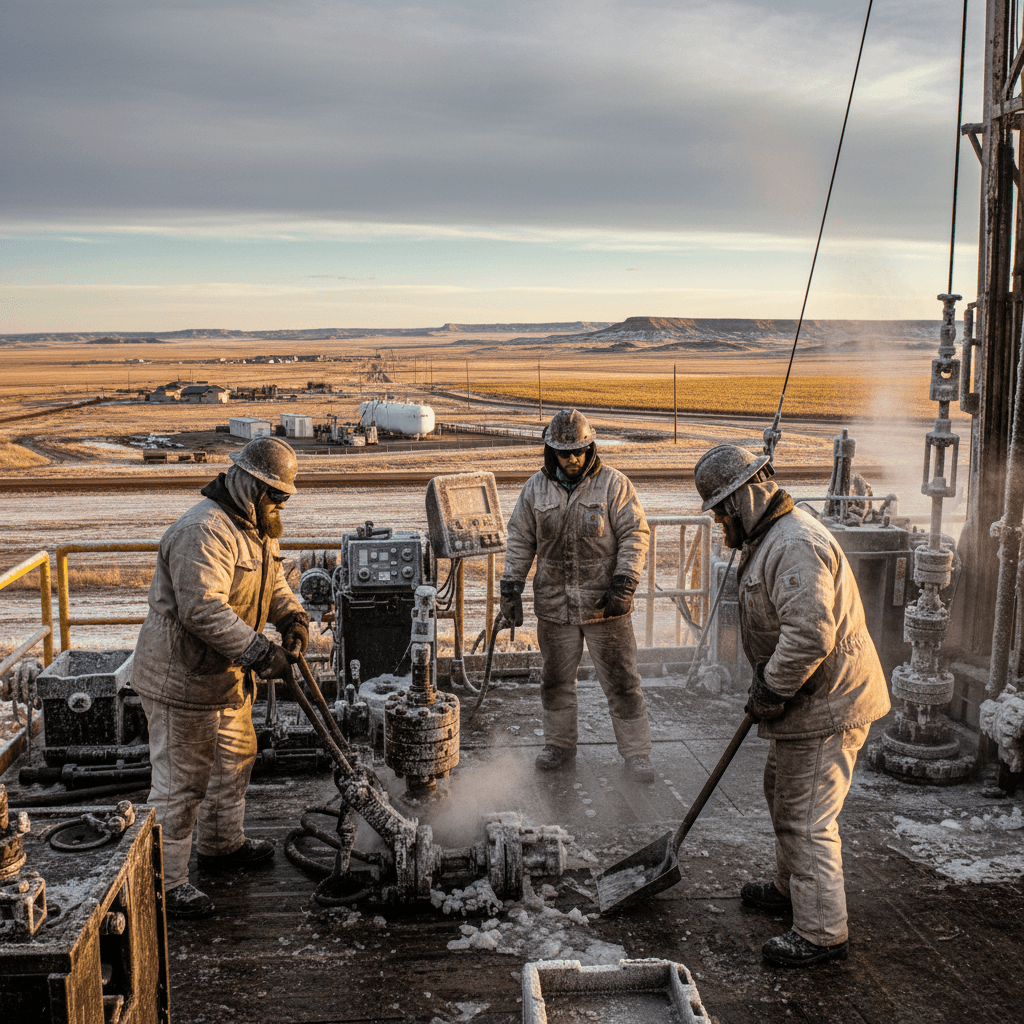
The relationship between oil prices, rig activity, and community impact in the Bakken is direct. The current rig count of 27 is a fraction of the historic peaks seen during previous boom cycles. This low level of drilling activity translates to reduced demand for field personnel, including roughnecks, roustabouts, and other service company employees. Sustained periods of low rig counts typically lead to workforce attrition, as skilled laborers seek opportunities in other basins or industries.
Housing markets in western North Dakota communities like Williston, Watford City, and Dickinson are particularly sensitive to these activity swings. During boom periods, housing shortages and skyrocketing rents were common. The current environment of lower activity likely alleviates some of that pressure but can also depress local real estate markets and reduce economic velocity for landlords and property developers.
Local economies, heavily reliant on oilfield commerce, feel the compound effect. Fewer active rigs mean less spending on lodging, meals, transportation, and retail by a smaller rotational workforce. Municipal budgets funded by sales and gross production taxes can face uncertainty when activity plateaus at lower levels. The midday price plunge adds further caution, as operators may delay or reconsider incremental spending plans if the price weakness persists.
The Bakken formation remains a cornerstone of North Dakota's economy and a major U.S. oil-producing region. However, the current data indicates the region is navigating a period of consolidation. For royalty owners, stable but lower production from existing wells may provide a revenue base, but the minimal new drilling limits the potential for new royalty streams. The workforce and community infrastructure that expanded rapidly during prior booms must now adapt to a more measured pace of industrial activity.
Source
Live Bakken Data as of midday Monday, August 3, 2026