Bakken Workforce Stability Tested as Rig Count Holds at 26
With oil prices holding above $70, a plateau in drilling activity suggests a mature, cautious phase for North Dakota's oil communities.
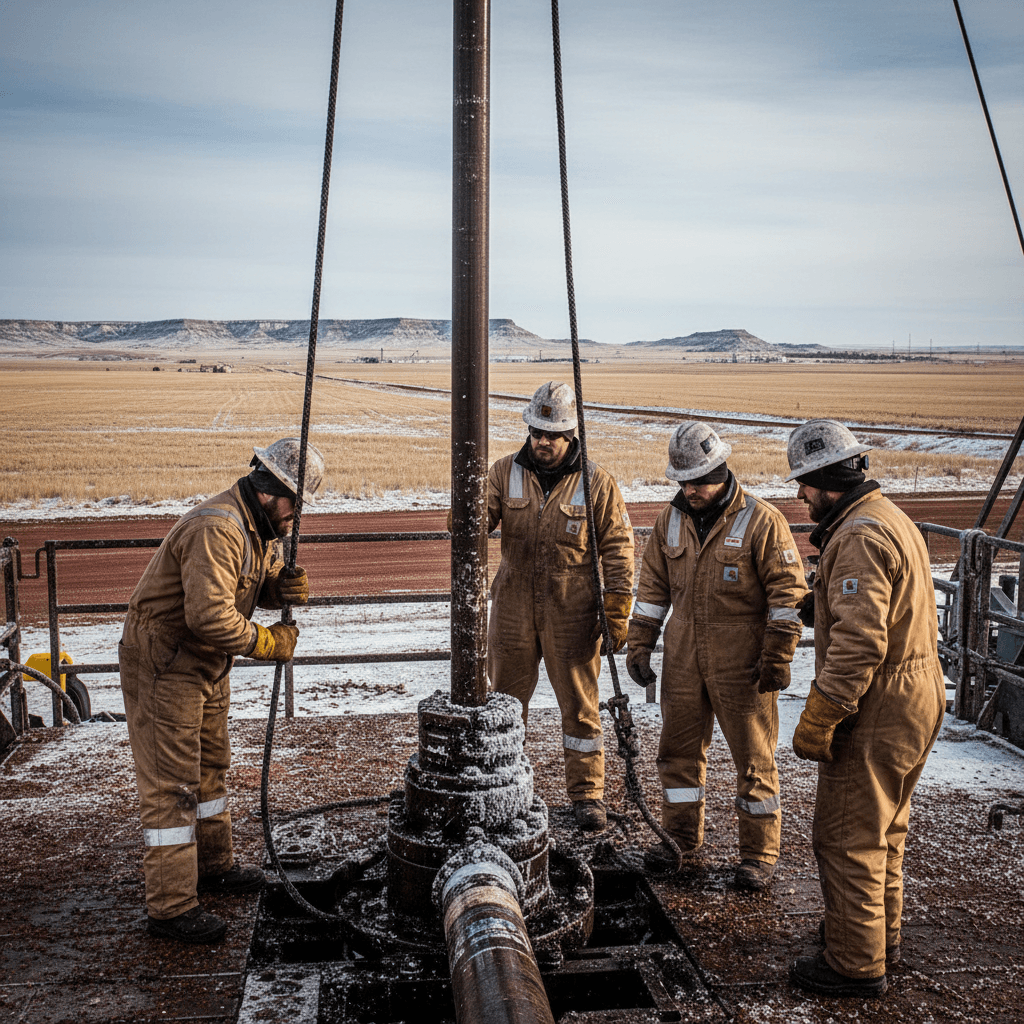
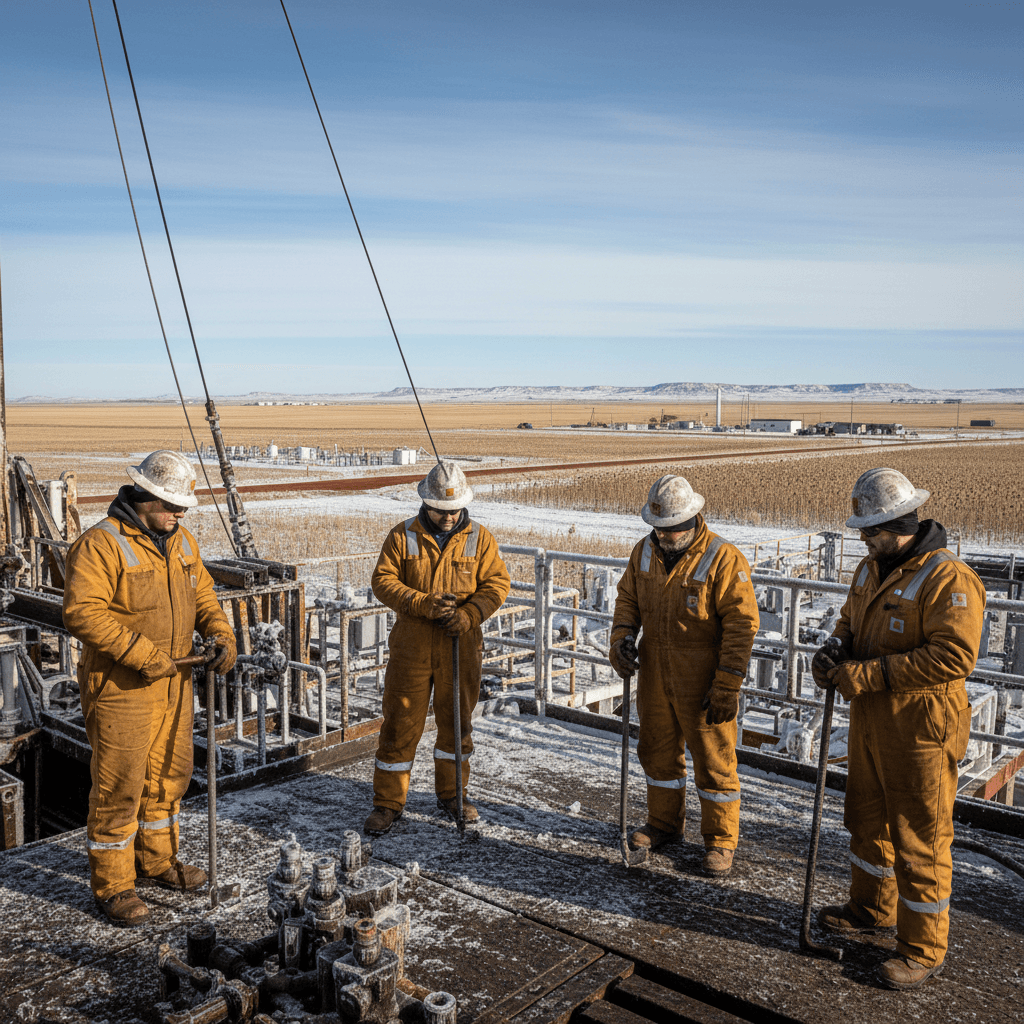
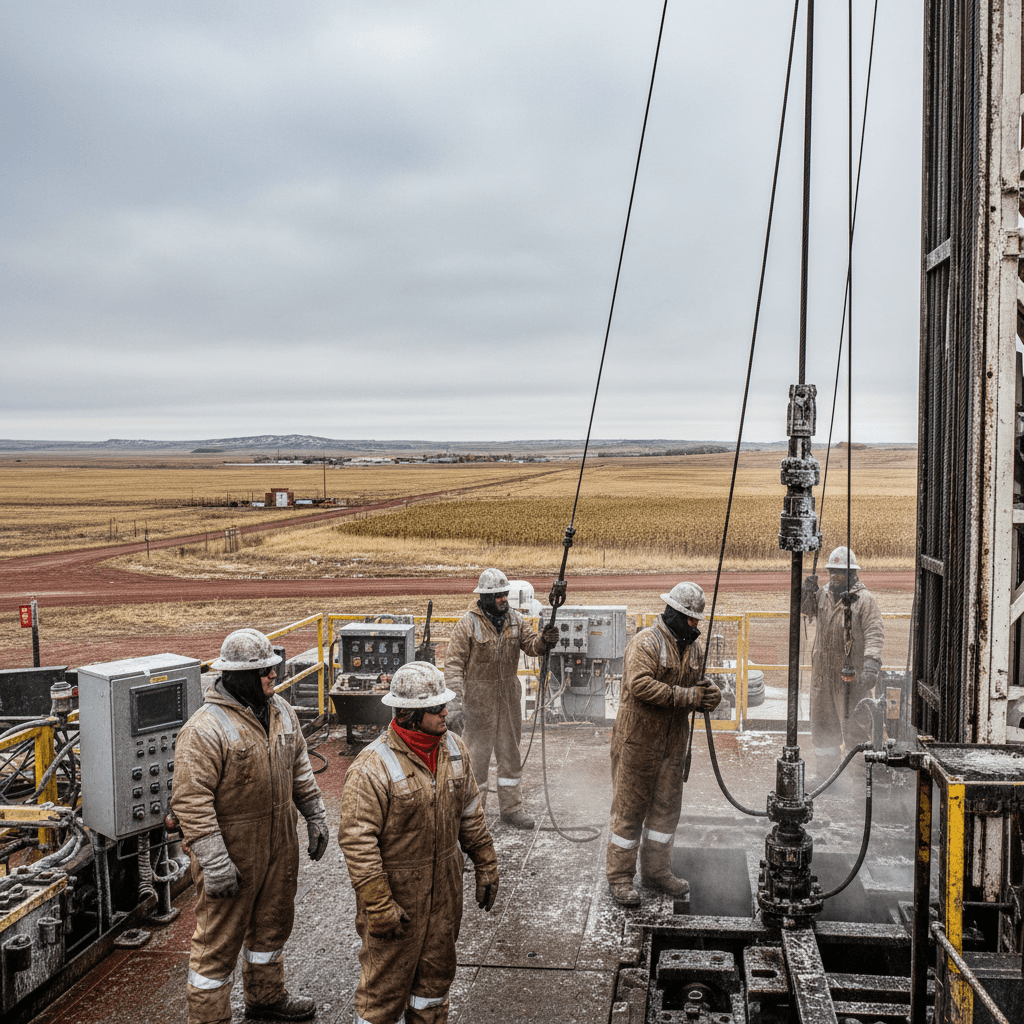
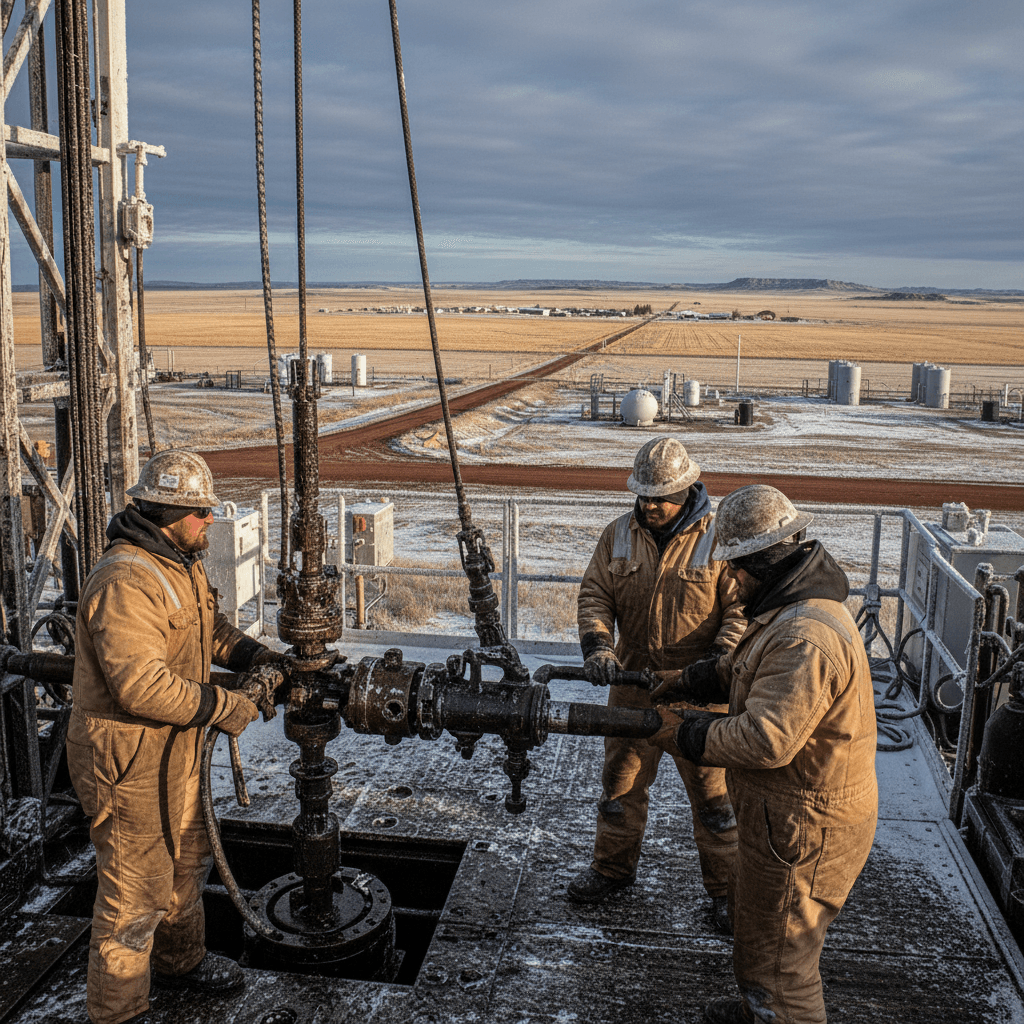
The number of active drilling rigs in North Dakota held steady at 26 this week, signaling a period of stability for the Bakken region's workforce and local economies. The current count, a fraction of the boom-era highs, reflects a mature phase of development focused on efficiency and capital discipline by operators.
West Texas Intermediate (WTI) crude traded at $70.49 per barrel on Monday, a gain of $1.26. The local Bakken crude price, trading at a discount of $3.42 to WTI, sits near $67.07. These price levels are generally considered supportive of maintenance activity but not aggressive expansion in the current cost environment.
Historically, the active rig count is a leading indicator for oilfield employment, housing demand, and commercial activity in western North Dakota. A rig count in the mid-20s, sustained over time, suggests a stabilized jobs market for drilling crews, hydraulic fracturing teams, and related oilfield services. This plateau avoids the severe job losses of a downturn but also lacks the rapid job creation and population influx that strained housing and infrastructure during previous booms.
For local communities like Williston, Watford City, and Dickinson, a steady operational tempo provides predictable tax revenues and supports core local businesses without the extreme volatility of the past. School districts and municipalities can plan budgets with greater certainty. Housing markets, which saw massive construction during the 2010s boom and corrections during busts, are likely experiencing balanced conditions without significant new pressure.
The sustained discount for Bakken crude, currently at -$3.42, impacts the revenue realized by producers and, by extension, the royalties paid to mineral owners and the state's tax coffers. This discount reflects regional pipeline and rail takeaway capacity and competing crudes, subtly influencing the economics of every new well drilled.
The current environment points to a managed, sustainable pace of activity. Workforce levels are likely optimized for this level of drilling and completion work, with less demand for the large transient crews that characterized peak periods. The long-term challenge for Bakken communities remains diversifying their economic base to build resilience against future commodity price cycles, even as they continue to rely on the foundational oil and gas industry.
Source
Bakken Wire Live Data as of June 29, 2026