Canadian West Coast Pipeline Ambitions Hit by Federal Tanker Ban
Alberta's proposed export line faces new uncertainty, potentially impacting Bakken crude flows to U.S. and global markets.
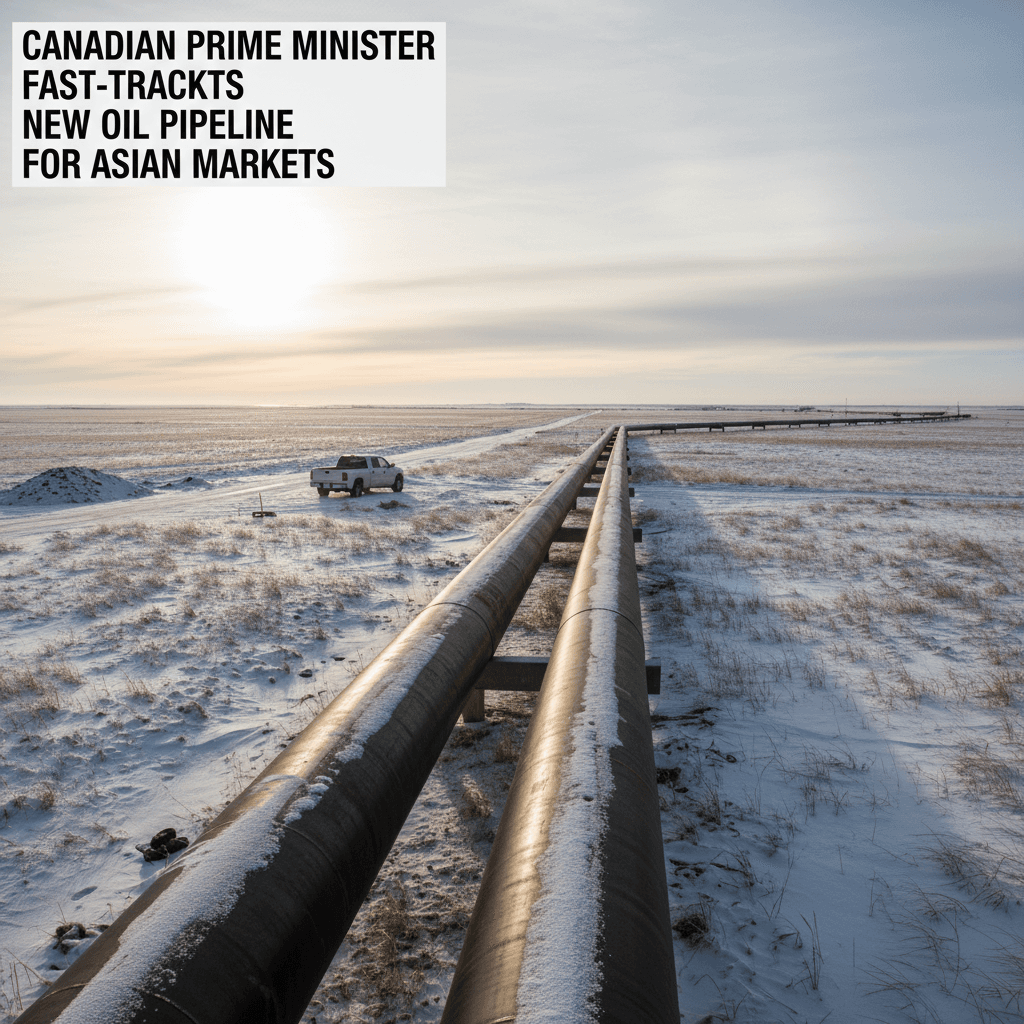
Prime Minister Mark Carney reaffirmed the federal ban on oil tankers along British Columbia's North Coast on Thursday, creating a new obstacle for Alberta's proposed West Coast pipeline just hours before its official unveiling. According to OilPrice.com, Carney made the announcement alongside B.C. Premier David Eby, effectively removing one of the most attractive export corridors from consideration for Alberta's project.
Alberta Premier Danielle Smith's government is pitching a privately financed pipeline with a capacity of one million barrels per day to Canada's West Coast. The province wants Ottawa to designate it as a project of national interest to boost export capacity, reduce dependence on the U.S. market, and strengthen Canada's energy security. However, OilPrice.com reported that the intact tanker ban "immediately narrows the project's options," introducing logistical questions about where oil would be loaded.
For Bakken operators and North Dakota's oil market, the uncertainty around Canadian export capacity has direct implications. Increased Canadian crude flowing to the U.S. West Coast could compete with Bakken barrels for market share in that region. Conversely, a blocked or delayed Canadian outlet would maintain Bakken's critical role in supplying U.S. refineries, particularly in the Midwest and on the East Coast via existing pipeline networks.
The political landscape surrounding the proposal is complex. While Premier Eby reiterated his opposition to lifting the tanker ban, he acknowledged pipelines fall under federal jurisdiction. OilPrice.com reported that Eby said his government "would not go to court to stop a federally approved project." In exchange, British Columbia secured a commitment for compensation for environmental risks should a pipeline proceed.
The project's path forward remains fraught with challenges. As reported by OilPrice.com, it still lacks a private developer, must clear federal review, and navigate indigenous consultation. The tanker ban announcement adds another layer of difficulty. The source concluded that while Alberta gets consideration for its proposal and British Columbia keeps its moratorium, "investors may see it differently."
The development highlights the persistent constraints on North American crude oil export infrastructure. For North Dakota producers, the status of cross-border pipeline projects directly affects market dynamics and pricing. Any major new Canadian pipeline to tidewater could alter flow patterns and competition, while delays or cancellations reinforce the importance of existing southbound routes like the Dakota Access Pipeline for Bakken crude.
Source
OilPrice.com