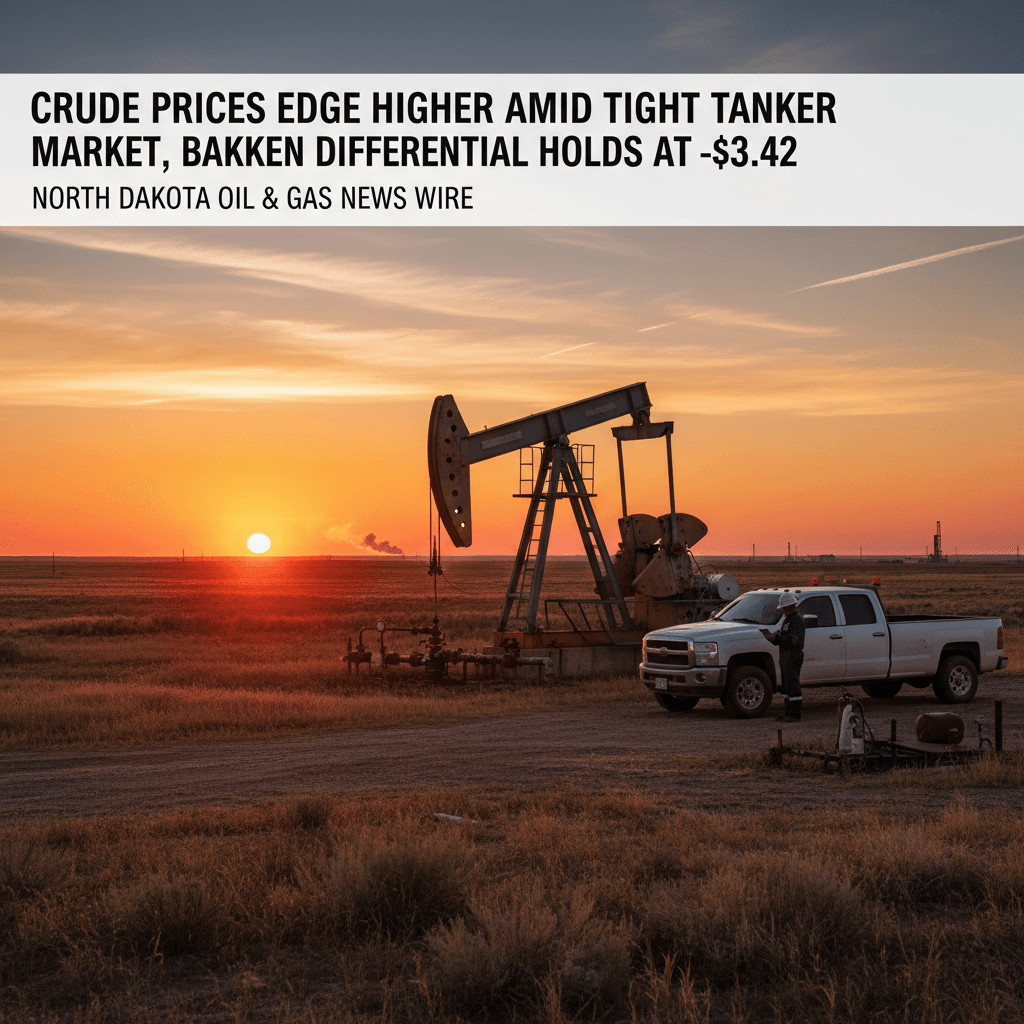
Crude Prices Edge Higher Amid Tight Tanker Market, Bakken Differential Holds at -$3.42
Middle East conflict continues to disrupt global shipping and support prices, while UK energy cap surge signals sustained natural gas market pressure.
Oil prices posted modest gains in Wednesday morning trading, with global supply chain disruptions from the ongoing Middle East conflict providing underlying support. West Texas Intermediate (WTI) crude traded at $82.23 per barrel, up $0.18, while the global Brent benchmark rose $0.11 to $88.89, according to live price data. Bakken crude traded at a discount of $3.42 per barrel to WTI.
The geopolitical premium in the market is being sustained by severe logistical disruptions. According to an OilPrice.com report published today, the conflict has pushed a record 75% of the global LR2 tanker fleet—vessels typically used for refined fuels—into carrying crude oil. This shift, which began in 2025, has accelerated in 2026 as more tankers are needed to evacuate crude from the Strait of Hormuz region amidst refinery damage and shipping disruptions. Signal Ocean data shows dirty employment for LR2 tankers hit 74.2% on October 30, 2026, up from 53.0% at the start of 2025.
This reallocation of the tanker fleet tightens available shipping capacity and increases freight costs, adding a layer of support to crude prices. The report notes that high crude freight rates are earning "additional millions of dollars for ship owners and operators."
The war's impact is also reverberating through natural gas markets and consumer energy bills globally. In a separate announcement covered by OilPrice.com, the UK's energy regulator, Ofgem, said the country's household energy price cap will jump by 26% starting January 1, 2027, reaching its highest level since 2023. The regulator directly attributed the hike to high wholesale gas prices driven by "the ongoing war in the Middle East." Natural gas prices were quoted at $3.61 in morning trading.
For Bakken operators, the current price environment presents a stable, if not spectacular, backdrop. WTI above $82 provides economic viability for most drilling programs in the play. The Bakken differential of -$3.42 represents the discount at which local crude trades compared to the WTI benchmark, a key figure for calculating wellhead revenues. Sustained global crude price support from shipping constraints helps offset the wider discount typically seen for inland Bakken crude.
The continued pressure on global natural gas prices, as evidenced by the UK cap increase, may also influence associated gas economics in the Bakken, where natural gas is a co-product of oil extraction. The ongoing market tightness suggests that geopolitical risk, particularly around Middle Eastern shipping lanes, remains a dominant price driver as 2026 draws to a close.
Source
Live Price Data, OilPrice.com (Iran War Is Pushing Record Numbers of Fuel Tankers Into Crude Trade, published November 25, 2026), OilPrice.com (UK Energy Price Cap Jumps 26% in January, Highest Since 2023, published November 25, 2026)