WTI Crude--
Brent Crude--
Natural Gas--
ND Rig Count--
WTI Crude--
Brent Crude--
Natural Gas--
ND Rig Count--
Oil Prices Drop Sharply Amid Demand Concerns, Bakken Discount Widens - Bakken Wire
Oil Prices

Oil Prices Drop Sharply Amid Demand Concerns, Bakken Discount Widens

WTI and Brent crude futures fell over 2.5% in midday trading, pressuring Bakken wellhead economics.

Bakken Wire Staff·🔆Midday Wire·

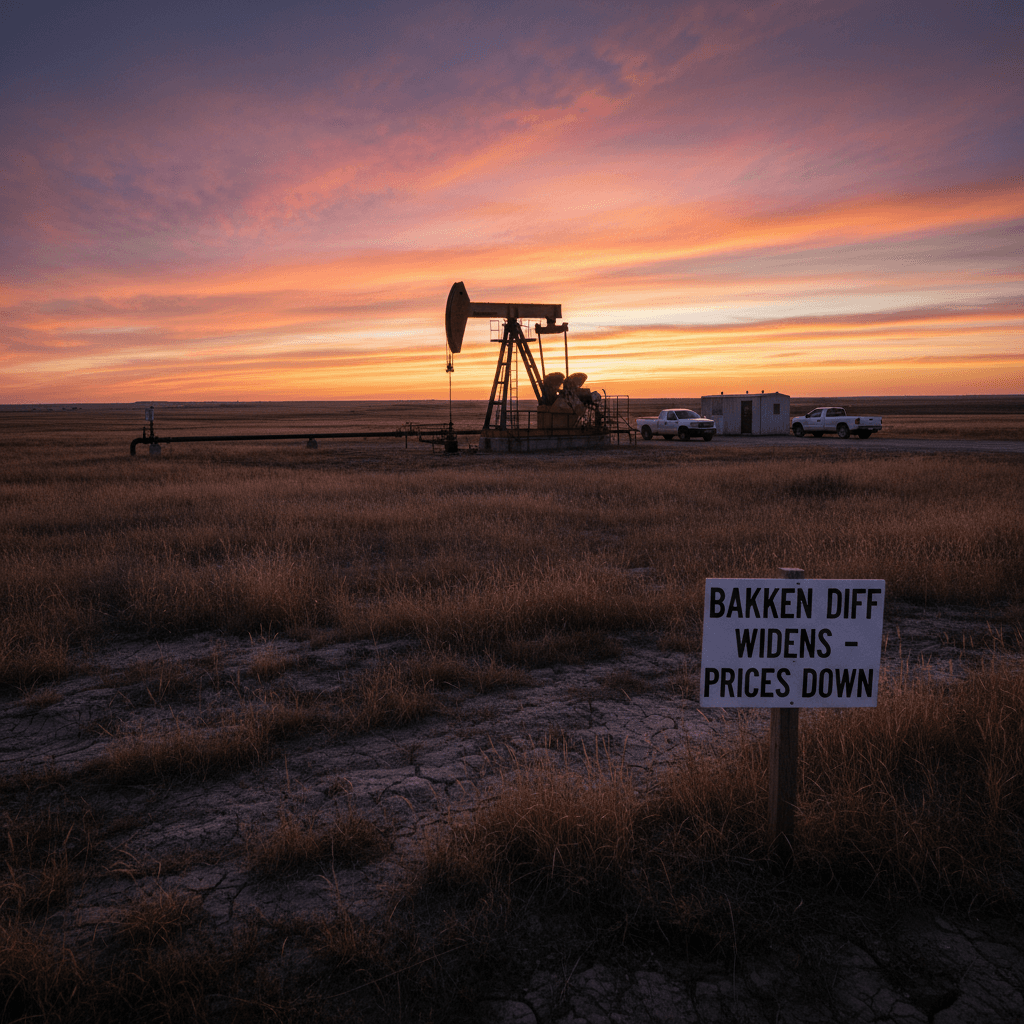
Front-month crude oil futures sold off sharply in midday trading Sunday, September 27, with both major benchmarks falling more than 2.5%. The decline puts pressure on Bakken operators as the region's crude price discount to the U.S. benchmark also widened.

West Texas Intermediate (WTI) crude for November delivery was trading at $92.41 per barrel, down $2.20 or 2.33% from Friday's settlement. The international benchmark Brent crude traded at $97.44, down $2.78 or 2.77%. The price for Bakken crude at the wellhead is directly impacted by these moves, trading at a discount of $3.42 per barrel below WTI.

The midday sell-off reflects mounting concerns over global oil demand. Economic data from major consuming nations, particularly China and Europe, has shown signs of weakening, raising fears of a slowdown in fuel consumption. Traders are also weighing the potential for increased non-OPEC supply later in the year, which could loosen the market.

For Bakken producers, the price drop translates to a direct hit to cash flow. With WTI at $92.41 and the Bakken differential at -$3.42, the implied wellhead price for Bakken crude is approximately $88.99 per barrel. This level, while still historically robust, erodes the margins for drilling and completion activities, particularly for operators with higher breakeven costs.

Natural gas prices also faced downward pressure, with the front-month contract trading at $3.23 per MMBtu, down $0.15 on the day. Lower gas prices can impact the economics of associated gas produced from Bakken oil wells, though oil revenue remains the primary driver for most operators in the region.

The price action comes ahead of the next OPEC+ meeting, where the producer group will decide on output policy for the coming months. Market participants are watching closely to see if the alliance will adjust its production cuts in response to the changing demand outlook. A decision to maintain or deepen cuts could provide a floor for prices, while any signal of increased output could extend the current downturn.

For North Dakota's oil industry, sustained price volatility underscores the importance of cost discipline and operational efficiency. Operators are likely to scrutinize capital spending plans if the downturn persists, potentially slowing the pace of drilling activity in the Williston Basin. However, with prices still above $90 for WTI, the sector remains in a broadly profitable environment compared to years past.

Source

LIVE PRICE DATA: Bakken Wire Midday Futures
oil priceswtibrentbakken differentialnatural gasmarket updatebakken operators

Share this article

Related Articles

Oil Prices Steady as Bakken Differential Holds at -$3.42 - Bakken Wire
Oil Prices

Oil Prices Steady as Bakken Differential Holds at -$3.42

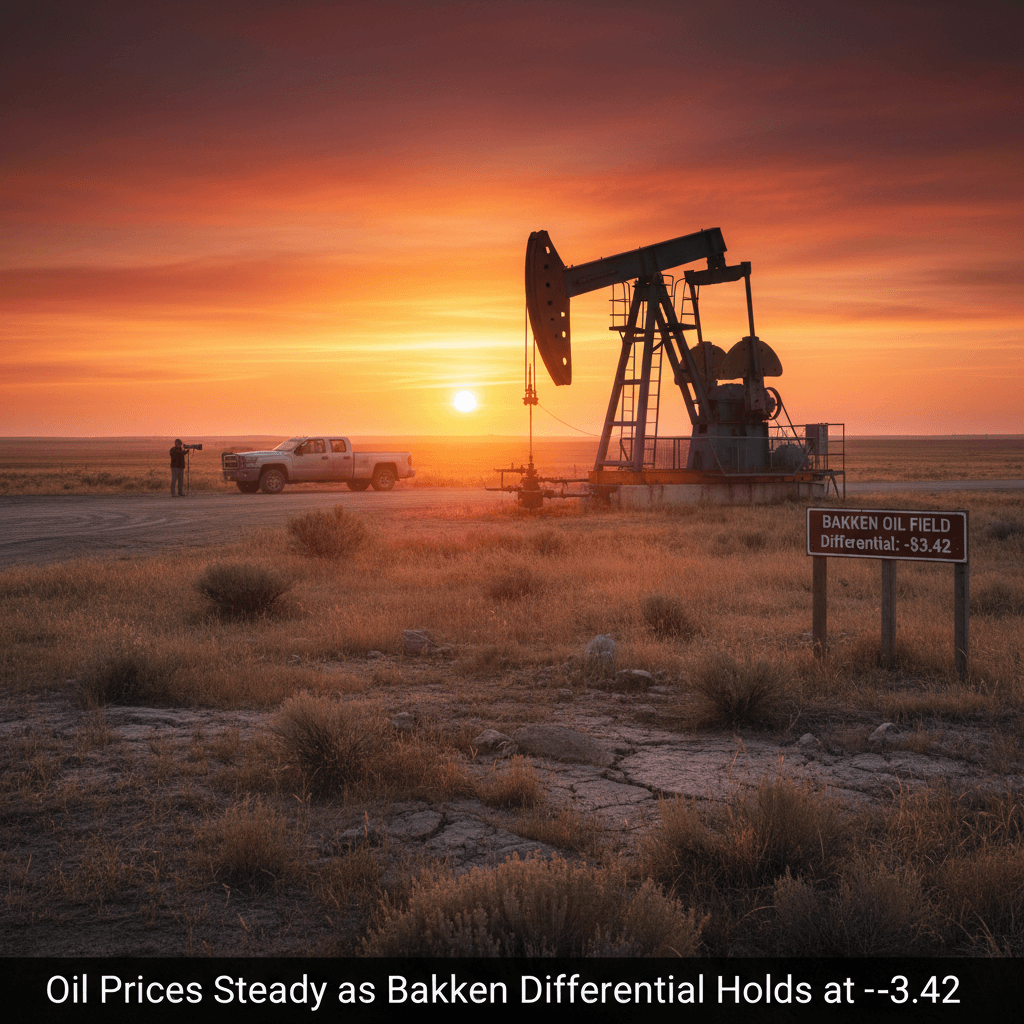
Front-month futures for global crude benchmarks were largely unchanged in quiet Sunday trading, with West Texas Intermediate holding at $92.41 per barrel and Brent crude at $97.44, according to live market data. The Bakken crude differential, a key metric for local producers, was steady at a discount of $3.42 per barrel versus WTI. The lack of price movement reflects typical weekend trading activity with lower liquidity. The stability comes after a volatile week where prices were influenced by geopolitical tensions, OPEC+ supply policy, and fluctuating inventory reports. For Bakken operators, the current price environment translates to an effective price of approximately $88.99 per barrel for Bakken-quality crude when accounting for the differential. This price level remains supportive for ongoing drilling and completion activity in the Williston Basin, though operators continue to manage costs amid inflationary pressures for services, steel, and labor. The steady differential indicates consistent pipeline and rail takeaway...

🌅Afternoon Wire·Sep 27
Oil Prices Drop Sharply, Bakken Differential Widens - Bakken Wire
Oil Prices

Oil Prices Drop Sharply, Bakken Differential Widens

Global crude oil prices posted significant declines in early Sunday trading, with West Texas Intermediate (WTI) falling below $93 per barrel. The front-month WTI contract dropped $2.20 to settle at $92.41 per barrel, a decline of 2.33%, according to live price data. The international benchmark Brent crude fell $2.78 to $97.44 per barrel, a 2.77% loss. The price drop immediately impacted the value of Bakken crude at the wellhead. The Bakken differential to WTI—the discount at which Bakken crude trades versus the benchmark—widened to negative $3.42 per barrel. This means Bakken crude priced at the hub of Clearbrook, Minnesota, is valued at approximately $88.99 per barrel ($92.41 - $3.42). The sharp decline was also reflected in natural gas markets, where the front-month Henry Hub contract fell $0.15 to $3.23 per MMBtu. The simultaneous retreat in both oil and gas prices suggests broader macroeconomic or fundamental pressures are at play in...

☀️Morning Wire·Sep 27
Oil Prices Drop Sharply Amid Demand Concerns, Bakken Differential Widens - Bakken Wire
Oil Prices

Oil Prices Drop Sharply Amid Demand Concerns, Bakken Differential Widens

Oil prices fell sharply in trading Saturday, with global benchmarks Brent and WTI crude both dropping more than 2.5%. West Texas Intermediate (WTI) crude closed at $92.41 per barrel, a loss of $2.20 or 2.33%. The global benchmark, Brent crude, settled at $97.44 per barrel, down $2.78 or 2.77%. The price drop pressures the value of crude produced in the Bakken formation. North Dakota's Bakken crude price is typically quoted as a differential to WTI. According to live price data, the Bakken differential widened to a discount of $3.42 per barrel below WTI. This means Bakken crude is effectively priced at approximately $88.99 per barrel. Natural gas prices also declined, with the benchmark falling $0.15 to settle at $3.23 per million British thermal units (MMBtu). The sudden downturn reverses recent strength in oil markets. Analysts point to rising concerns over global fuel demand as a primary driver for the sell-off....

🌅Afternoon Wire·Sep 26