Oil Prices Drop Sharply, Bakken Differential Widens
Crude futures fall over 2% in Sunday trading, pressuring local Bakken crude prices as the WTI discount deepens.
Global crude oil prices posted significant declines in early Sunday trading, with West Texas Intermediate (WTI) falling below $93 per barrel. The front-month WTI contract dropped $2.20 to settle at $92.41 per barrel, a decline of 2.33%, according to live price data. The international benchmark Brent crude fell $2.78 to $97.44 per barrel, a 2.77% loss.
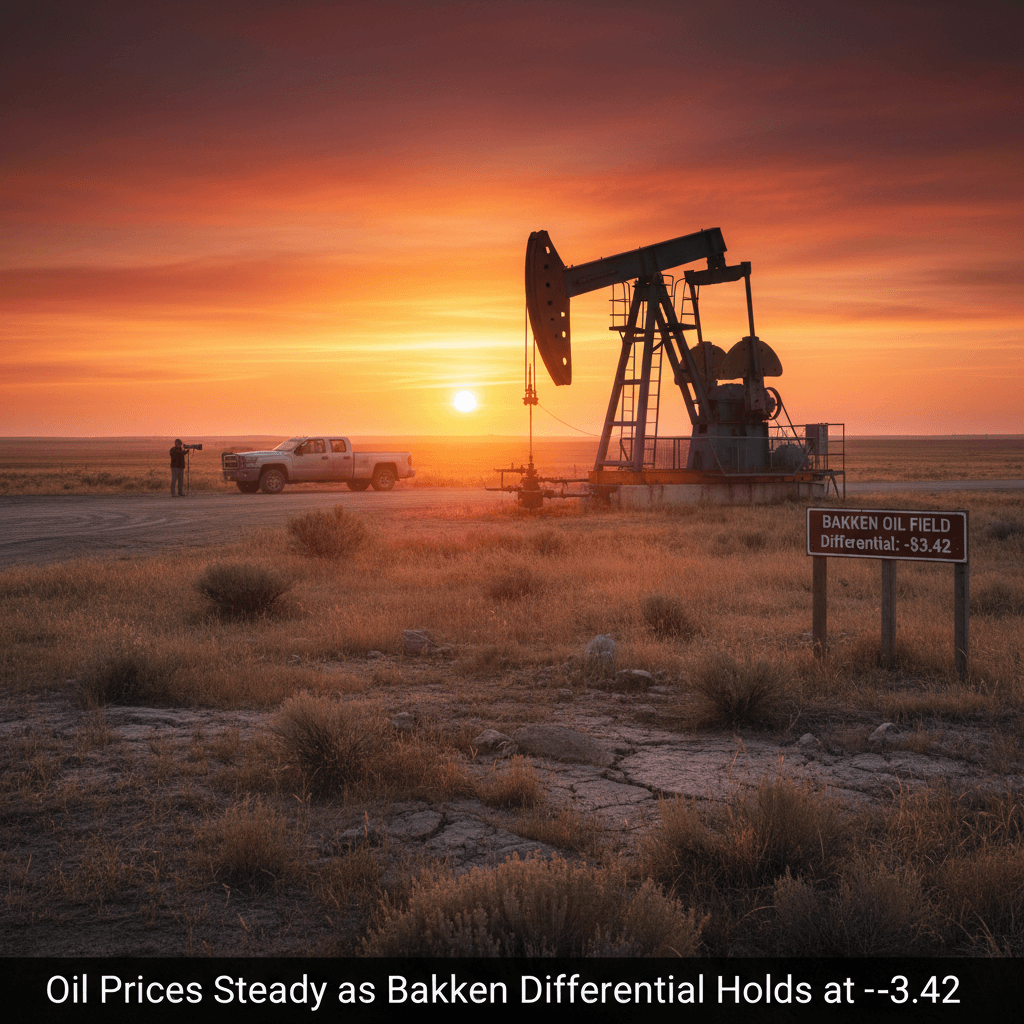
The price drop immediately impacted the value of Bakken crude at the wellhead. The Bakken differential to WTI—the discount at which Bakken crude trades versus the benchmark—widened to negative $3.42 per barrel. This means Bakken crude priced at the hub of Clearbrook, Minnesota, is valued at approximately $88.99 per barrel ($92.41 - $3.42).
The sharp decline was also reflected in natural gas markets, where the front-month Henry Hub contract fell $0.15 to $3.23 per MMBtu. The simultaneous retreat in both oil and gas prices suggests broader macroeconomic or fundamental pressures are at play in the energy commodity complex.
For Bakken operators, the price move represents a notable headwind for cash flow and drilling economics. A roughly $2.20 drop in the WTI benchmark, compounded by a wider local differential, directly reduces the revenue received for each barrel of oil produced. This can influence decisions on near-term well completion schedules, workover operations, and the pacing of new drilling activity in the Williston Basin.
While specific news catalysts for Sunday's sell-off were not provided in the source data, such moves often correlate with shifts in perceived supply and demand fundamentals. Traders may be reacting to indications of rising global inventories, concerns over economic growth and future fuel demand, or developments within major producing blocs like OPEC+. Market sentiment can also shift rapidly ahead of the weekly trading open based on geopolitical developments or changes in the U.S. Dollar's strength.
The wider Bakken differential indicates a potential softening in regional demand or a temporary logistical bottleneck affecting takeaway capacity to refining markets. Bakken crude typically trades at a discount to WTI to account for transportation costs from North Dakota to the primary Cushing, Oklahoma, pricing hub.
Source
Bakken Wire Live Price Data