Oil Prices Rise as EIA Lifts 2026, 2027 Forecasts
WTI, Brent and natural gas gain midday as EIA raises Brent outlook again; Bakken differential remains negative.
Oil prices moved higher Thursday morning in North Dakota and national benchmark trading as the U.S. Energy Information Administration raised its Brent oil spot price forecasts for 2026 and 2027 yet again, according to Rigzone.
At midday, WTI crude was $86.92 a barrel, up $0.39, or 0.45%. Brent crude was $93.83, up $1.07, or 1.15%. The spread between Brent and WTI stood at $6.91, based on the midday quotes. Natural gas was $3.30, up $0.09.
Rigzone reported the EIA update in its latest short-term energy outlook. The report did not detail the new forecast levels in the summary provided to Bakken Wire, but the agency’s repeated increases in 2026 and 2027 Brent spot price forecasts were the most prominent news item in the midday tape.
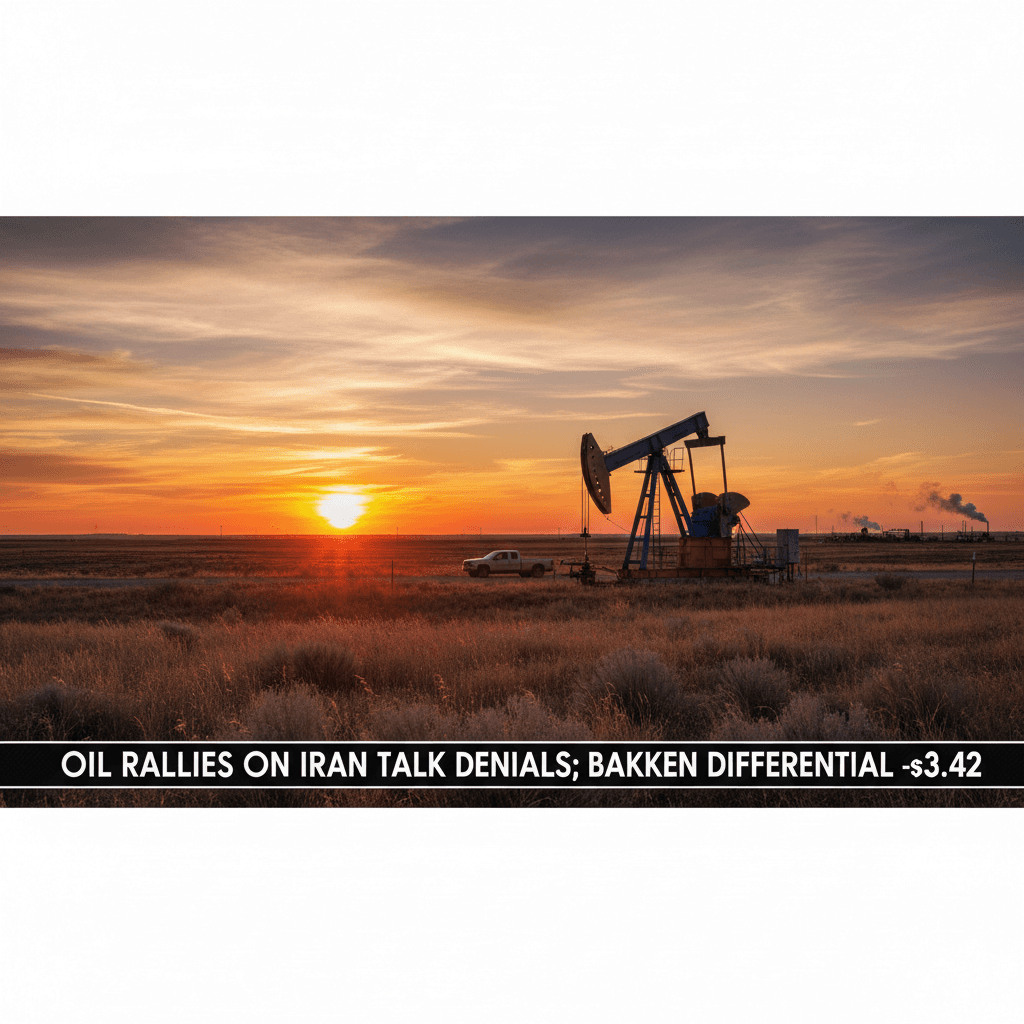
For Bakken operators, the price action has two sides. Higher benchmark crude prices and revised EIA forecasts improve the revenue outlook for producers selling oil from the Bakken formation, North Dakota’s primary oil-producing region. At the same time, the Bakken differential was quoted at minus $3.42 against WTI, meaning Bakken crude was trading $3.42 below the WTI benchmark at midday.
That discount matters because Bakken producers and royalty owners do not receive WTI outright. Their realized price is typically tied to a regional benchmark or a posted differential, and infrastructure constraints, crude quality, pipeline access and local market conditions can keep Bakken prices below WTI. The live quote shows the gap remains negative, but it also shows the gap is measured against a WTI price that is itself higher than the previous session.
The gain in natural gas, up $0.09 to $3.30, provides a modest positive for Williston Basin producers who market associated gas. Natural gas prices are volatile and can move on weather, storage and pipeline flows, but the midday increase helps producers balance revenue streams when oil prices are firm.
The larger move in Brent than WTI may reflect the focus on the EIA’s Brent forecast revisions. Rigzone said the agency raised 2026 and 2027 Brent oil spot price forecasts yet again. Because Brent is the global benchmark, changes to its forecast can influence sentiment across crude markets, even when WTI’s absolute move is smaller.
For North Dakota producers, the practical takeaway is that oil prices are moving higher at midday and the federal forecast outlook has become more supportive for Brent, according to Rigzone. But operators selling Bakken crude will still need to watch the differential. A $3.42 discount versus WTI reduces the benefit of each dollar increase in the national benchmark. Royalty owners, whose payments are calculated from wellhead prices after applicable deductions and market formulas, will also feel that spread.
The midday data show WTI up 0.45%, Brent up 1.15%, natural gas up $0.09, and the Bakken differential at minus $3.42. The EIA forecast update, as reported by Rigzone, is the central news item behind the price move.
Source
Bakken Wire live price data; Rigzone, “EIA Raises 2026, 2027 Oil Price Forecasts Yet Again,” Nov. 12, 2026.